

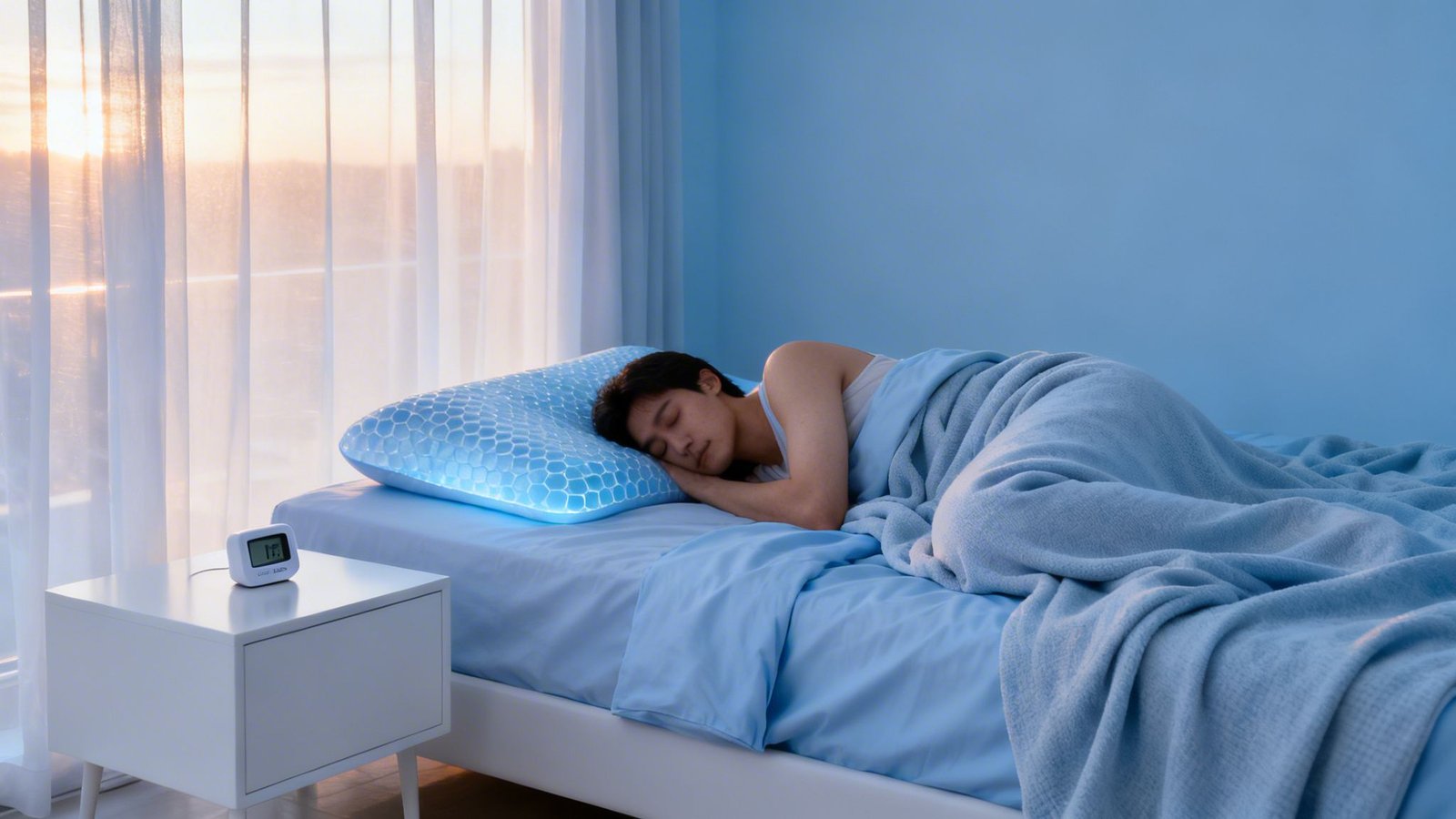
Ever find yourself kicking off the covers, feeling like a furnace in the middle of the night, only to be searching for them an hour later? That familiar dance isn’t random. Your body temperature when sleeping follows a finely tuned script, and a crucial drop of 1-2 degrees Fahrenheit is the biological cue that tells your brain it’s time to sleep.
The Hidden Rhythm of Your Sleep Temperature
Think of your body as having an internal thermostat, one that's pre-programmed to help you get deep, restorative rest. This thermostat runs on a 24-hour cycle known as your circadian rhythm—the master clock in your brain that dictates when you feel sleepy, hungry, and alert.
A non-negotiable part of this rhythm is the nightly cooldown. As evening sets in, your brain gives the command to start shedding heat. It does this mainly by widening the blood vessels in your hands and feet, a process that efficiently pushes warmth away from your core. This is precisely why your hands and feet might feel toasty right as you start to feel drowsy.
This slight but significant drop in your core temperature isn't just a byproduct of getting tired; it’s a direct trigger. It actively helps you fall asleep and, just as importantly, stay asleep.
So, Why Does This Nightly Cooldown Matter So Much?
The connection between a cool core and quality sleep is fundamental. A lower body temperature is strongly linked to getting more deep sleep, also known as slow-wave sleep. This is the critical phase where your body gets its most important work done.
- Physical Recovery: Repairing muscles and tissues from the day's wear and tear.
- Memory Consolidation: Storing important memories and clearing out the mental clutter.
- Hormone Regulation: Releasing growth hormone, which is essential for cell repair and overall health.
When your body successfully cools itself, it’s like giving your brain the all-clear to enter this vital maintenance phase. Without that temperature drop, your brain never gets the memo that it's safe to power down into truly deep rest.
To help visualize this, let's break down how your temperature syncs up with your sleep stages throughout the night.
Your Nightly Temperature Drop Explained
A summary of how your body's temperature changes to promote deep, restorative sleep.
| Sleep Phase | Typical Temperature Change | What It Means for Your Sleep |
|---|---|---|
| Falling Asleep | Starts to drop | Your body sheds heat through your hands and feet, signaling to your brain that it's time for bed. |
| Light & Deep Sleep | Reaches its lowest point | A cooler core allows you to enter and stay in the most physically and mentally restorative sleep stages. |
| REM Sleep | Begins to rise slightly | Your body's temperature regulation becomes less active, and your temperature fluctuates more. |
| Waking Up | Rises back to normal | The increase in core temperature is a natural wake-up signal that helps you feel alert in the morning. |
As you can see, this isn't a random process—it's a carefully orchestrated cycle designed for optimal recovery.
What Happens When This Rhythm Is Disrupted?
This natural cooldown is surprisingly easy to throw off track. Anything that prevents your body from shedding heat can sabotage your sleep, leading to some incredibly frustrating nights. If you often feel like you're losing the battle with overheating, it’s probably because something is blocking this essential process.
Common culprits include:
- A bedroom that’s too warm or stuffy
- Bedding that traps your body heat, like heavy synthetic comforters or non-breathable foam
- Eating a big meal or exercising too close to bedtime
- Hormonal changes, especially those common during perimenopause and menopause
When your body can’t lower its temperature, it gets stuck. You'll spend more time in lighter, less restful sleep and wake up far more often. Tossing and turning, kicking off the blankets, or waking up drenched in sweat is your body's desperate attempt to force the cooldown that should have happened hours ago.
Understanding this core mechanism is the first step for any hot sleeper looking to finally get some relief and reclaim a cool, uninterrupted night.
How Your Body Temperature Changes With Each Sleep Stage
Dropping your core temperature is the signal that tells your body it's time for bed, but the process doesn't stop there. Your internal thermostat doesn't just get set to "cool" for the night and then ignored. Instead, it’s constantly adjusting, fine-tuning your temperature to match the specific sleep stage you’re in.
You don't just fall into a deep sleep and stay there. You actually cycle through different stages of light sleep, deep sleep, and REM (Rapid Eye Movement) sleep all night long. Your body temperature when sleeping is right there along for the ride, shifting up and down in a purposeful rhythm that’s essential for both physical and mental recovery.
The following timeline shows just how that initial temperature drop paves the way for the most restorative parts of your night.
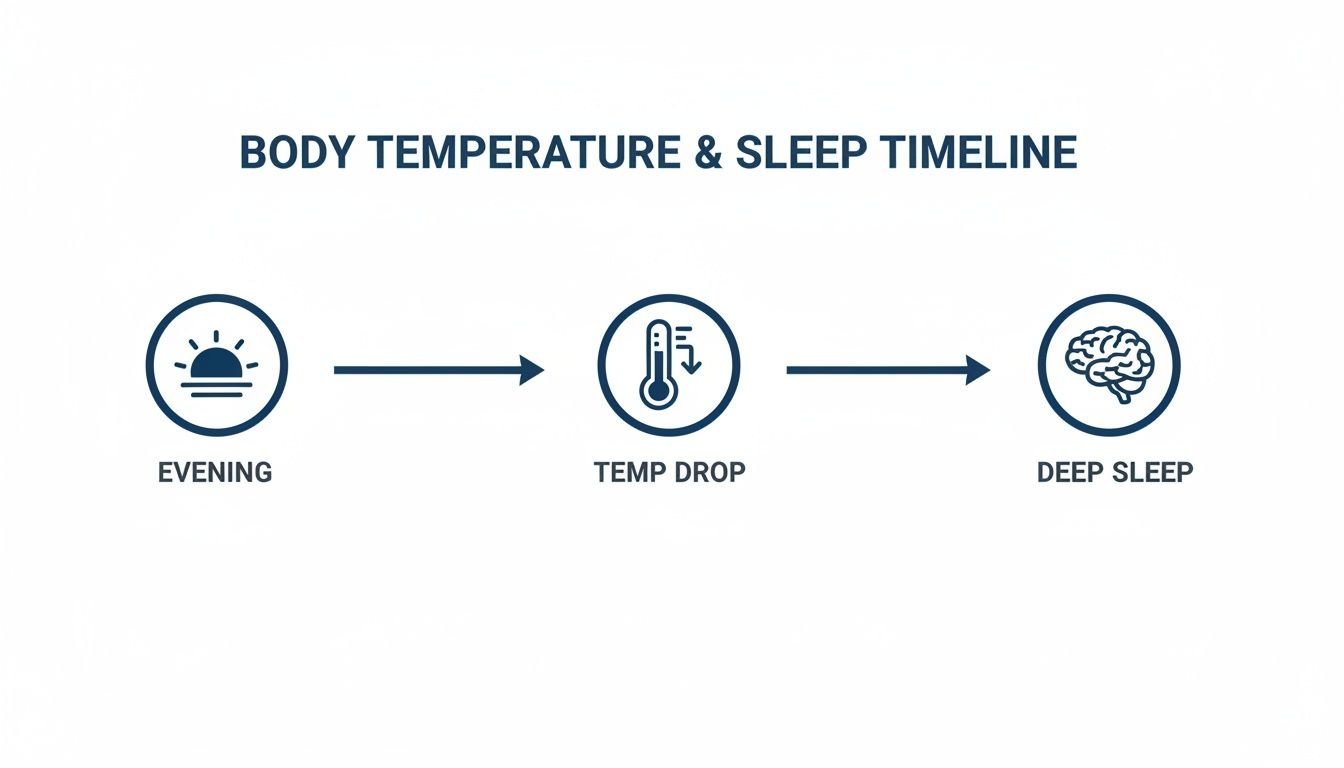
As you can see, that cooling process that starts in the evening isn't just about feeling comfortable—it’s a critical trigger for getting the deep, rejuvenating sleep your body needs.
The Chill of Deep Sleep
Your core body temperature hits its lowest point of the entire night during deep sleep, also known as NREM stage 3. This isn't just a coincidence; this deep chill is what allows your body to get its most important work done.
It's during this phase that your body gets down to business with:
- Physical Repair: Fixing muscles, building new tissue, and giving your immune system a tune-up.
- Hormone Regulation: Releasing crucial growth hormone for cell regeneration.
- Brain Cleanup: Your brain’s glymphatic system flushes out metabolic waste that builds up while you're awake.
A cool core temperature is the secret ingredient for maximizing your time in this crucial deep sleep stage. If you’re too warm, your body has to divert energy to cooling itself down, stealing resources from this vital maintenance work.
If you often find yourself kicking off the covers, it might be worth digging into the common culprits. Our guide on why you get so hot when you sleep can offer some personalized clues.
The Vulnerability of REM Sleep
Right after hitting that temperature low in deep sleep, your body shifts into REM sleep—the stage famous for vivid dreams. But here's where things get interesting. During REM, your body temporarily shuts down its main temperature-control systems. You basically stop shivering or sweating.
This leaves you incredibly susceptible to the temperature of your bedroom, almost like a cold-blooded creature. If your room is too cold, your body temperature can plummet. If it's too warm, your temperature can spike, often jolting you awake from a dream feeling either freezing or soaked in sweat.
Your body's temperature can fluctuate by as much as 2°F over the course of the night, trying to sync up with these different sleep stages. This is why a stable, cool bedroom is so non-negotiable. Research confirms that higher core body temperatures actively cut into both deep sleep and REM, robbing you of the most restorative phases of sleep. You can read more in these sleep temperature findings.
Ultimately, a cool and stable environment isn't just about the comfort of falling asleep. It's about giving your body the support it needs to navigate these complex nightly temperature changes without being woken up, ensuring you get the full benefit of every single sleep stage.
Common Reasons You Overheat at Night
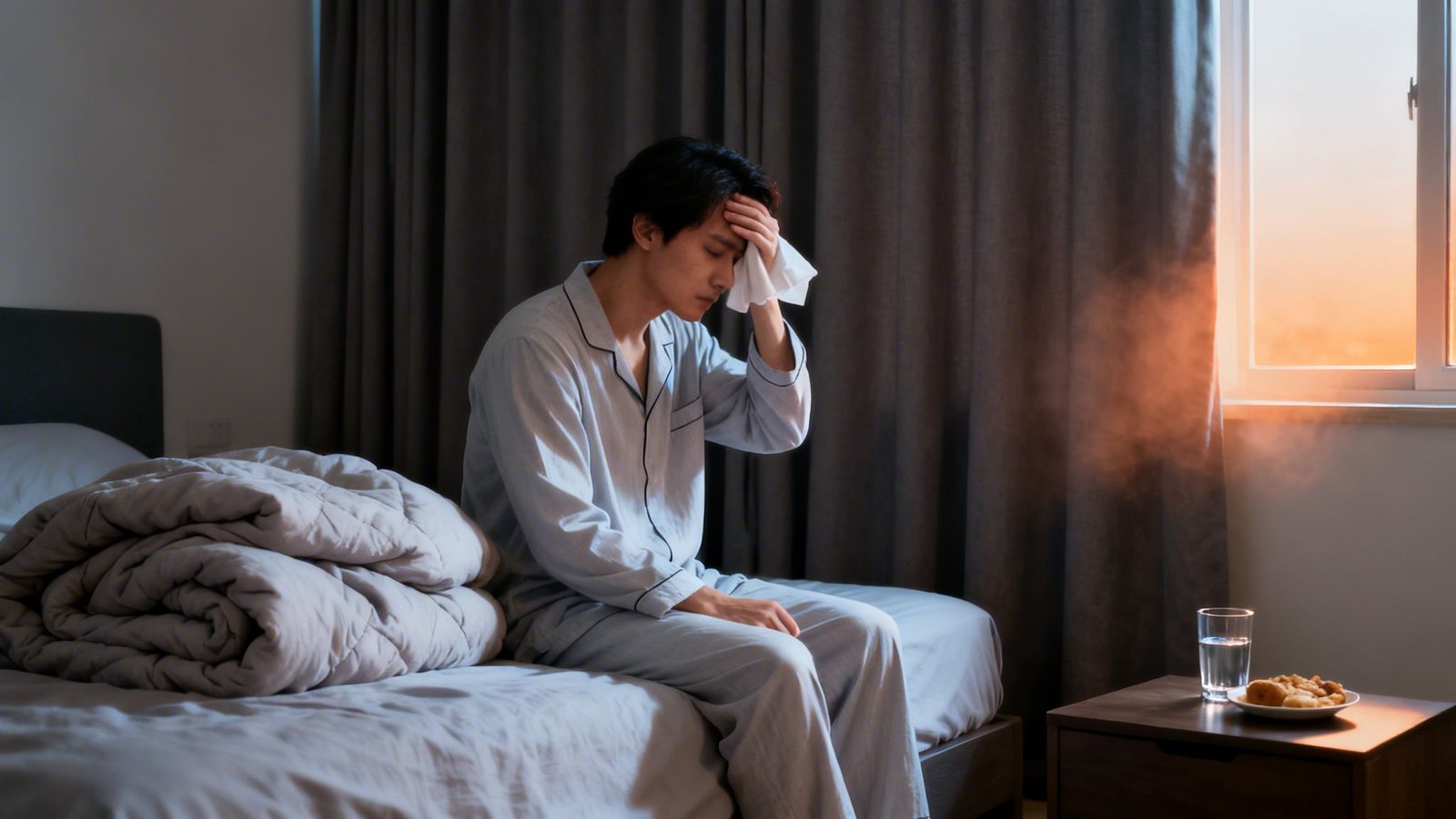
Waking up in a tangled, sweaty mess is one of life's most frustrating feelings. It's a surprisingly common problem, but it’s almost never a mystery without a solution. The first step to a cooler night's sleep is figuring out exactly why you’re overheating in the first place.
Think of your body like an engine that has to cool down to run properly overnight. If something is blocking that cooling process—whether it’s the wrong kind of blankets or something going on inside your body—the engine overheats. Your sleep is what pays the price.
The reasons you’re waking up hot can usually be traced back to two main areas: your sleep environment and your own internal body processes. Let's dig into the most common culprits.
Environmental and Bedding Factors
Sometimes, the simplest answer is the right one. Your bedroom setup and bedding choices have a massive impact on how well your body can get rid of heat while you sleep.
A Warm or Humid Bedroom: The sweet spot for sleep is a room that feels refreshingly cool, typically between 60-67°F (15-19°C). High humidity makes things even worse, as the moisture in the air prevents sweat from evaporating off your skin, effectively trapping heat.
Heat-Trapping Bedding: That memory foam mattress that felt so cozy in the store is often a major heat trap. Traditional foam is notorious for absorbing and holding onto body heat. The same goes for synthetic fabrics like polyester or microfiber in your sheets and comforter—they just aren’t breathable, creating a personal sauna under the covers.
Too Many Layers: A heavy duvet, a thick mattress protector, and a pair of flannel pajamas might sound comfortable, but together they can act like an oven, preventing your body from releasing the heat it needs to.
Did you know your body temperature naturally drops by about 1 to 2 degrees Fahrenheit as you fall asleep? This isn't random; it's a critical signal to your brain that it's time for bed. Research from millions of sleep cycles shows that a higher nighttime body temperature makes it harder to fall asleep and stay asleep. For the 57% of U.S. adults who say they sleep too hot, this essential cool-down process is being blocked, leading directly to fragmented, unsatisfying rest.
For many of us, feeling hot at night is a clear sign that our sleep setup is working against our body's natural rhythm. If you find yourself constantly sweating, it's worth exploring the specific reasons why you sweat so much in your sleep.
Internal and Physiological Causes
If you’ve already turned your bedroom into a cool oasis and you're still kicking off the covers, the source of the heat might be internal. Several things happening inside your body can crank up your internal thermostat.
Hormonal Fluctuations
Hormones are powerful chemical messengers that can directly affect your body’s temperature controls. Many women experience intense night sweats during perimenopause and menopause because fluctuating estrogen levels throw the hypothalamus—your brain's thermostat—out of whack. An overactive thyroid (hyperthyroidism) can also be a culprit, as it puts your metabolism into overdrive and increases heat production.
Metabolism and Diet
What you eat, and when you eat it, matters. A large, heavy meal close to bedtime forces your digestive system to work hard, generating heat in a process called thermogenesis. Spicy foods and alcohol are also well-known triggers that can raise your core body temperature and disrupt that all-important cooldown period needed to drift off.
Illness and Medications
This is one most of us have felt before. When your body is fighting off an infection, it intentionally raises its temperature to create a fever, which easily leads to overheating and night sweats. Beyond that, a surprising number of common medications list night sweats as a side effect. These include:
- Antidepressants
- Steroids
- Some blood pressure medications
- Drugs used to manage diabetes
By working through this list, you can start to pinpoint what’s turning up the heat at night. Whether the fix is as simple as swapping out your comforter or requires a chat with your doctor, identifying the root cause is the first step toward finally getting a cool, deep, and restorative night’s sleep.
How Overheating Disrupts Your Sleep and Health
If you’ve ever woken up in a tangle of sweaty sheets, you know that being too hot is more than just uncomfortable—it’s a full-blown assault on your sleep. When your body can’t pull off its natural nightly cooldown, it’s forced to work overtime. Think of it like a computer whose cooling fan is broken; it can still run, but it’s going to overheat, slow down, and eventually crash.
That’s exactly what happens to your sleep. A consistently high body temperature when sleeping sabotages your sleep architecture, the nightly blueprint your brain and body follow. It cuts short your time in the two most crucial stages: deep sleep and REM sleep.
Without enough deep sleep, your body misses its main opportunity for physical repair, immune system upkeep, and hormone balancing. The results are often painfully obvious the next morning.
The Real-World Impact of Sleeping Too Hot
This isn't just about feeling a little groggy. When heat constantly fragments your sleep, the effects ripple into every corner of your life.
Suddenly, you’re dealing with a new normal that looks a lot like this:
- Waking Up Exhausted: You feel unrested and drained, even after spending a full eight hours in bed.
- Persistent Brain Fog: It becomes harder to focus, your memory feels hazy, and your patience wears thin much faster.
- Slower Physical Recovery: Your muscles ache longer after a workout, and you might notice a drop in your athletic performance.
- Weakened Immunity: You seem to catch every cold that goes around.
Tossing and turning because you’re too warm isn't a simple inconvenience. It's a clear signal that your body is failing to regulate its temperature, actively robbing you of restorative deep sleep.
What starts as a nightly frustration can snowball. Over time, chronically poor sleep from overheating can contribute to more serious, long-term health risks.
The Science Behind a Bad Night's Sleep
The link between high temperatures and terrible sleep is incredibly clear. Studies covering tens of thousands of people have shown that once the bedroom temperature creeps above 68°F (20°C), our sleep efficiency begins to plummet. At that point, your environment is actively working against your body’s natural desire to cool down.
Even the climate right under your blankets—what we call the microclimate—has a huge impact. The sweet spot is somewhere between 80.6-89.6°F (27-31°C). Any hotter, and your body is far more likely to jolt you awake in an attempt to cool off, shattering your deep and REM sleep cycles.
You're not alone in this struggle. A 2026 Gallup poll found that a staggering 57% of adults say being too hot is a frequent cause of their poor sleep. You can learn more about this crucial connection from experts who dive into the role of temperature in sleep quality on PsychologyToday.com.
When your body spends all night fighting heat instead of resting and repairing, you pay the price during the day. It’s time to stop thinking of overheating as a minor comfort issue and start treating it as the serious health disruptor it is. By creating a cooler sleep environment, you’re not just chasing comfort—you’re giving your body the tools it needs to keep you healthy, sharp, and resilient.
Actionable Strategies to Keep You Cool at Night
Feeling hot at night is more than just a minor annoyance—it’s a major roadblock to the deep, restorative sleep your body and brain crave. The great news is you have more control over your sleep temperature than you might think. By making a few smart changes to your bedroom, bedding, and even your daily routine, you can finally stop wrestling with the covers and start working with your body’s natural cool-down cycle.
Let’s get straight to the most effective, proven strategies you can start using tonight to lower your body temperature when sleeping and get some real relief.
Optimize Your Sleep Environment
Think of your bedroom as the foundation for cool sleep. Getting this space right is the most critical first step you can take.
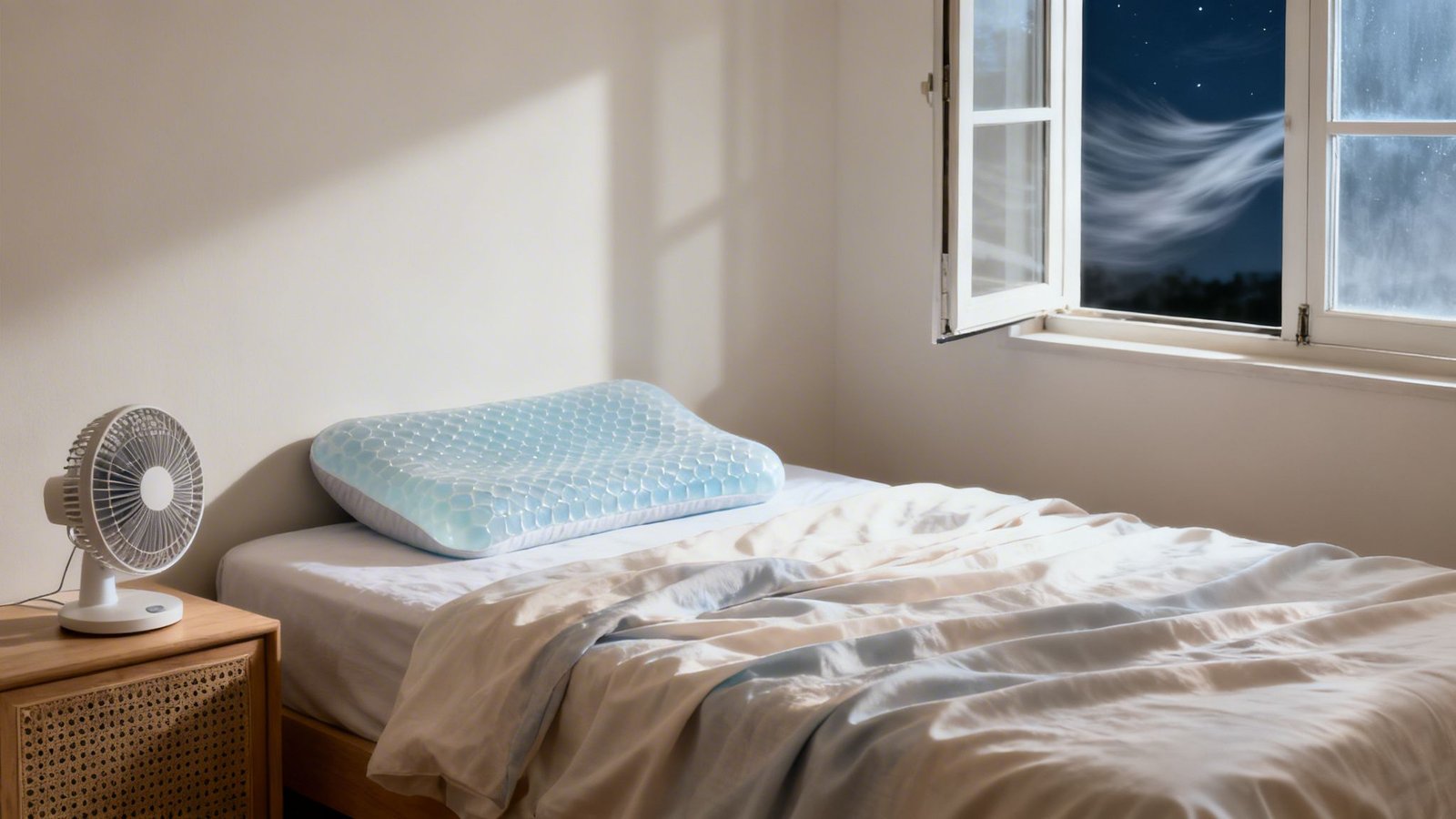
Dial in the Temperature: The sweet spot for sleep is surprisingly cool, typically somewhere between 60-67°F (15-19°C). A cool room helps trigger your body's instinctual temperature drop, which is a powerful signal to your brain that it’s time to rest.
Get the Air Moving: A stuffy room is a heat trap. Use a ceiling fan or a portable fan to create a gentle breeze and promote air circulation. For a little extra cooling power, try placing a shallow bowl of ice in front of your fan; it acts like a mini, DIY air conditioner.
Tackle the Humidity: If you live somewhere humid, a dehumidifier can be an absolute lifesaver. When the air is thick with moisture, your sweat can't evaporate effectively, robbing your body of one of its best natural cooling mechanisms.
Nailing these environmental basics sets the stage for a truly cool night. For an even deeper look, our full guide is packed with more tips on how to stay cool at night, especially if you’re dealing with a really hot climate.
Upgrade Your Bedding for Maximum Cooling
With your room nice and cool, it’s time to zoom in on what you're actually sleeping on. Your mattress, sheets, and pillows form a personal "microclimate" around your body. The wrong materials can turn this space into a heat-retaining oven, no matter how low you set the AC.
At CoolRestGuide, we don't just read marketing claims—we put products to the test. We ask the important questions: Does it actually feel cool when you lie down? Does it pull moisture away when things heat up? And crucially, does it stay breathable through the entire night? This is how we separate the gear that genuinely works from the stuff that just looks good on the box.
Here’s our breakdown of the materials that make a real difference for hot sleepers.
Your Guide to Cooling Bedding Materials
Choosing the right fabric is one of the easiest wins for a cooler night's sleep. This table compares some of the most popular options we've tested to help you find your perfect match.
| Material | How It Cools | Best For | Expert Take |
|---|---|---|---|
| Tencel/Lyocell | Exceptional moisture-wicking and breathability; smooth, cool-to-the-touch feel. | Anyone who wants silky-soft sheets that actively pull sweat away from the body. | One of our top-rated materials for its consistent cooling performance and luxurious feel. |
| Bamboo Viscose | Highly breathable and moisture-absorbent, with natural temperature-regulating properties. | Hot sleepers who prioritize softness and want a fabric that drapes well and feels light. | A fantastic choice, but look for high-quality weaves, as cheaper versions can pill over time. |
| Latex | Naturally breathable due to its open-cell structure, which allows for continuous airflow. | People looking for a responsive, cooling mattress or pillow that doesn’t trap heat like foam. | Talalay latex is generally more breathable than Dunlop. It’s a durable and effective cooling material. |
| Gel-Infused Foam | Gel beads or swirls are mixed into memory foam to absorb and pull heat away from the body. | Those who love the contouring feel of memory foam but need a cooler alternative. | Performance varies widely. Gel can provide initial cooling but may eventually warm up. |
| Traditional Memory Foam | Traps body heat due to its dense, closed-cell structure. | Not recommended for hot sleepers. | This is the most common culprit for overheating. If you love foam, seek out advanced open-cell or gel-infused options. |
Ultimately, materials like Tencel and Bamboo are champions of breathability and moisture management, making them our go-to recommendations for sheets. For mattresses, latex is a clear winner over traditional memory foam, which is notorious for trapping heat.
Make Smart Lifestyle Adjustments
Finally, a few simple tweaks to your daily habits can work wonders by helping your body prepare for its nightly cooldown.
Time Your Meals Wisely: Try to avoid big, heavy meals within 2-3 hours of bedtime. The process of digestion actually generates heat (a process called thermogenesis), raising your core temperature right when you need it to be dropping.
Take a Warm Shower (Really!): This might sound counterintuitive, but taking a warm shower or bath 60-90 minutes before bed is a brilliant sleep hack. The warm water brings blood to the surface of your skin, and when you get out, the rapid cooling effect sends a powerful "time for sleep" signal to your brain.
Exercise Earlier in the Day: Regular exercise is fantastic for sleep quality, but a vigorous workout too close to bedtime can leave your body feeling warm and energized. Aim to wrap up any intense activity at least 3-4 hours before you plan to turn in.
Stay Hydrated: Drink plenty of water during the day to help your body regulate temperature efficiently. Just be sure to taper off your intake an hour or two before bed to avoid middle-of-the-night bathroom runs.
By layering these strategies—a cool room, the right bedding, and smarter daily habits—you create a powerful system that encourages a deep, uninterrupted, and refreshingly cool night's sleep.
Frequently Asked Questions About Sleep Temperature
Once you start paying attention to how temperature affects your rest, a lot of practical questions pop up. Let's tackle some of the most common ones we hear from people trying to master their sleep environment.
Can Wearable Devices Track My Nighttime Temperature?
Yes, they can—and the data is incredibly useful. Popular wearables like the Oura Ring, Whoop strap, and many smartwatches track your skin temperature trends while you sleep.
It's crucial to know that they're measuring your skin temperature, not your deep internal core temperature. Think of it like checking the temperature of a car's hood versus its engine. They're related, but not the same.
But that doesn't mean the data isn't valuable. These devices are fantastic for spotting your personal patterns night after night. By tracking these trends, you can connect the dots between your temperature and your sleep quality.
For instance, you might see that your most restful nights happen when your skin temperature takes a nice, steady dip. Or you might spot a temperature spike that lines up perfectly with a night you remember tossing and turning. This information gives you real-world feedback on how your habits, bedding, and room temperature are impacting your body temperature when sleeping.
Is It Bad to Sleep with a Fan on All Night?
Not at all. For most people, sleeping with a fan is a game-changer for staying cool and comfortable. It works in a few key ways.
- Keeps Air Moving: A fan prevents a bubble of hot, stagnant air from forming around your body, especially under the covers.
- Boosts Evaporation: That gentle breeze helps sweat evaporate from your skin much more quickly, which is your body's natural air conditioning system.
- Provides White Noise: The consistent hum can be a blessing, masking sudden noises like traffic or a partner's snoring that might otherwise jolt you awake.
The only potential downsides are minor. The constant airflow can sometimes dry out your skin, sinuses, or mouth, and it can kick up dust and allergens that are already in the room.
To get the benefits without the drawbacks, try aiming the fan to circulate air around the room rather than blowing directly on you all night. Running an air purifier at the same time can also do wonders for keeping the air clean.
What Should We Do If My Partner and I Have Different Temperature Needs?
Ah, the classic "battle of the thermostat." It's a real struggle when one person sleeps like a furnace and the other is always searching for another blanket. The secret is to stop trying to find one solution for the whole bed and start customizing each person's side.
Here are a few of the best strategies for couples with mismatched sleep temperatures:
The "Duvet Method": This trick, popular in Scandinavia, is brilliantly simple. Ditch the single large comforter and use two smaller, separate duvets instead. The hot sleeper can use a lightweight, breathable one (like Tencel or bamboo), while the cold sleeper can snuggle up with a warmer down or wool version.
Embrace Dual-Zone Tech: If you're shopping for a new mattress or topper, look for products with dual-zone climate control. These allow each of you to set the temperature for your side of the bed, creating two perfect microclimates.
Layer Strategically: Start with a single, lightweight quilt or coverlet that you both share. The colder sleeper can then easily add a personal throw blanket on their side for extra warmth whenever they need it.
When Should I See a Doctor About Night Sweats?
While most overheating at night is simply due to your environment or bedding, you shouldn't ignore persistent, drenching night sweats. Sometimes, they can be your body's way of signaling an underlying health issue.
It’s probably time to make an appointment with your doctor if your night sweats are:
- Drenching: You consistently wake up with your pajamas and sheets soaked through, even when the room is cool.
- Paired with Other Symptoms: Be extra vigilant if the sweats come with a lasting fever, unexplained weight loss, fatigue, body aches, or swollen lymph nodes.
- Constant and Disruptive: The sweating is so bad that it ruins your sleep night after night, and nothing you do to cool your environment seems to help.
Remember, this article is for informational purposes and isn't a substitute for professional medical advice. A doctor is the only one who can properly diagnose the cause and rule out any serious conditions.
Finding the right products to keep you cool can feel like a guessing game, but it doesn't have to be. At CoolRestGuide, we spend our nights testing and reviewing cooling bedding and sleep gear to help you find what actually works. See our top-rated picks and get more expert advice at https://coolrestguide.com.
