

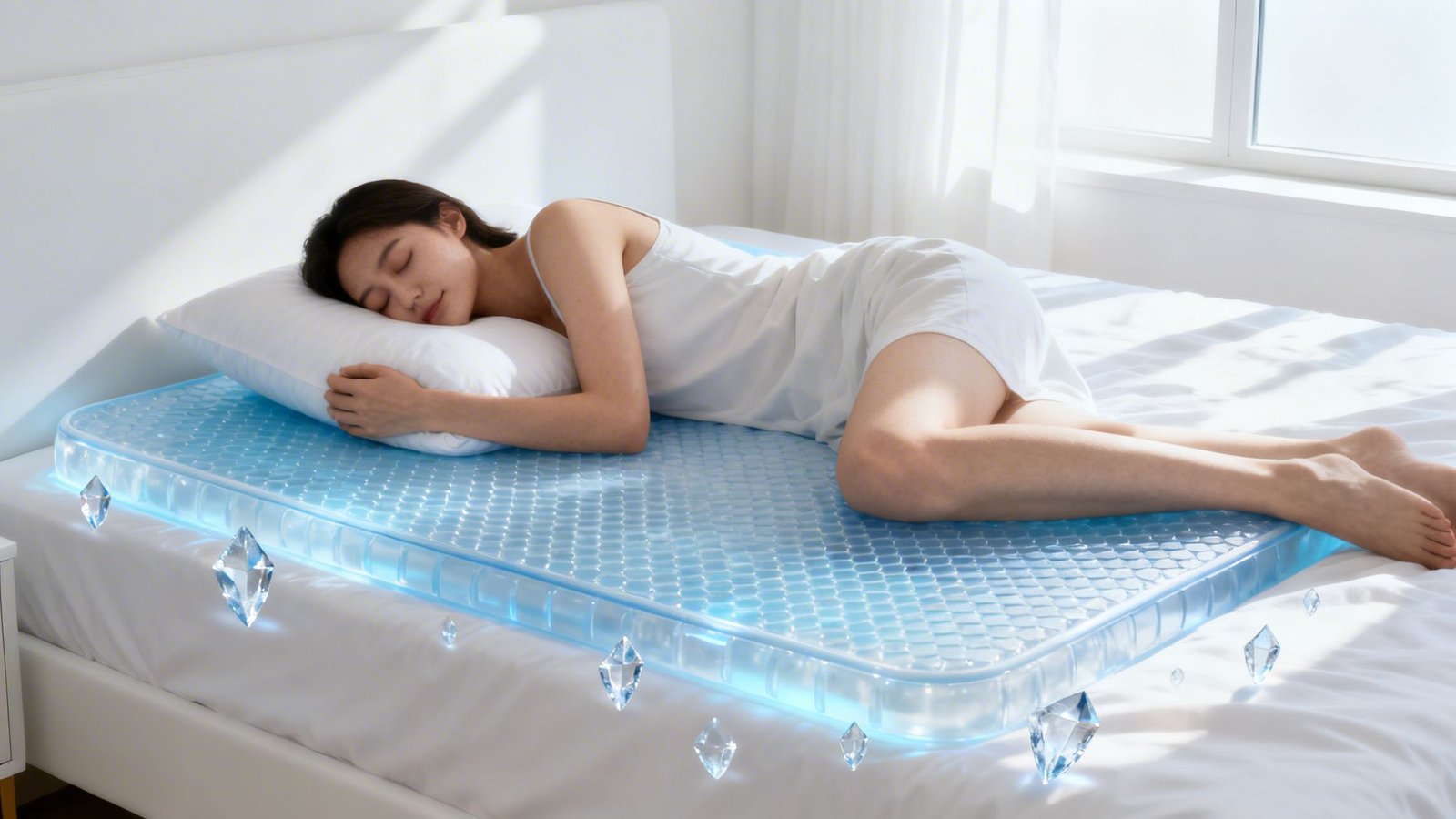
You go to bed tired, finally get comfortable on your side, and then wake up in the middle of the night with two problems at once. Your shoulder aches. Your back and chest feel damp. You flip to the other side, kick a leg out from under the sheet, and start the whole cycle again.
That combo is why finding the best cooling mattress topper for side sleepers is harder than most product roundups make it seem. A topper can feel cool for ten minutes and still sleep hot by 3 a.m. It can feel plush at first and still leave your hips and shoulders cranky by morning. In Florida-style humidity, those failures show up fast.
Most reviews treat cooling and pressure relief like separate issues. Side sleepers do not get that luxury. If a topper traps heat, you sweat. If it does not cushion the shoulder and hip well enough, you toss, twist, and create even more heat. That connection matters, especially in warm, sticky bedrooms and for couples where one person runs hot.
The Side Sleeper's Dilemma Waking Up Hot and Sore
The pattern is familiar. You fall asleep on your left side. An hour or two later, that shoulder feels jammed into the mattress, your hip feels loaded, and the spot under your torso has turned into a heat pocket. You shift to the other side. Same result.
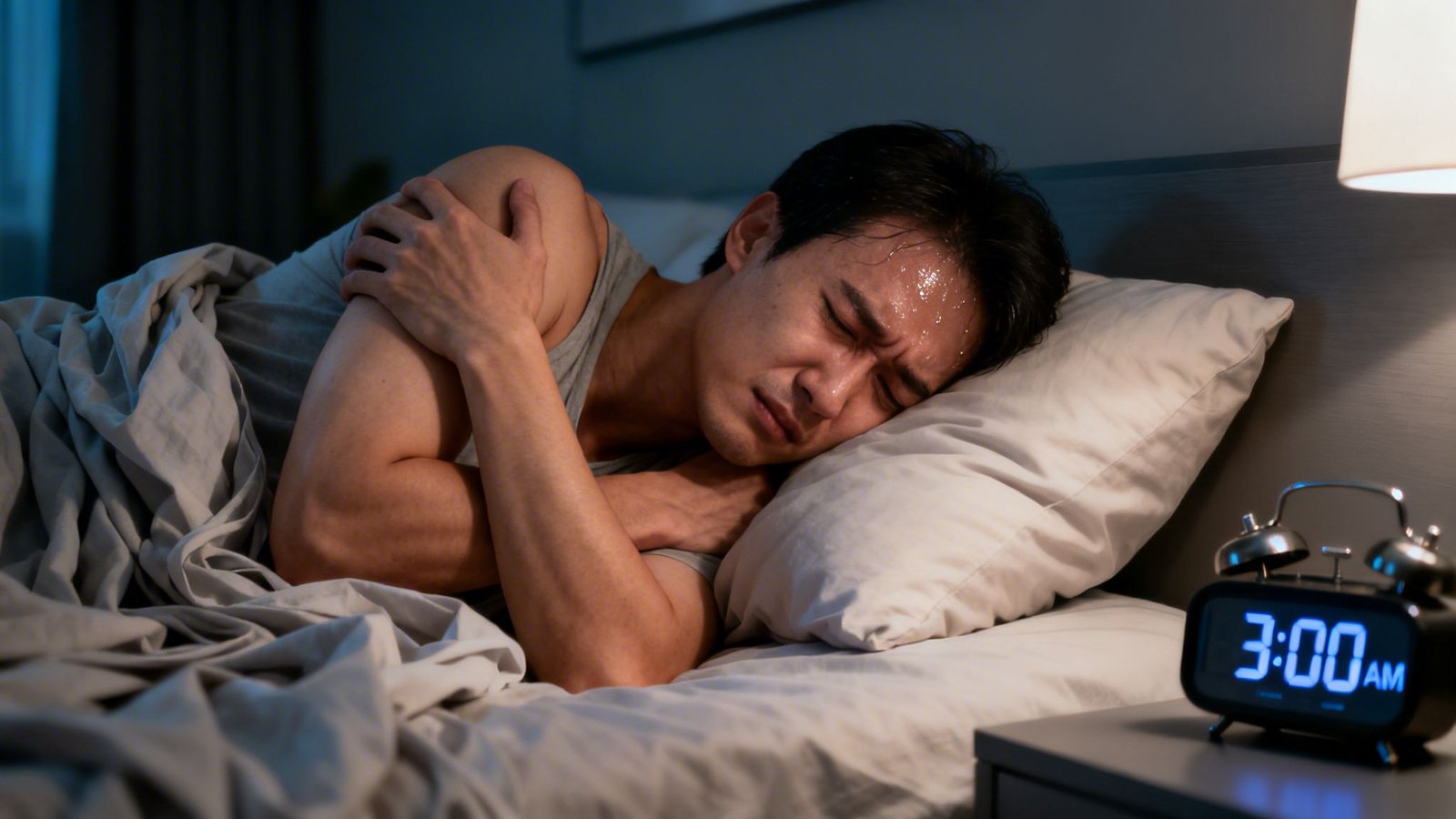
For side sleepers, the problem is mechanical and thermal at the same time. Your shoulders and hips press deeper into the surface than a back sleeper’s broad, flatter contact points. That pressure concentrates body heat in the exact zones where foam tends to compress most.
Why generic cooling advice falls apart
A lot of “cooling” advice is built for average sleepers in average rooms. That is not the experience for someone sleeping in humid air with a mattress that already runs warm. A topper that only feels cool-to-the-touch can fade fast once your body heat and sweat build under the blanket.
The bigger issue is the lack of side-sleeper-specific data. Current reviews mention cooling features but do not quantify temperature regulation differences for side sleepers specifically, and they also do not show how topper thickness changes cooling for people dealing with shoulder and hip pressure points in warm climates, as noted in this discussion of the current testing gap.
Key takeaway: Side sleepers need a topper that manages pressure, airflow, and moisture together. If one of those fails, the whole setup fails.
What matters at 3 a.m.
At 3 a.m., marketing words mean nothing. You care about whether the topper:
- Relieves shoulder load: Enough give to stop that jammed, numb feeling.
- Keeps the hip from dropping too far: Too much sink throws off alignment.
- Lets heat escape: Especially from the torso and upper back.
- Does not hold onto sweat: Humidity changes everything.
That is the lens I use. Not showroom comfort. Not hand-feel. Overnight performance.
How Cooling Technologies Work in Humid Climates
In a humid bedroom, a topper can feel cool for the first ten minutes and still sleep hot by 2 a.m. That is the difference between surface chill and actual heat release. In Florida, that gap shows up fast, especially under the shoulder and hip where a side sleeper sinks in deepest and airflow drops off.
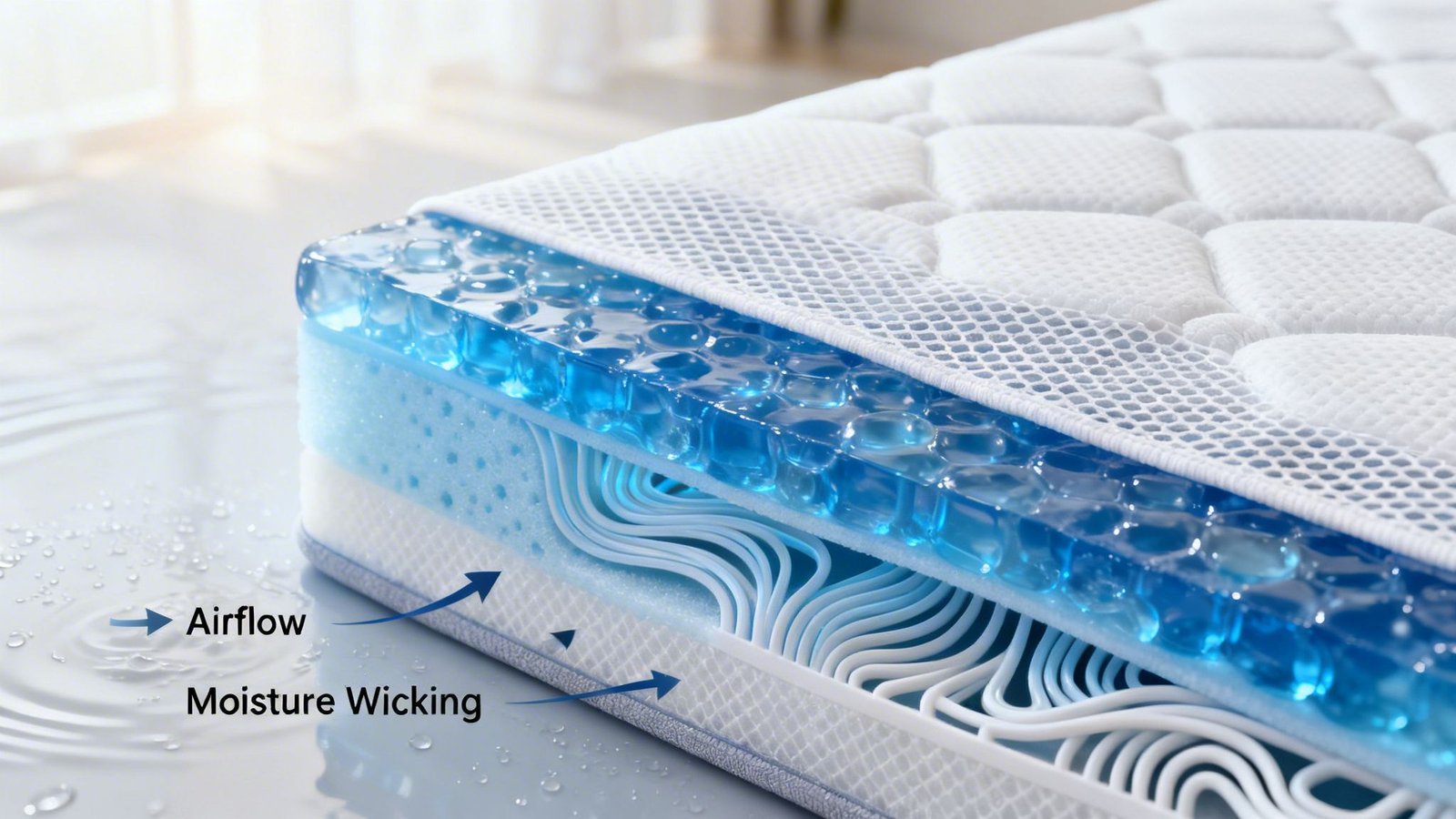
Surface cooling is not the same as sustained cooling
A cool-to-the-touch cover only tells you how the topper feels before your body warms it up. Side sleepers need more than that. You are pressing the same zones into the topper for hours, and in muggy air, trapped moisture makes those spots feel even warmer.
Different materials fail in different ways.
- Gel foam often gives a quick cool hit, then levels out once the material absorbs body heat.
- Copper-infused foam may move heat a bit faster, but it still depends on the foam beneath it staying breathable.
- Ventilated latex usually performs better over a full night because air can move through the material instead of stalling at the surface.
If you want a useful primer on how your own sleep temperature shifts overnight, this guide on body temperature when sleeping is worth reading.
Why latex tends to hold up better in muggy rooms
Latex is not a miracle fix. A bad cover or a heat-trapping mattress underneath can still ruin the setup. But latex, especially a more open and ventilated build, usually handles humid conditions better than dense memory foam because it compresses without sealing off as much airflow.
Cover fabric matters too. Sleep Foundation notes that cotton is a breathable material commonly used in mattress toppers and bedding because it allows better airflow and moisture management than many synthetic fabrics, which is part of why cotton covers tend to feel less swampy in hot weather (Sleep Foundation's guide to the best cooling mattress toppers).
That lines up with what I see in real use. In sticky weather, the toppers that stay comfortable are usually the ones that let heat escape and let sweat dry out, not the ones with the flashiest cooling label.
What works, and what disappoints
Some materials have a better track record in humid rooms.
Usually better choices
- Ventilated latex: Better airflow, faster heat release, less of that stuck-in-foam feeling.
- Cotton or other breathable covers: Help moisture evaporate instead of trapping it against the body.
- Foam designs with real channels or cutouts: Better than relying on infusion marketing alone.
More hit or miss
- Dense memory foam with a little gel added: Can relieve pressure well, but often warms up where your shoulder and hip stay planted.
- Very thick plush foam toppers: Comfortable at first, but they can hold heat once they fully compress.
- Tight synthetic covers: They often cancel out whatever cooling benefit the core material had.
Cooling works as a system
The topper is only one part of the bed. The cover, sheets, protector, and mattress underneath all affect whether heat escapes or gets trapped. Put a breathable topper over a mattress that already sleeps hot, then wrap it in a slick synthetic protector, and the whole setup can still feel humid and heavy.
A good rule of thumb is simple. In humid climates, buy for airflow and moisture release first. A brief cold feel is nice. All-night breathability is what keeps a side sleeper comfortable.
What Side Sleepers Must Demand Beyond Just 'Cooling'
At 2 a.m. in a warm, damp room, side sleepers usually feel two problems at once. The shoulder and hip are starting to ache, and the bed surface that felt cool at first now feels humid and loaded with body heat. A topper that fixes only one of those problems is not doing its job.
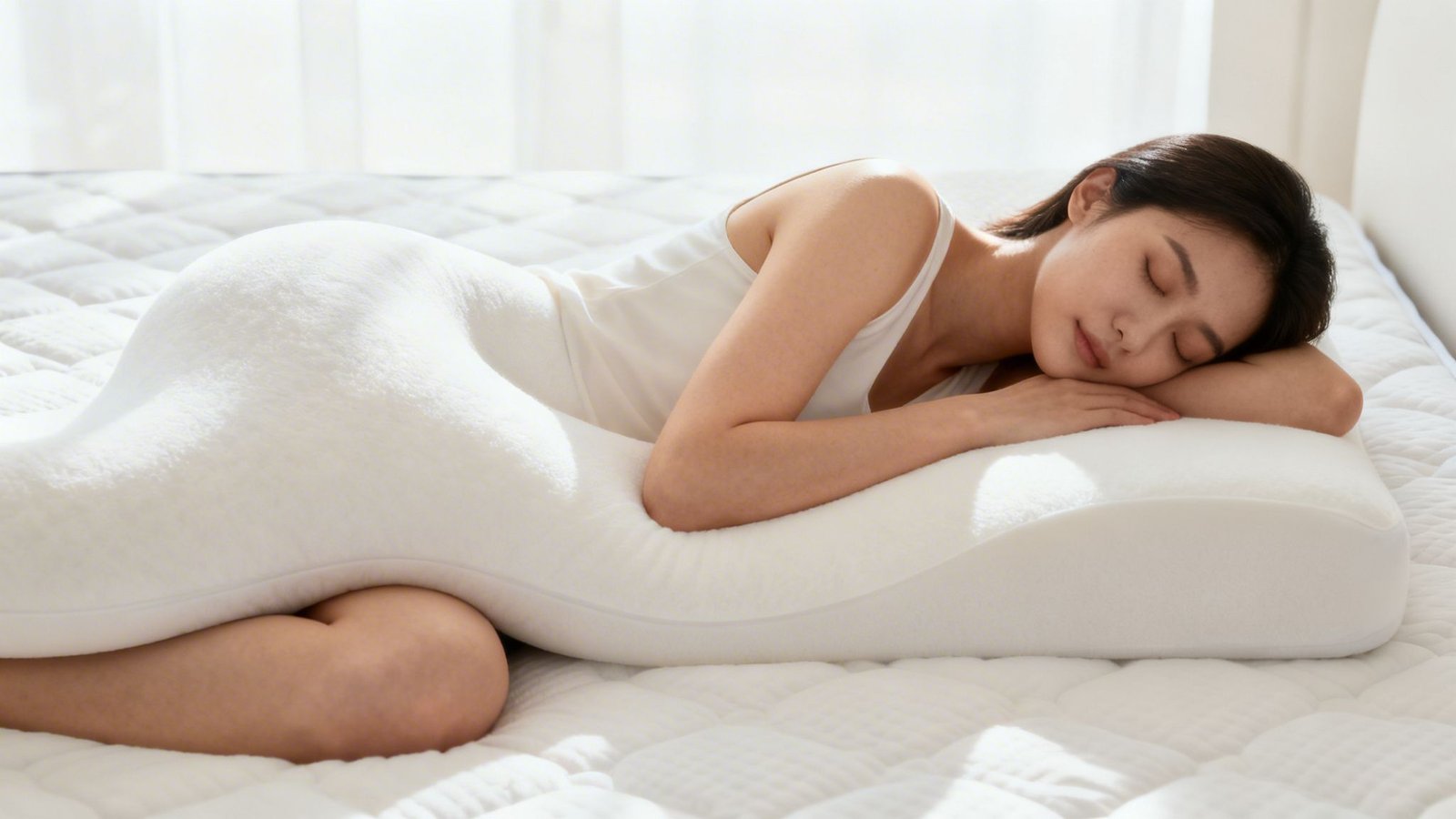
Your pressure points decide the whole experience
Side sleeping concentrates force at the shoulder and hip. The waist usually needs support at the same time, or the spine bows downward. In real testing, that balance matters more than any cooling label on the box.
The topper has to cushion the sharp pressure points without letting the heavier parts of the body sink too far. That is the hard part. In Florida-style humidity, deeper sink also tends to mean more trapped warmth around the exact spots pressing hardest into the bed.
Research on side-sleeper ergonomics from the Sleep Doctor notes that side sleepers generally need enough contouring to reduce pressure at the shoulders and hips while keeping the spine aligned, which is why softness alone is not the target (Sleep Doctor’s guide to sleeping positions).
Thickness changes how a topper performs
Thickness is where a lot of shoppers get fooled.
A thicker topper can take the edge off a hard mattress and protect a sensitive shoulder better. It can also hold more heat if the material is dense and slow to release moisture. A thinner topper often feels less swampy, but it may not add enough cushioning to stop pressure pain, especially for curvier side sleepers or anyone on a firm mattress.
Material changes that trade-off. Soft memory foam can relieve pressure well, but once your shoulder and hip settle in, the body impression can sleep warmer. Latex usually feels springier and easier to move on, which helps both airflow and repositioning, but some side sleepers find it less forgiving than plush foam.
Real pressure relief beats showroom softness
I do not judge a topper by the first five minutes. Side sleepers need support that still feels good after the shoulder has been parked in one spot for hours.
Analysts at the Sleep Doctor point out that pressure relief and spinal alignment are the two core fit issues for side sleepers, and toppers can help by adding surface cushioning when the mattress underneath is too firm (Sleep Doctor’s mattress topper guide). That matches what happens in practice. The best models spread pressure without creating a deep heat pocket around the torso and hips.
Controlled contouring is the goal. Too flat hurts. Too plush can sleep hotter and let the midsection sag.
The checklist I’d use before buying
Before buying a cooling topper for side sleeping, I would check these five things first:
- Shoulder relief: The surface needs enough give to reduce pressure instead of forcing the shoulder to jam into the mattress below.
- Hip and waist support: Good contouring should keep the spine straighter, not let the middle of the body collapse.
- Heat behavior under compression: Ask how the topper performs once your weight is settled into it, not just whether the cover feels cool on contact.
- Humidity handling: Breathable covers and more open materials matter more in sticky climates than flashy gel or mineral infusions.
- Ease of movement: If turning over takes effort, many hot sleepers end up feeling warmer through the night.
A quick visual on sleep posture and support helps here:
In summary, side sleepers should screen toppers for pressure relief, alignment, and heat management together. In humid climates, that combination matters more than any short-lived cool-touch effect.
The Best Cooling Mattress Toppers for Side Sleepers in 2026
You wake up on your side at 3 a.m., one shoulder numb, lower back slightly twisted, and the space around your torso feels swampy. That is the true test for a cooling topper in Florida-style humidity. A cover that feels cold for ten minutes does not matter much if the material traps heat once your hip and shoulder sink in.
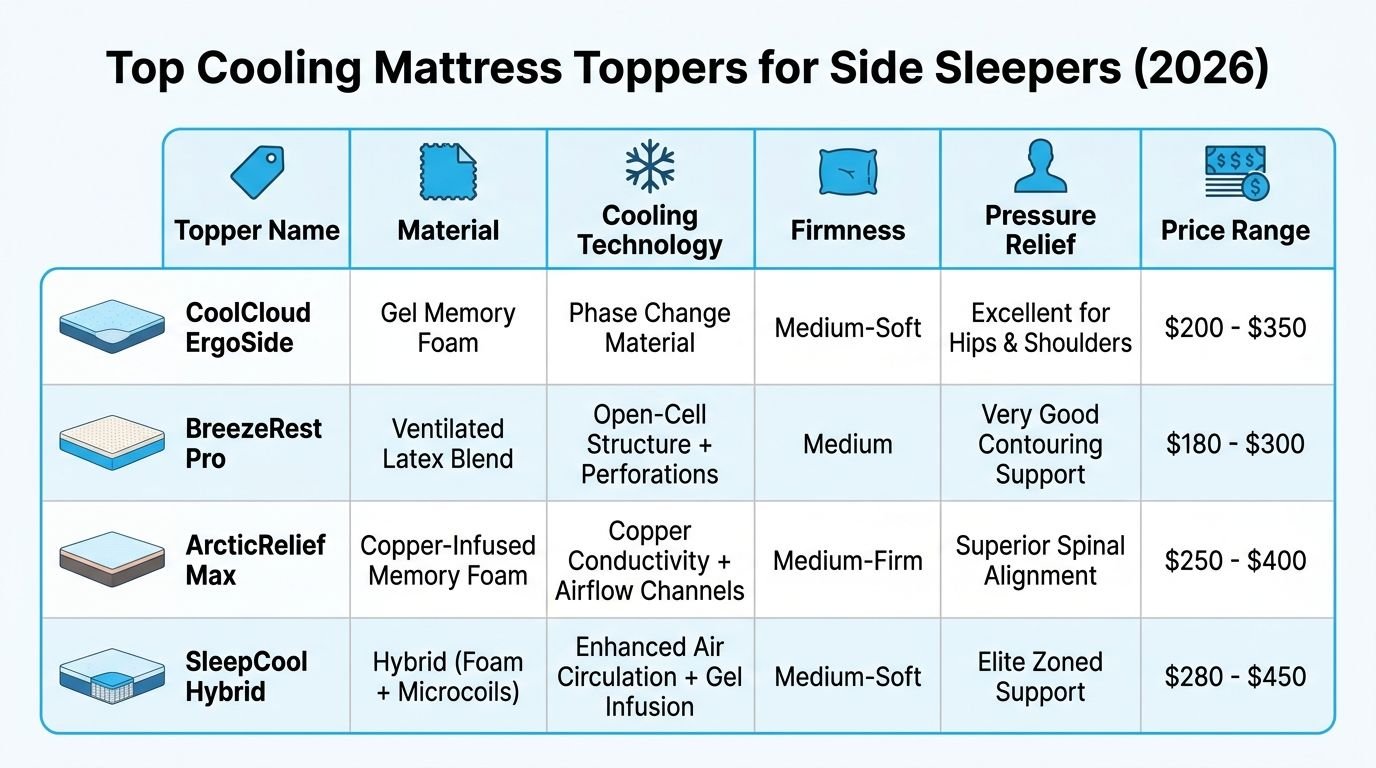
2026 Cooling Topper Comparison for Side Sleepers
| Topper Model | Primary Material | Thickness | Firmness (1-10) | Best For |
|---|---|---|---|---|
| ViscoSoft Active Cooling Copper Topper | Copper-infused memory foam with gel-infused foam layers | 4-inch | 5.5/10 | Side sleepers who want deeper cushioning and balanced support |
| Nolah AirFoam Luxe Mattress Topper | Proprietary AirFoam | 2-inch | 4/10 | Side sleepers who want plusher contouring and lighter-profile comfort |
| Brooklyn Bedding CopperFlex 201 Talalay Latex Topper | Ventilated Talalay latex with organic cotton cover | 2 to 3-inch recommended | Not listed on a 1-10 scale in the source | Hot sleepers who want airflow, bounce, and easier movement |
| No fourth evidence-backed pick with complete verified performance data | Qualitative gap in current data | Varies | Varies | Use caution with products that lean on generic cooling claims |
Best overall for side sleepers who run hot
ViscoSoft Active Cooling Copper Topper stands out if you need real pressure relief without turning the bed into a heat trap. For side sleepers, that balance matters more than any surface-cooling claim because most of your body heat collects where the shoulder, ribs, and hips stay compressed for hours.
ViscoSoft says this topper uses a 4-inch design with copper-infused and gel-infused foam layers plus a medium-firm feel intended to cushion joints without collapsing. You can review the construction details on the brand’s ViscoSoft Active Cooling Copper Topper product page.
In practice, the extra thickness helps if your mattress is too firm and your shoulder is taking a beating. I would put this in the sweet spot for side sleepers who need more than a cosmetic comfort fix. The trade-off is heat risk. Four inches of foam can still sleep warm in a humid room if your mattress underneath already lets you sink too far.
Best plush foam option for lighter side sleepers
Nolah AirFoam Luxe Mattress Topper is the better choice for side sleepers who want pressure relief with less bulk. That lower profile matters if you want some contouring at the shoulder and hip but do not want to climb out of a thick foam stack every time you turn over.
Nolah describes the topper as a 2-inch AirFoam design with a plush feel aimed at pressure relief and less heat buildup than traditional memory foam. The construction and firmness details are listed on Nolah’s AirFoam Luxe Mattress Topper page.
This one makes the most sense for lighter side sleepers, people with sharper shoulder pressure, and anyone whose mattress is mostly decent but too firm at the surface. The limitation is straightforward. If your mattress has deep sagging or feels hard enough to aggravate both hip and shoulder pain, 2 inches may not be enough correction.
Best airflow pick for sweaty sleepers in humid bedrooms
If your bedroom feels sticky for half the year, Brooklyn Bedding CopperFlex 201 Talalay Latex Topper is the one I would look at first. Latex usually handles humid heat better than memory foam because it does not wrap around the body the same way, and side sleepers who change position during the night usually notice the easier movement right away.
Brooklyn Bedding lists this topper with Talalay latex construction and a cotton cover, which is a strong setup for airflow and moisture handling compared with dense foam builds. If you are also weighing whether a topper is enough or whether the whole bed needs to change, a guide to choosing a cooling mattress for hot sleepers helps clarify that decision.
The feel is different. You get more lift, more bounce, and less of that slow sink around the ribs and hips. For sweaty side sleepers in humid climates, that is often a better trade than chasing a plusher foam that feels cooler at first touch but sleeps warmer by 2 a.m.
A significant gap buyers should know about
This category still has a testing problem. There is not enough clean, side-by-side data showing how topper materials perform for side sleepers across different body weights, room conditions, and humidity levels.
That is why I would treat bold cooling claims carefully, especially for foam models. Marketing usually focuses on gel, copper, or phase-change covers. Actual overnight comfort depends more on how the topper behaves once your shoulder and hip are fully settled into it. For my money, the practical order is clear. Choose ViscoSoft if you need the strongest mix of cushioning and support, Nolah if you want a softer low-profile foam feel, and Brooklyn Bedding CopperFlex if airflow and moisture control matter most.
What I would skip
I would skip any topper that sells the fantasy more than the build. Terms like “ice fabric,” “Arctic tech,” and “advanced gel” tell you very little unless the brand also explains thickness, density, cover material, and how the topper is supposed to release heat under body weight.
For side sleepers, that missing detail is a problem. Pressure relief and cooling have to work together. If the product page is vague about both, I would move on.
Choosing Your Ideal Topper by Budget and Sleep Style
The best pick depends on what is failing in your bed right now. Some people need rescue from shoulder pressure. Some need airflow above all else. Some need both, but cannot justify overspending.
If you are comparing broader sleep-surface options too, this guide to a cooling mattress can help you decide whether the topper route is enough or whether the mattress underneath is the primary issue.
If your shoulder hurts more than you sweat
Go softer and more contouring. The Nolah AirFoam Luxe makes the most sense when pressure relief is the first priority and your mattress is not wildly unsupportive underneath.
This profile usually fits:
- Lighter side sleepers
- People with sharper shoulder pressure
- Anyone who wants less height added to the bed
If you wake up damp and restless
Go more breathable. The Brooklyn Bedding CopperFlex 201 Talalay Latex Topper is the smarter move when trapped heat and moisture are the main problem.
This type of sleeper usually benefits from:
- More airflow through the topper
- Easier movement at night
- Less of that wrapped-in-foam sensation
If your mattress is too firm and your body feels beat up
The ViscoSoft Active Cooling Copper Topper is the stronger choice when your mattress feels hard and unforgiving. Its thicker build gives you more room to buffer pressure points.
That makes it especially useful for:
- Side sleepers on firm mattresses
- People who want a more substantial comfort change
- Shoppers trying to delay replacing a mattress that is still structurally sound
For couples with different temperature preferences
Look for balance, not extremes. A very plush foam topper can make the hot sleeper happier but frustrate the partner who wants easier movement. Latex often lands in the middle because it does not feel as insulating or as sink-heavy.
For budget-conscious buyers
Value is not about the cheapest sticker price. It is about avoiding the wrong material for your problem.
A cheap foam topper that sleeps warm is wasted money if overheating is what wakes you up. A pricier topper with breathable construction can be the better buy if it changes your nights.
Maximize the Lifespan and Cooling Power of Your Topper
A cooling topper can lose a lot of its value through bad setup and lazy upkeep. I see this constantly. People buy a breathable topper, then wrap it in a heat-trapping protector, pile on heavy sheets, and wonder why the bed still feels swampy.
Start with the layer above the topper
The fastest way to kill cooling performance is to cover the topper with something non-breathable. Thick, plasticky protectors can trap heat and moisture right where your body meets the bed.
Use a breathable protector if you need spill protection. If sweat is the issue, breathable sheets matter too. Crisp, airy fabrics generally outperform heavy, slick-feeling sets that hold dampness.
Keep airflow paths open
Latex and perforated foam rely on airflow. Once dust, skin debris, and body oils build up, performance can slide.
A simple routine helps:
- Vacuum the surface lightly: Especially on latex toppers with airflow channels.
- Wash the removable cover as directed: Follow the label, not internet folklore.
- Spot-clean foam carefully: Do not soak it.
- Let the topper air out: A dry room and moving air help.
Rotate before body impressions settle in
If you always sleep in the same spot, the topper can start forming a preferred shape. That does not just affect comfort. It can also change how air moves around your torso and hips.
A practical habit:
- Rotate the topper on a regular schedule.
- Check whether the shoulder zone is compressing more than the rest.
- Reassess if your mattress underneath has started sagging.
Practical tip: If a topper suddenly “stops cooling,” check the protector, sheets, and mattress support before blaming the topper itself.
Know what maintenance cannot fix
No cleaning routine will turn a dense heat-trapping topper into a breathable one. No rotation pattern will fix a mattress that has already lost support underneath. Maintenance protects performance. It does not create it.
If your topper starts sleeping hotter over time, ask:
- Did the cover get swapped for a less breathable one?
- Did your room humidity change?
- Is the mattress underneath retaining more heat than before?
- Has the topper developed soft spots under the shoulder and hip?
That checklist saves a lot of frustration.
Frequently Asked Questions from Hot Side Sleepers
Can a cooling topper help with menopausal night sweats
Yes, but the best results usually come from toppers that handle moisture and airflow, not just surface chill. A topper with a breathable structure and a cover that does not hold dampness tends to feel more stable through the night.
That is one reason latex-and-cotton combinations stand out for sweaty sleepers. Foam can still work, especially if pressure relief is your bigger problem, but the cover and sheet setup matter a lot more when night sweats enter the picture.
What works for couples when one partner sleeps hot and the other sleeps cold
Avoid the most extreme-feeling products. A topper that feels aggressively cool at the surface can annoy the colder partner, while a dense plush foam can frustrate the hot sleeper.
The better compromise is usually a topper with neutral temperature regulation and solid pressure relief. Latex often works well here because it does not feel as icy, but it also does not trap as much heat. For more bedroom-wide tactics, this guide on how to stay cool at night covers the bigger picture beyond toppers.
Will a topper fix an old sagging mattress
Not really. A topper can improve comfort. It cannot rebuild a broken support core.
If the mattress is sagging, a topper usually follows the sag. You may get a softer feel, but not better alignment. For side sleepers, that often means temporary shoulder relief paired with worse hip and back positioning.
Is thicker always better for side sleepers
No. Thicker can mean better pressure relief, but it can also mean more heat retention and too much sink. The right thickness depends on the firmness and condition of the mattress below it.
If your mattress is very firm, more thickness can help. If your mattress already has a deep cradle, adding a tall foam topper can push you into a warmer, less stable setup.
Should hot side sleepers choose latex or foam
Choose based on your main problem.
Latex usually makes more sense if:
- Heat and humidity are your biggest complaints
- You move around a lot
- You dislike the stuck feeling of foam
Foam usually makes more sense if:
- Sharp shoulder and hip pressure are the main issue
- Your mattress feels too hard
- You prefer a more body-hugging feel
What is the safest way to shop this category
Ignore hype and focus on material behavior. Look at thickness, firmness, cover fabric, and whether the topper is trying to solve heat through airflow or just through a cool-touch story.
For side sleepers, I would always ask two questions before buying:
- Will this reduce pressure at the shoulder and hip?
- Will it still breathe once my body has been on it for hours?
If the answer to either is unclear, keep looking.
CoolRestGuide helps hot sleepers cut through the nonsense and find cooling sleep products that hold up in real heat and humidity. If you want more no-BS reviews, practical comparisons, and buying advice built for sweaty Florida nights, visit CoolRestGuide.
