

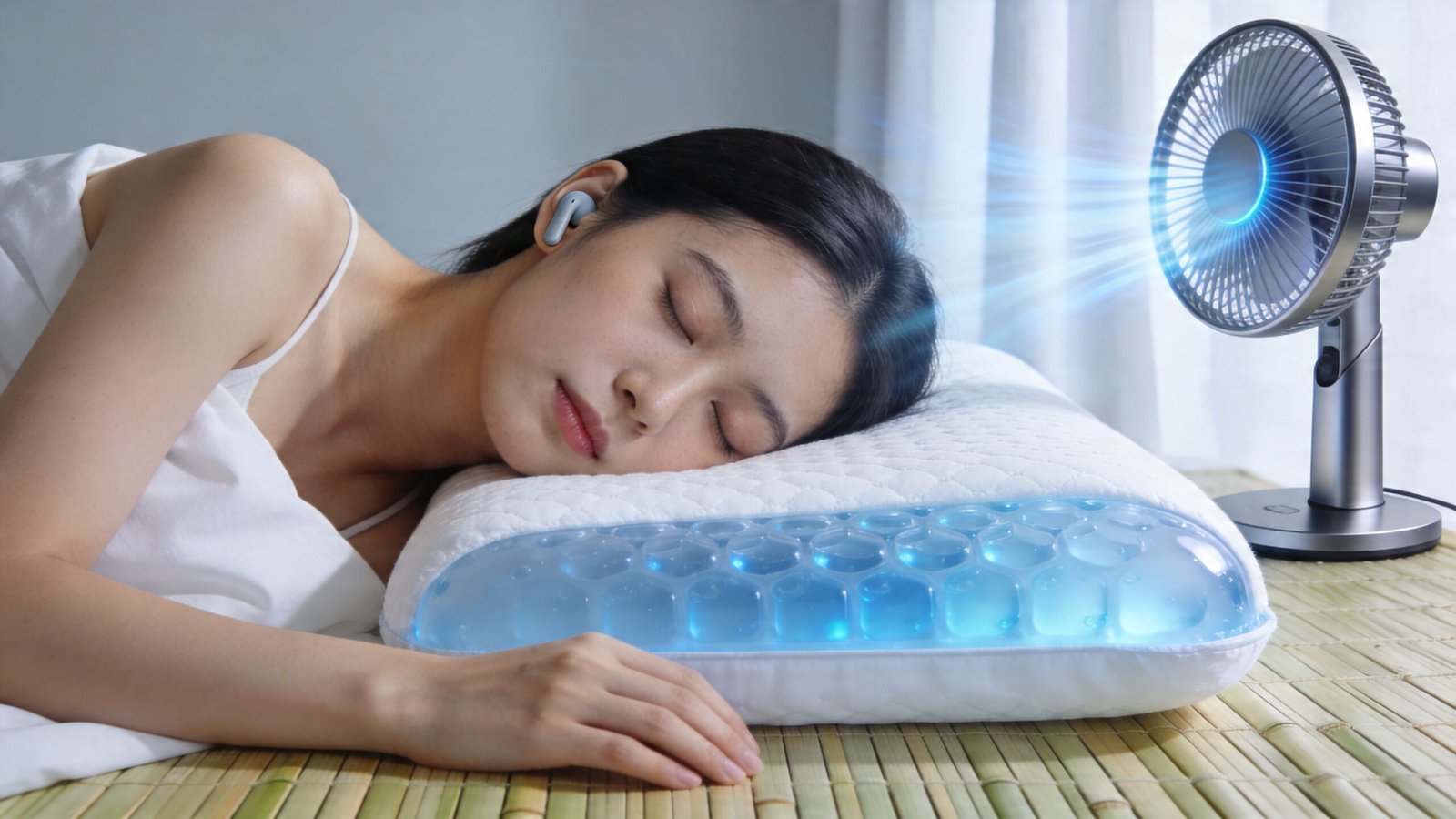
Tired of staring at the ceiling, feeling like your headphones are actually tiny earmuffs designed for a sauna? If you're a hot sleeper, you know the struggle. You're just trying to find headphones to sleep in that block out the world without causing you to overheat. You are definitely not alone.
Why Finding Cool Headphones to Sleep Is So Hard
It’s a frustratingly common problem. You need to drown out a snoring partner, city noise, or even the hum of your own AC unit. But your go-to headphones, the ones you love for music or podcasts, quickly become a one-way ticket to waking up in a pool of sweat. They form a tight seal around your ears, trapping all that body heat and moisture right where you don't want it.
Think of it like wearing a wool beanie to bed on a warm summer night. Sure, it might serve a purpose, but the discomfort is just not worth it. This is where most audio gear completely misses the mark for sleep. Traditional headphones are built for listening while you're awake and upright, not for all-night comfort—and certainly not for anyone who already runs hot. You can learn more about why this matters in our guide on how your body temperature when sleeping naturally drops.
This shared frustration has kicked off a huge demand for something better.
The global market for sleep headphones was valued at USD 2.28 billion in 2025 and is expected to surge to USD 5.38 billion by 2033. A big driver for this is the fact that nearly 30% of the world's population deals with some form of sleep disorder.
People are overwhelmingly looking for wireless, barely-there options. In fact, earbuds alone captured a massive 67.1% revenue share in 2025, with hot sleepers and side sleepers leading the charge. You can dig into more of this data in the full industry report.
Thankfully, manufacturers have heard the call. They're now engineering headphones to sleep with a completely different set of priorities, focusing on features that matter for hot sleepers:
- Cool-to-the-touch, breathable materials that help manage sweat instead of trapping it.
- Minimal, low-profile designs that won’t dig into your head when you’re sleeping on your side.
- Smart sound-masking technology that’s designed to block nighttime disturbances without needing bulky, heat-trapping cups.
The good news? Your search for a cool and quiet night is finally over. This guide will walk you through everything you need to find the right pair, so you can get the restorative sleep you've been dreaming of.
Choosing the Right Type of Sleep Headphones
Picking the right headphones for sleep isn't a one-size-fits-all deal. It's a delicate balance, especially when you're trying to stay cool. Think of it like buying a jacket—what you need for a mild autumn day is completely different from what you'd wear in a blizzard. Your sleep environment demands the same careful consideration.
For anyone who tends to overheat at night, understanding the three main types of sleep headphones is your first step. Each has its own set of trade-offs when it comes to comfort, sound, and, most importantly, staying cool.
Sleep Headphone Types for Hot Sleepers
To make sense of the options, let's break them down. This table gives you a quick snapshot of how each type stacks up, specifically for those of us who can't stand being hot at night.
| Headphone Type | Best For | Cooling Potential | Key Drawback for Hot Sleepers |
|---|---|---|---|
| Soft Headband | Side sleepers who want total comfort without pressure points. | Low to Medium | The fabric can trap a surprising amount of heat and sweat. |
| In-Ear Earbuds | Maximum cooling and a minimalist feel. | High | Some people find the in-ear sensation uncomfortable for long periods. |
| Over-Ear Headphones | Excellent sound isolation in very cold rooms. | Very Low | They create a seal that acts like an incubator for your ears. |
Now that you've got the big picture, let's dive into the details of what makes each of these options work—or not work—for a comfortable night's sleep.
Soft Headband Headphones
At first glance, soft headband headphones look like the perfect solution. They have ultra-flat speakers tucked inside a soft fabric band, kind of like a high-tech sweatband. For side sleepers, this is a game-changer. No more waking up with an earache from a hard plastic earbud digging into your cartilage.
But here’s the catch for hot sleepers: that cozy fabric can become your own personal head-blanket. If the material isn't right, it will trap heat and moisture, leaving you feeling sticky and gross. To avoid this, seek out headbands made from performance fabrics like bamboo or athletic mesh, which are designed to breathe and wick moisture away.
In-Ear Sleep Earbuds
If your number one priority is staying cool, in-ear sleep earbuds are your best bet. It’s simple physics, really.
These tiny buds are designed to sit inside your ear canal with very little contact with your outer ear. This minimalist approach leaves most of your head and ears exposed to the air, which is exactly what you need to prevent heat from building up.
The best ones are made from soft, pliable silicone and have a low-profile design so they don’t feel like a foreign object when you lay on your side. Their small size makes them the most discreet and often the coolest option out there. For more gear designed to keep you from overheating, you can explore our guide to other cool sleep tech.
This is a big reason why headphones designed specifically for sleep are a much better choice than just using the ones you wear to the gym.
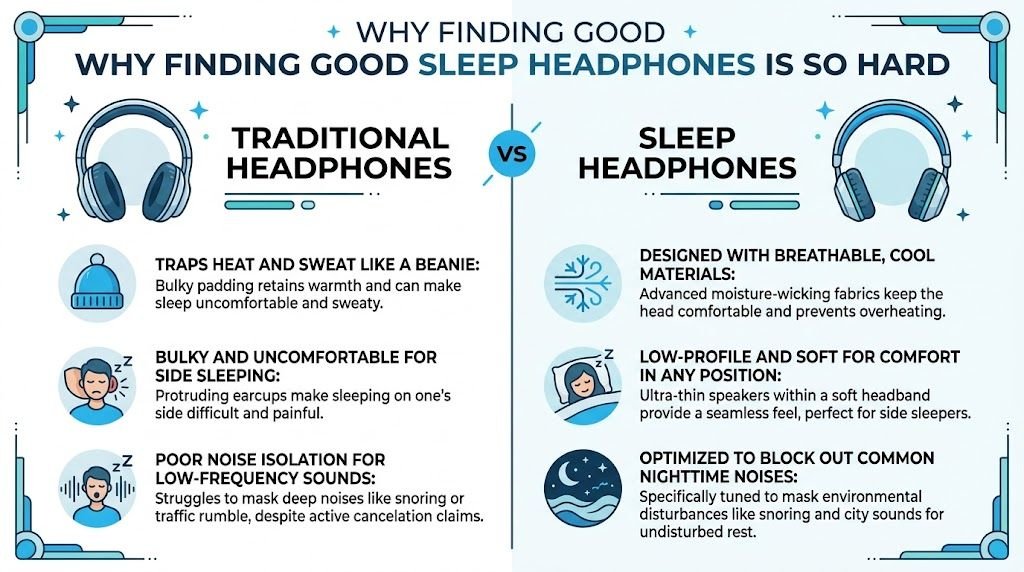
As you can see, purpose-built sleep headphones tackle the unique problems of trying to get comfortable at night, from breathability to how they feel when you’re on your side.
Over-Ear Headphones
Let me be blunt: for a hot sleeper, over-ear headphones are almost always a terrible idea. While they're fantastic for immersive sound, they create a perfect seal around your entire ear.
This design is incredibly efficient at trapping heat and sweat. You're basically wearing earmuffs to bed—a surefire way to wake up feeling uncomfortable and clammy.
Unless you sleep in a room that feels like a walk-in freezer and you don’t move an inch all night, just steer clear. They're simply too bulky and trap way too much heat to be a practical choice for a restful night.
Unlocking Deeper Sleep by Blocking Out Noise
Ever notice how even the smallest sounds can jolt you awake? A car door slamming, a distant siren, or your partner's snoring can feel like a personal attack on your rest. That’s because even when you’re fast asleep, a part of your brain stays on high alert, listening for potential threats. This is where headphones to sleep can be an absolute game-changer.
Their real magic isn't just about playing calming music or podcasts. It’s about creating a predictable, consistent bubble of sound around you. This is a technique called sound masking. Think of it like this: a steady stream of white noise, rain sounds, or a gentle hum lays down a "blanket" of sound that covers up those sudden, jarring noises that would otherwise send your brain into panic mode.
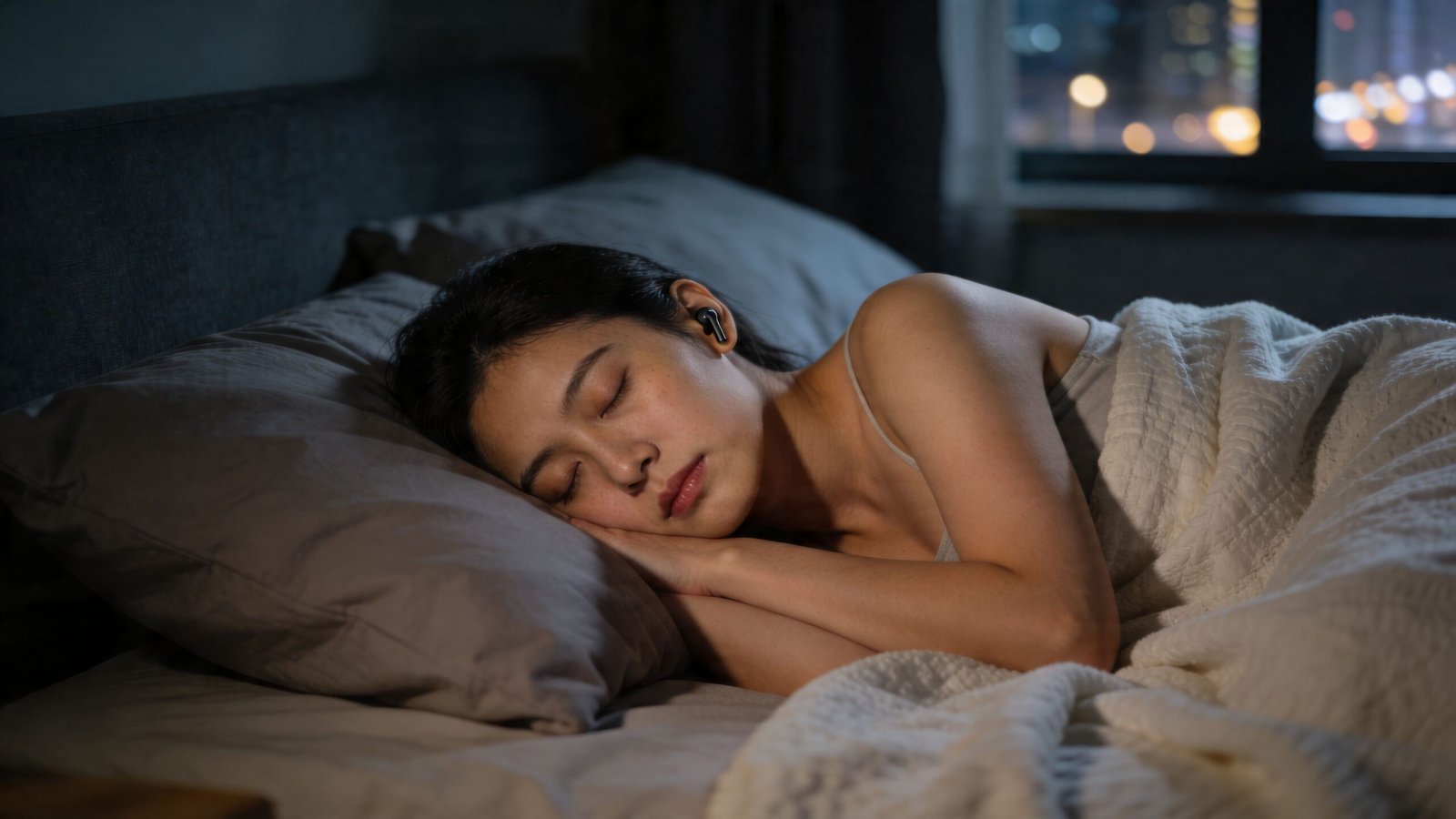
Instead of being startled out of deep sleep by every little bump in the night, your brain learns to ignore them, allowing you to stay in those deeper, more restorative stages of slumber.
The Science Behind Quieter Nights
The impact of blocking out these little disturbances is huge, and it’s something researchers have seen time and again. Giving your brain a quiet, stable environment to work in helps it move through the crucial stages of sleep without interruption.
This is especially true for those of us who run hot at night. When you're already wrestling with night sweats or just feeling too warm, the last thing you need is another reason to wake up. By minimizing noise-based disruptions, sound masking gives your body a better shot at regulating its temperature and getting the recovery it needs.
A 2022 study on healthcare workers, for instance, showed just how powerful this effect can be. When they wore noise-canceling earbuds to bed, their self-reported sleep quality shot up by 0.5 points. Even better, their feelings of daytime sleepiness and tension both dropped by 0.6 points. It's a clear demonstration of how effective headphones to sleep can be against common sleep disruptors. You can dig into the specifics of this study on the benefits of sleeping with earbuds if you're curious.
The goal is simple: a quieter environment leads to more consistent sleep. More consistent sleep means more time spent in deep and REM stages, which are essential for both mental clarity and physical recovery.
How Consistent Sound Impacts Your Health
Creating this personal sound shield does more than just make your nights feel more peaceful—it has a direct and positive effect on your health and how you feel the next day. It’s a genuine investment in your well-being.
- For Athletes: Deep, uninterrupted sleep is when muscle repair and physical recovery go into overdrive. Blocking out noise ensures this vital process isn’t cut short, which can directly translate to better performance.
- For Professionals: Nothing beats a full night's rest for sharpening your focus, boosting memory, and enhancing your problem-solving skills. You’ll feel less groggy and more on top of your game.
- For Hot Sleepers: When you aren't being jolted awake by sounds, your body has a better chance to cool down and stay asleep. This helps break that frustrating cycle of overheating, restlessness, and exhaustion.
At the end of the day, using sleep headphones is about taking back control of your sleep environment. By putting a stop to random interruptions, you're not just getting more hours of sleep—you're getting higher-quality rest that truly recharges you for the day ahead.
The Non-Negotiable Features for Hot Sleepers
Trying to find the right sleep headphones can be a real headache, especially when you run hot. But if you know what to look for, you can easily filter out the duds. I’ve learned from experience that a few key features separate the truly great sleep headphones from the ones that leave you in a sweaty, tangled mess.
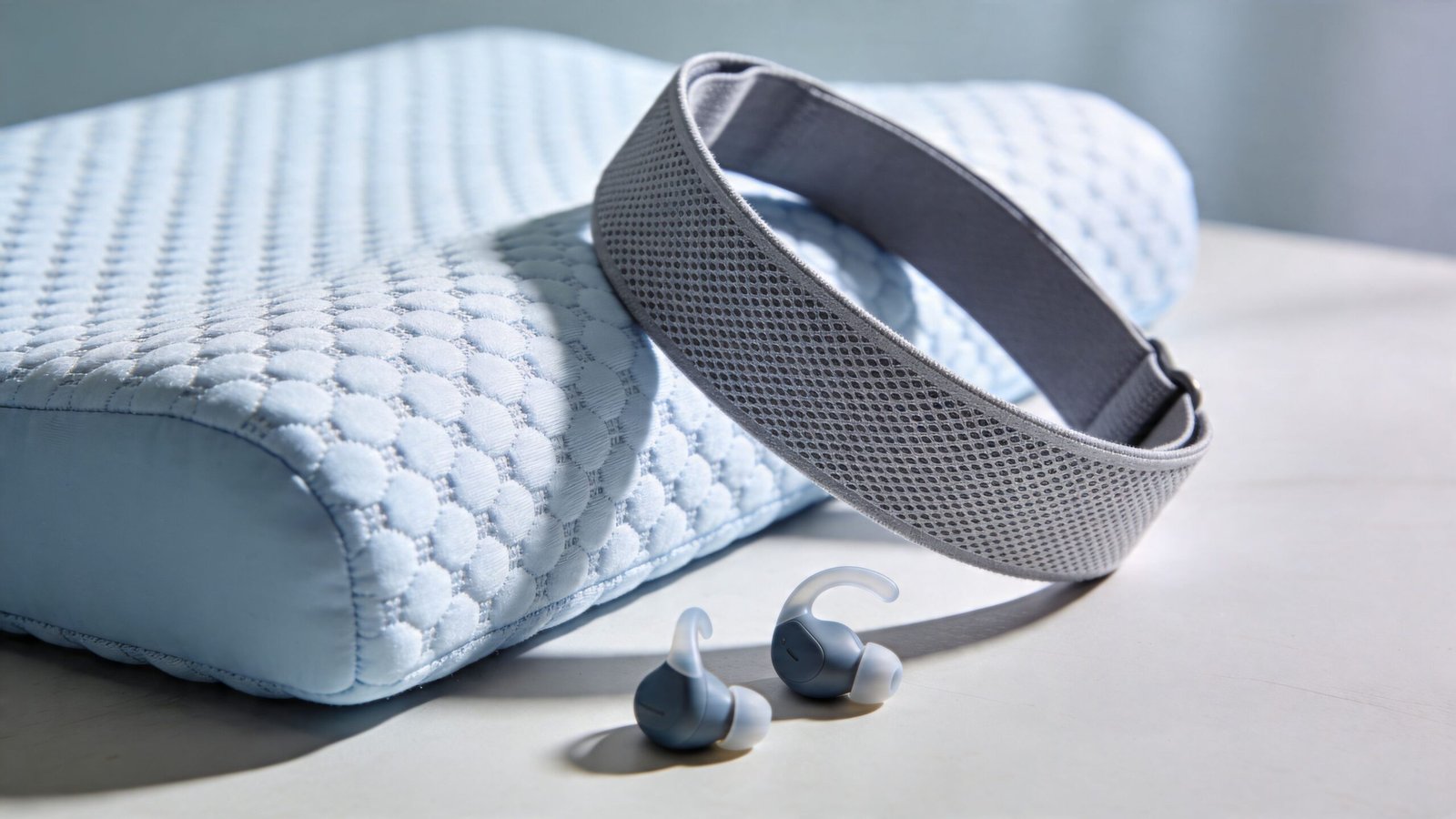
Think of this as your must-have checklist. Before you even consider a pair, make sure it hits these four critical marks. For a hot sleeper, these aren't just nice-to-haves; they're essential for a cool and comfortable night.
Breathable Materials Make All the Difference
First things first: the material. If the fabric or plastic feels stuffy, it’s going to trap heat against your head, and that’s a deal-breaker. Look for materials that act like performance sportswear—they need to breathe and manage moisture.
For Headbands: Steer clear of cozy fleece or thick cotton. Your best bet is lightweight, airy fabrics like bamboo, lycra, or a good athletic mesh. These materials are specifically designed to pull sweat away from your skin and let air flow freely.
For Earbuds: The contact points matter more than you think. Top-tier sleep earbuds use soft, medical-grade silicone for their tips and stabilizing wings. It's hypoallergenic, gentle on your skin, and doesn’t insulate heat the way cheap plastics and foams can.
A great pair of headphones is even better when you pair it with other cooling gear. A cooling pillow can work with your headphones to create the ultimate cool-sleep setup.
A Low-Profile Fit for Any Sleeping Position
If you’re a side sleeper, this one's for you. Anything bulky will press into your ear and skull, creating painful pressure points that are guaranteed to wake you up. A low-profile design isn't just about comfort; it's also about reducing heat buildup.
The goal is to find headphones so slim that you barely notice them. They should lie almost completely flat against your head, letting you toss and turn without feeling them dig into your ear or pillow. This minimal contact also means less surface area is available to trap your body heat.
Battery Life That Lasts the Whole Night
Few things are more jarring than your white noise track cutting out at 3 a.m., followed by a shrill "low battery" alert. Reliable, long-lasting battery life isn’t a premium feature; it's a fundamental requirement.
Look for a bare minimum of 10 hours of playback time on a full charge. This gives you a buffer for longer nights and ensures your audio companion won't bail on you before your alarm goes off. Anything less just isn’t worth the risk of interrupted sleep.
The Right Kind of Quiet
Finally, think about how the headphones block out the world. You’ll see two main technologies on the market: sound masking and active noise cancellation (ANC). For sleep, one is usually a much better fit.
Sound masking works by playing a gentle, consistent sound (like white noise or nature sounds) to cover up jarring external noises. It’s effective, simple, and creates a soothing audio blanket.
Active noise cancellation (ANC), on the other hand, uses tiny microphones to listen for ambient sound and then creates an opposite sound wave to digitally cancel it out. While impressive, some people find that ANC creates a weird "eardrum suck" or pressure sensation that feels unnatural and distracting when you're trying to wind down. For all-night use, sound masking is almost always the more comfortable and relaxing choice.
How to Use Sleep Headphones Safely
While drifting off to your favorite podcast or soundscape can be a game-changer for your sleep, wearing electronics all night long means you have to be smart about it. Getting a good night's rest is the goal, but doing it safely is just as important.
The most obvious concern is your hearing. The fix is simple, but you have to be disciplined: keep the volume low. Think about it—blasting sound directly into your ears for eight hours straight, night after night, is bound to cause strain. Over time, that can lead to permanent damage.
As a simple rule of thumb, keep the volume at or below 50% of the maximum. If the person sleeping next to you can make out what you're listening to, it's definitely too loud.
This isn't just friendly advice. Studies on listening habits have shown a clear link between high volume and hearing damage. For instance, some research shows that 10% of adolescents listen at risky levels of 90-100 dB for long stretches, including while they sleep. You can dive deeper into how to protect your hearing while using headphones with insights from The Hearing Institute.
Stay Aware of Your Surroundings
Blocking out a snoring partner is one thing, but you don't want to be so cocooned in sound that you miss something important. You still need to be able to hear a smoke alarm, a security alert, or a child calling for you in the middle of the night.
This is where features like "transparency" or "ambient" mode, common in many modern sleep earbuds, come in handy. These modes use tiny, outward-facing microphones to let critical sounds pass through, so you get the peace you want without being completely cut off. If your headphones don't have this feature, just make sure the volume is low enough that a loud, sudden noise could still grab your attention.
Prioritize Ear Health and Hygiene
Let's be honest: wearing anything in or on your ears all night can get a little grimy. Warmth and moisture can get trapped, especially if you’re a hot sleeper who sweats.
This creates the perfect environment for bacteria to thrive, which can lead to skin irritation or even nasty ear infections. A little bit of upkeep goes a long way in preventing this.
- Clean Them Regularly: At least once a week, wipe down your earbuds or the fabric of your headband. Always use a gentle, manufacturer-approved cleaner.
- Do a Quick Check: Before you pop them in or on, give them a quick once-over to make sure there’s no debris or earwax buildup.
- Let Things Breathe: If you're using a headband, a breathable fabric is non-negotiable. It makes a huge difference in cutting down on moisture.
Following these simple habits will help you enjoy all the benefits of quiet, restful sleep without any unwelcome surprises.
Alright, let's tie this all together. We’ve gone through the nitty-gritty of materials, fit, and tech. Now it’s time to help you find your perfect pair of headphones to sleep in, especially if you run hot.
Choosing the right pair is all about knowing what you truly need. Let’s cut to the chase.
If your absolute top priority is staying cool—no matter what—then in-ear sleep earbuds are your best bet. Their tiny footprint leaves the most skin exposed, allowing for maximum airflow right where it counts. For the hottest of sleepers, this is often the winning choice.
But what if you just can't stand having anything in your ears? In that case, a soft headband made from performance fabrics is the next best thing. Look for materials like bamboo or athletic mesh. These are engineered to breathe and pull moisture away from your skin, giving you a great middle ground between comfort and staying cool.
Create a Complete Cooling Sleep System
To really win the war against night sweats, you need to think bigger than just your headphones. Think of it as creating a complete "cooling sleep system." When you pair your new sleep headphones with other temperature-regulating gear, the effect is so much more powerful.
A great pair of headphones to sleep in is often the final piece of the puzzle. When you combine them with a cooling pillow, breathable sheets, and maybe a temperature-regulating mattress topper, you're not just blocking out noise. You're building a personal sleep sanctuary where your body can finally stay comfortable all night long.
This layered strategy tackles the problem from all sides. It’s about creating an environment where a cool, quiet, and truly deep sleep is finally possible.
Final Tips Before You Buy
Before you click that "buy" button, a couple of last practical thoughts.
First, always check the return policy. Comfort is incredibly personal. What feels like a cloud to one person can be a nuisance to another. A decent trial period lets you test them out in your own bed, risk-free.
Second, have a plan for keeping them clean. If you sweat, regular cleaning isn't just about hygiene—it's about making your investment last. A little bit of care goes a long way. By choosing thoughtfully and maintaining your gear, you’re setting yourself up for countless nights of cool, uninterrupted rest.
Frequently Asked Questions About Sleep Headphones
It's totally normal to have questions when you're thinking about wearing headphones to bed. Let's tackle some of the most common ones we get, especially for those who struggle with overheating at night.
Can Sleeping with Headphones Every Night Damage My Ears?
It absolutely can be safe, but you have to be smart about it. There are really only two things you need to watch out for.
First, protect your hearing for the long haul by keeping the volume at or below 50%. A great rule of thumb: if the person next to you can hear what you're listening to, your volume is definitely too high.
Second is simple hygiene. Earwax and sweat can build up on any device you wear, which can become a breeding ground for bacteria. Make a habit of cleaning your sleep headphones or headband regularly to avoid any skin irritation or nasty ear infections.
Are Earbuds or a Headband Better for Hot Sleepers?
For almost every hot sleeper I've talked to, in-ear earbuds are the way to go. Because they make such minimal contact with your skin, they allow for much better airflow around your head and ears. This is a game-changer for keeping cool.
That said, if you just can't tolerate the feeling of something in your ear canal, a headband is your next-best bet. The trick is to find one made from a modern, breathable fabric like bamboo or a light athletic mesh. Stay far, far away from any headbands made of thick fleece or cotton—they're just a recipe for a sweaty night.
What Is Better for Sleep: Noise Masking or Noise Cancelling?
When it comes to sleep, noise masking is almost always the more effective and pleasant option. It works by playing a gentle, consistent sound (think white noise or rainfall) that simply covers up, or "masks," jarring sounds like a partner's snoring or a passing car. Your brain finds it incredibly soothing.
Active Noise Cancellation (ANC), on the other hand, is a tech-heavy process that uses microphones to digitally delete outside sounds. It's powerful, for sure, but some people find it creates a weird, distracting pressure sensation in their ears. ANC also burns through battery life, making noise masking the more practical and comfortable choice for getting through the entire night.
