

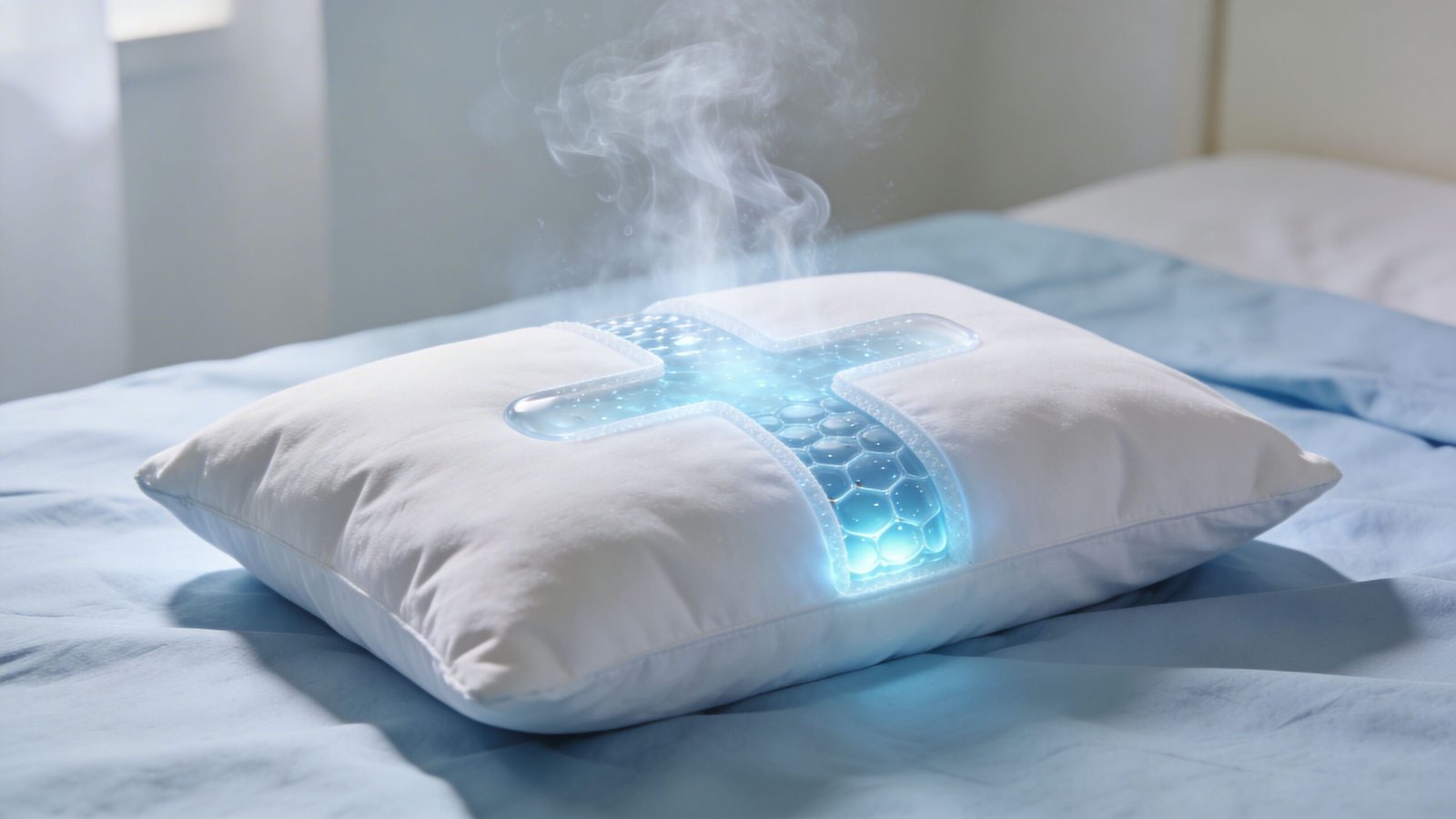
You wake up at 2:13 a.m. and do the same thing you did last night. Flip the pillow. Hunt for the cool side. Pull one leg out from under the sheet. Nudge the thermostat lower. A few minutes later, your neck is damp again and the pillow feels warm, sticky, and dead.
If you live in Florida, or anywhere else with heavy humidity, you already know the problem isn’t just heat. It’s wet heat. The air feels full, your skin never fully dries, and a pillow that felt cool when you first lay down can turn into a sweat trap by the middle of the night.
That’s why most advice about pillows that keep you cool misses the mark. Marketing leans hard on “cool-to-the-touch” fabrics, glossy gel swirls, and icy product names. Sleep depends on something less flashy. A pillow has to release heat, move air, and deal with moisture without turning swampy.
I’ve tested enough bedding in Florida to stop caring about the sales copy. I care about what happens at 1 a.m., 3 a.m., and right before sunrise when the AC is running but the room still feels sticky. Some cooling pillows help. Some feel nice for ten minutes and then fail exactly when you need them most.
The End of Sweaty Nights Starts Here
At 2 a.m., the problem usually is not your whole bed. It is the small patch under your head and neck that has turned warm, damp, and sticky.
That is why pillow advice falls apart so often in places like Florida. In high humidity, sweat does not evaporate well, so a pillow that felt pleasantly cool for the first few minutes can still trap heat and moisture for the next six hours. The result is broken sleep, a damp pillowcase, and that irritated, half-awake feeling where you keep flipping the pillow and hoping for a reset.
Night sweats make the cycle worse. Menopause, stress, medication, post-workout body heat, naturally sleeping hot, or sharing a bed with someone who prefers warmer settings can all lead to the same outcome. Moisture builds up right where your body needs airflow most.
I have tested enough bedding in Florida to stop caring about icy branding and slick packaging. A cool surface helps for a moment. What matters overnight is whether the pillow can stay breathable once the room feels sticky and your skin starts sweating.
Practical rule: If a pillow mainly promises a cold-to-the-touch cover, expect short-term relief, not lasting comfort.
That difference matters because a pillow shapes the sleep microclimate around your head more than many people realize. For readers trying to solve the bigger temperature problem, this guide to body temperature when sleeping gives helpful context on why overheating keeps interrupting sleep.
A good cooling pillow will not fix every cause of night sweats. It can still reduce the misery. The right one releases heat better, dries faster, and stays less swampy by the second half of the night. In humid climates, that is the standard that separates a helpful pillow from one that only feels cool in the first ten minutes.
How Cooling Pillows Work
Cooling pillows work by reducing heat buildup and helping moisture escape before your pillow turns clammy.
Your head and neck release heat for hours at a time. In a dry room, a pillow can get away with storing some of that warmth. In Florida-style humidity, that same pillow often falls apart because sweat does not evaporate well. The result is familiar. The surface starts comfortable, then gets sticky, warm, and irritating.
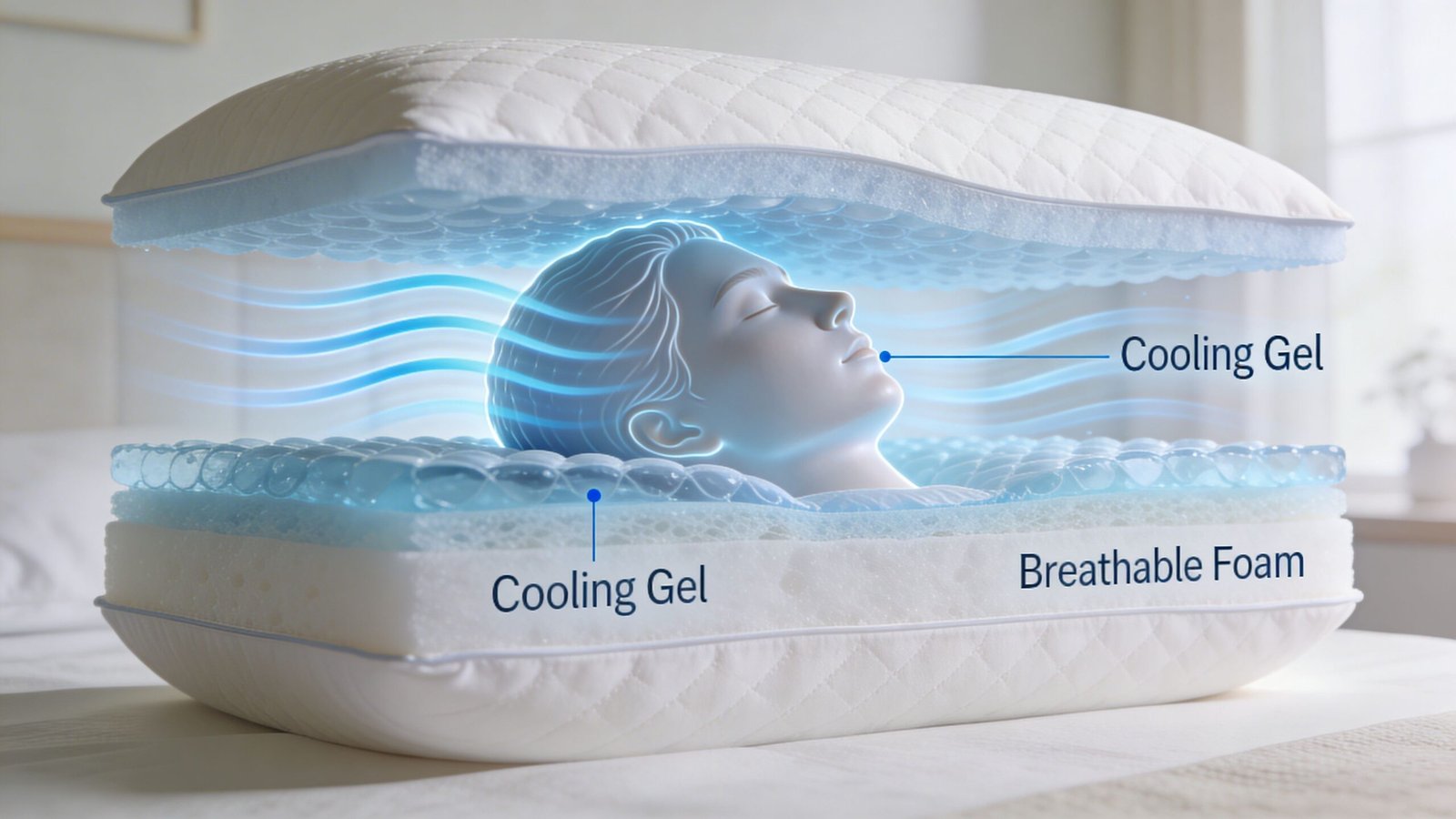
Heat transfer matters more than branding
A pillow only stays cool if it can keep moving heat away from your skin after the first few minutes of contact. Marketing terms do not change that. Construction does.
The best pillows that keep you cool usually handle three jobs at once:
- Move heat away from the skin: Some materials feel less stuffy and warm up more slowly under steady contact.
- Allow airflow through the fill: Air movement helps prevent a dense hot spot from forming under your head.
- Manage sweat without staying damp: Moisture-wicking fabrics and quicker-drying materials matter even more in humid bedrooms.
If you want the broader sleep-temperature angle, this guide on body temperature when sleeping is worth reading alongside pillow selection.
Passive cooling usually works better than gimmicky surface chill
Most cooling pillows rely on passive cooling. They use materials and internal design rather than power, fans, or refrigeration.
That usually means some mix of a breathable core, ventilated foam or fiber fill, moisture-managing fabric, and a shape that does not compress into a solid heat-trapping slab. Some models also use phase-change materials or gel layers to create a cooler first touch. Those features can help, but they are not enough on their own. If the center of the pillow holds heat and humidity, the cool cover stops mattering pretty quickly.
Airflow is where many pillows win or lose
Many brands bury this part in the fine print. A cooling cover can sit on top of a core that barely breathes.
Open structures tend to perform better because they leave room for heat and moisture to move instead of collecting under your scalp and neck. In real use, that usually shows up as a pillow that feels less muggy after an hour, not just cooler when you first lie down. According to the Evercool product information, silicone sponge cores with over 5 million micro-pores enable continuous airflow that filters heat and moisture away, which is especially useful in humid climates where traditional foam tends to feel muggy (Evercool cooling pillow details).
The pillow core matters at least as much as the fabric you touch. A slick cover over a heat-trapping core is still a hot pillow.
Why a pillow can feel cool at first and still fail by 2 a.m.
The hand test is easy to pass. Sleeping on the pillow is harder.
A cool-to-the-touch fabric, gel panel, or room-temperature cover can create instant relief. Then your body settles in, humidity builds around the contact point, and its true performance shows up. If the pillow cannot keep releasing heat and drying out, it gradually turns warmer and wetter under your head.
That is why dense foams often disappoint hot sleepers in humid climates. They can feel excellent at first contact, then trap enough heat and moisture to wake you later.
Head cooling can help sleep feel less restless
Cooling the area around your head can make it easier to settle down and stay comfortable. That is the practical takeaway.
Research reviews have linked cooler head surfaces with faster sleep onset and deeper sleep stages. The useful point here is straightforward. You do not need an icy pillow. You need one that stays breathable, sheds heat steadily, and does not hold onto sweat through the second half of the night.
A Guide to Cooling Pillow Materials and Technology
Materials decide whether a pillow stays usable through the night or turns into a warm sponge. Here, the trade-offs become significant.
Some fills offer better support but run hotter. Some feel airy but don’t hold shape well. Some fabrics wick moisture nicely but can’t save a poorly designed core.
Memory foam and gel foam
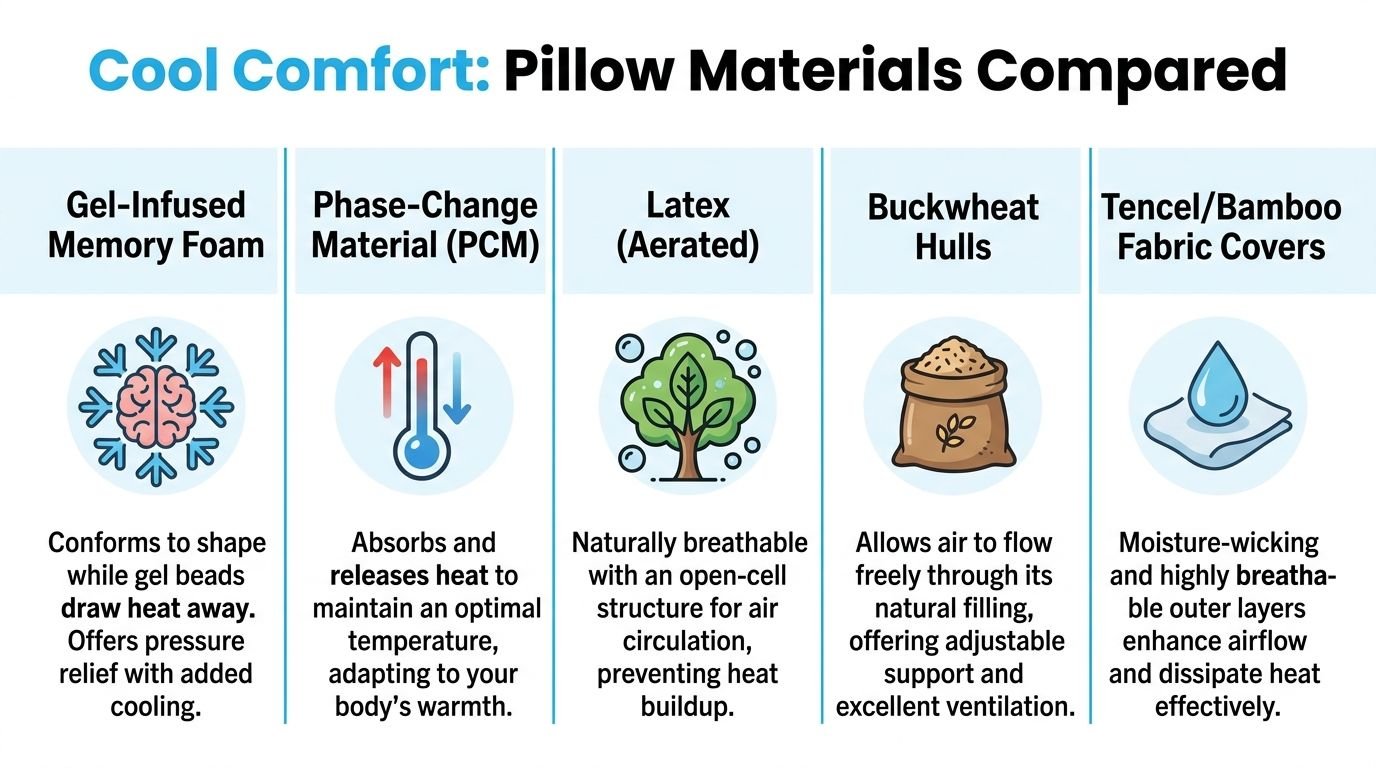
Memory foam is popular for good reason. It cradles the head well, reduces pressure points, and many people like that hugged-in feel.
The downside is heat. A 2011 comparison highlighted in a sleep review found memory foam pillows superior for comfort, but that same body-conforming behavior can reduce airflow and trap warmth around the head. The same review notes that modern cooling fibers such as FRÍO® rapid chill cooling fibers can cool 5x faster than traditional polyester by moving heat away through the fabric structure (review discussing pillow materials and cooling fibers).
Gel-infused memory foam can help at first contact, but in my experience the phrase “gel-infused” needs skepticism. Some gel foams give a quick cool sensation and then behave like ordinary dense foam once body heat builds.
Shredded foam versus solid foam
This one matters more than many shoppers realize.
A solid foam block can feel supportive and neat, but it usually has fewer internal gaps for airflow. A shredded foam fill tends to breathe better because the pieces create more internal space. It can also be adjusted more easily if the pillow has a zipper.
Trade-off:
- Solid foam: cleaner shape, often steadier support, usually warmer
- Shredded foam: better airflow, more adjustable, can shift around
If you sleep hot in humidity, shredded often makes more sense than a dense slab.
Latex
Latex usually sleeps less stuffy than traditional memory foam, especially when it’s aerated. It has a springier feel, doesn’t contour as much, and often allows better air movement.
Not everyone likes the bounce. If you want that deep sink-in sensation, latex may feel too responsive. But for many hot sleepers, especially side and combo sleepers, it’s a useful middle ground between support and breathability.
Down and feather blends
Classic down pillows can feel plush and airy at first, but performance depends heavily on construction. Cheap down or feather pillows flatten, trap moisture, and lose airflow as the night goes on.
Higher-end designs with cooling fibers in the cover can perform better. Products like Purecare’s Cooling Down Pillow use FRÍO® fibers in a TENCEL™ Lyocell woven cover and are built around chambered down-and-feather construction. That setup is trying to solve the usual problem with down, which is loss of loft and reduced airflow over time.
Silicone sponge and open-cell cores
For humid climates, this category is worth attention.
Open-cell silicone sponge cores are designed to move air continuously instead of sealing heat in. When a pillow has a ventilated internal structure, you notice it in how much less swampy the surface feels after an hour or two.
This kind of construction tends to outperform flashy “cold touch” fabrics when the room itself feels damp.
Water-based and head-cooling options
These are less common, but the idea makes sense. Water has strong thermal properties, and head-cooling has a clear physiological connection to sleep onset.
The trade-offs are obvious. Weight, maintenance, and a more niche feel. Some people love water-based sleep products. Others try them once and decide never again.
Cooling covers and specialty fabrics
A cover won’t rescue a bad core, but it still matters.
Look for fabrics described as breathable and moisture-wicking. TENCEL™, bamboo-derived fabrics, and proprietary cooling weaves are common in this category. They help manage surface moisture better than basic, heavy cotton or synthetic covers that hold onto dampness.
Cooling Pillow Material Comparison
| Material | Cooling Mechanism | Breathability | Best For |
|---|---|---|---|
| Gel-infused memory foam | Surface cooling and heat absorption feel | Moderate to low | People who want contouring support and can tolerate some warmth |
| Shredded foam | Air gaps between fill pieces improve airflow | Moderate | Hot sleepers who want adjustable loft |
| Aerated latex | Open structure supports ventilation | Moderate to high | Combo sleepers who want support without deep sink |
| Down with cooling fiber cover | Loft plus moisture-managing outer fabric | Moderate | Sleepers who want a softer, more traditional feel |
| Open-cell silicone sponge core | Continuous airflow through porous structure | High | Humid-climate hot sleepers and night-sweat sufferers |
Don’t shop by one material in isolation. Shop by the full build. Core, loft, cover, and shape all affect how cool a pillow sleeps.
What to Look for in High Humidity Climates
Humidity changes the rules.
A pillow that feels fine in a dry, climate-controlled showroom can feel awful in a Gulf Coast bedroom after midnight. That’s because humid air slows down evaporation. Sweat lingers on skin, moisture stays in fabrics longer, and any pillow that already struggles with airflow gets overwhelmed fast.
Cool to the touch is not enough
This is the biggest buying mistake I see.
A cold-feeling cover can impress you for the first few minutes. It says almost nothing about whether the pillow will stay comfortable when your body heat and moisture build over several hours. In high humidity, breathability beats gimmicky chill every time.
The gap in testing is real too. A report cited by Sleep Foundation noted that 62% of hot sleepers in humid regions like Florida reported no benefit from “cooling” pillows, often because trapped moisture cancels out the cooling effect that looked good in dry-climate reviews (Sleep Foundation discussion of cooling pillow performance in humidity).
That tracks with what many Florida sleepers already know. A pillow can feel slick and “premium” and still sleep hot.
Prioritize drying and airflow
When the air is already heavy, you want a pillow that doesn’t trap your own moisture.
Look for these traits first:
- Breathable construction: Ventilated or open-cell cores usually outperform dense blocks.
- Loft that holds shape: A pancake-flat pillow loses air channels around your head and neck.
- Moisture-managing cover fabric: TENCEL™, bamboo-style viscose blends, and technical cooling weaves tend to work better than basic, heavy cotton or synthetic covers that hold onto dampness.
- Removable washable cover: If you sweat at night, cleanup and drying time matter.
Covers matter more than most buyers think
A bad pillowcase can sabotage a decent pillow.
I’ve seen people spend real money on a cooling pillow and then wrap it in a thick, non-breathable pillowcase. That kills a lot of the benefit immediately. In humid climates, the outermost layer has to release moisture fast or your face stays on a damp surface.
Cotton isn’t automatically bad, but heavy, dense cotton can hold moisture longer than a lighter technical fabric. If your pillow starts feeling sticky, don’t just blame the fill. Check the case.
Pillow shape affects cooling too
This gets overlooked because people think of shape as a support issue only.
A pillow with some structure keeps your head raised enough for air to circulate around the sides. A fully compressed pillow creates more close contact, and more contact means more heat retention. That doesn’t mean taller is always cooler. It means dead-flat and packed-out usually isn’t.
In Florida, boring design often beats fancy design
The best humid-climate pillow is often not the one with the most dramatic marketing. It’s the one with honest ventilation, a breathable cover, and fill that doesn’t collapse into a wet lump.
If you sleep in sticky air, choose the pillow that can breathe, not the one that only feels cold in your hand.
Choosing the Best Cooling Pillow for Your Sleep Style
At 2 a.m. in a Florida bedroom, the wrong pillow usually fails in a very specific way. Your neck is off, your cheek feels damp, and the surface that felt cool at bedtime now feels sticky. Sleep style decides the support piece of that problem. Humidity decides whether the pillow can stay comfortable past the first hour.
A cooling pillow has to do two jobs at once. It needs to keep your head and neck in a neutral position, and it needs to keep heat and moisture from getting trapped where your skin stays in contact with the surface.
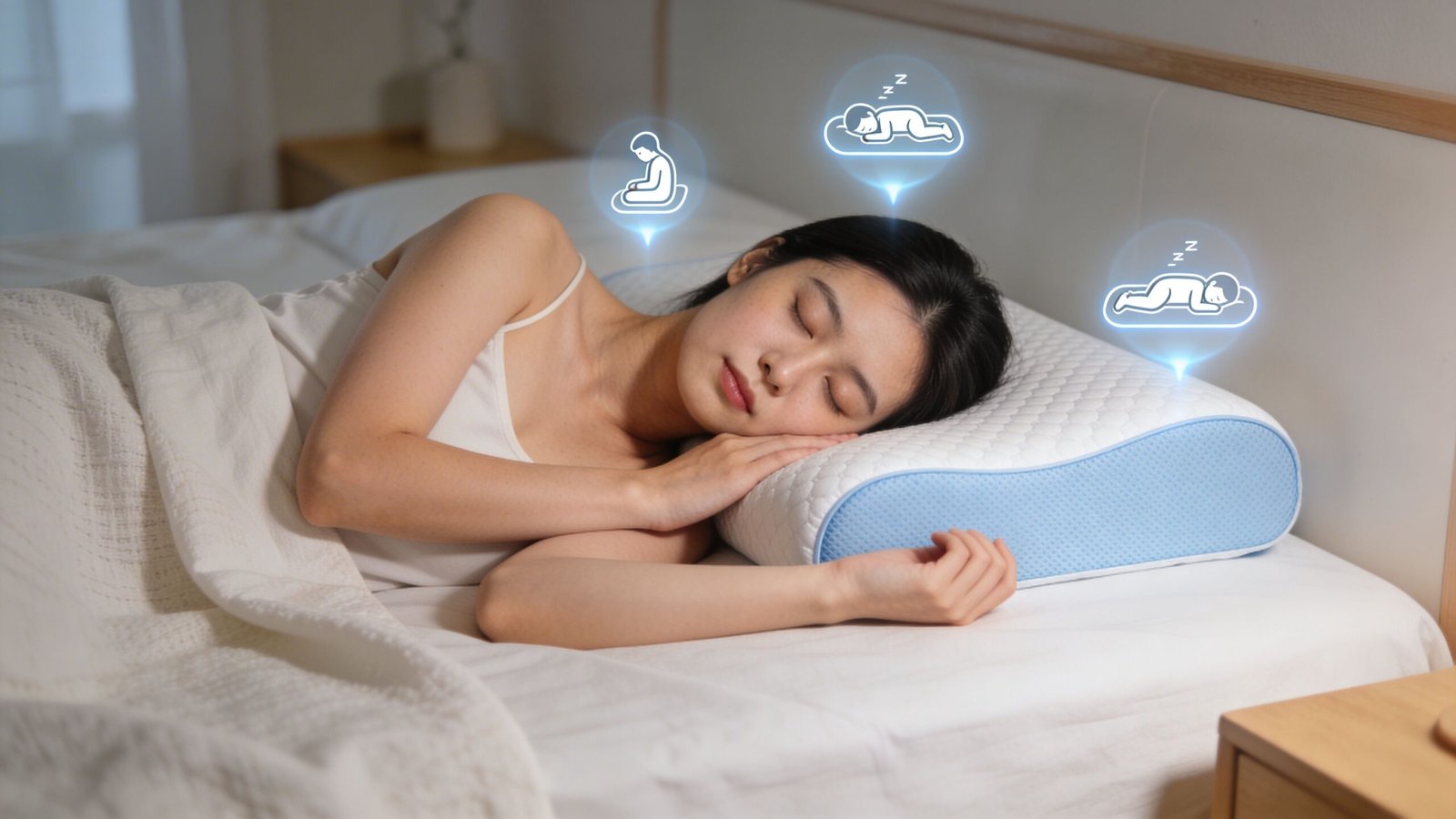
Side sleepers
Side sleepers usually need the most loft because the pillow has to fill the gap between the shoulder and the head. If it does not, the neck drops and pressure builds fast.
The best picks for hot side sleepers usually include:
- Shredded foam with adjustable fill
- Aerated latex with medium to high loft
- Cooling pillows with gusseted sides that hold height
I’m careful with solid memory foam here, especially in humid rooms. It can support well, but dense foam puts a lot of material right against one side of the face and ear. If airflow through the core and cover is weak, that area gets muggy fast.
Back sleepers
Back sleepers have more room to work with, but loft still matters. Too much height pushes the head forward. Too little lets the head fall back and can flatten the support under the neck.
Good options often include:
- Ventilated memory foam with moderate contour
- Latex with a lower profile
- Down-alternative or chambered designs that don’t flatten too fast
Back sleepers often notice cover fabric more than they expect because the back of the head stays in contact with the pillow for long stretches. A breathable cover and a breathable pillowcase both matter. Pairing the pillow with cooling sheets for hot sleepers also helps if the whole bed tends to hold heat.
Stomach sleepers
Stomach sleepers need the flattest profile of the three groups. A tall pillow turns the neck and can strain the lower back.
Look for:
- Low-loft down alternative
- Soft, flatter cooling fiber pillows
- Slim adjustable pillows with fill removed
This is the sleep position where flashy “cooling” features often distract buyers from the bigger issue. If the pillow is too thick, it is the wrong pillow, even if the fabric feels cold for a few minutes.
If night sweats are the primary problem
Heavy sweaters need to shop a little differently. Support still matters, but in high humidity, moisture handling matters just as much.
For menopause-related sweats, post-workout overheating, or naturally heavy perspiration, I would prioritize:
- Open, breathable core construction
- Moisture-wicking cover fabric
- Easy-to-wash outer layer
- Fill that doesn’t go dense when compressed
The goal isn’t just a cooler start to the night. It is a pillow that dries out and keeps breathing instead of turning clammy underneath your face. That is why a pillow that feels icy in the store can still perform badly in Florida. Surface chill fades quickly. Breathability and moisture release are what carry you through the night.
As noted earlier, some research and user testing point in the same direction. Cooling helps, but lasting comfort during night sweats depends on how the pillow handles ongoing heat and moisture, not just the first touch.
For couples with different temperature preferences
A pillow can solve part of the temperature fight without forcing the whole room colder.
If one partner sleeps hot and the other does not, start with the hot sleeper’s pillow before changing the thermostat. That usually gives relief where overheating feels most obvious, around the head and neck, without making the other person pile on blankets.
After you’ve narrowed your options, it helps to watch how different builds compare in practice:
Budget reality
Price matters, but price alone does not predict overnight cooling.
A practical breakdown looks like this:
- Entry level: Usually cooling covers, basic gel foams, and standard fills. These can feel pleasant at first touch but often lose the edge quickly in humid bedrooms.
- Mid range: Better cover fabrics, more deliberate ventilation, adjustable loft, and better durability.
- Higher end: More advanced core designs, stronger consistency in support, and fabrics that handle repeated washing better.
If budget is tight, I would skip the dense foam pillow with aggressive cooling claims and buy the simpler model with better airflow, washable materials, and the right loft for your position.
Buy for your worst hour of sleep, not your first ten minutes in bed.
Testing, Care, and Simple Cooling Hacks
A pillow needs a real trial, not one nap and a guess.
Give it several nights before you make the call. Some cooling designs need a short adjustment period, and your neck may need time to settle into a new loft or firmness. Don’t judge too early, but don’t make excuses for a bad pillow either.
How to test it thoroughly
Use a simple checklist for the first week:
- Track wake-ups: Are you waking because your head feels hot or damp?
- Check the pillow at sunrise: Is it still breathable, or does it feel muggy and compressed?
- Notice your neck and shoulders: Cooling doesn’t matter if alignment is off.
- Watch the cover: If it feels clammy night after night, the fabric or fill is wrong for your room.
Basic care that preserves performance
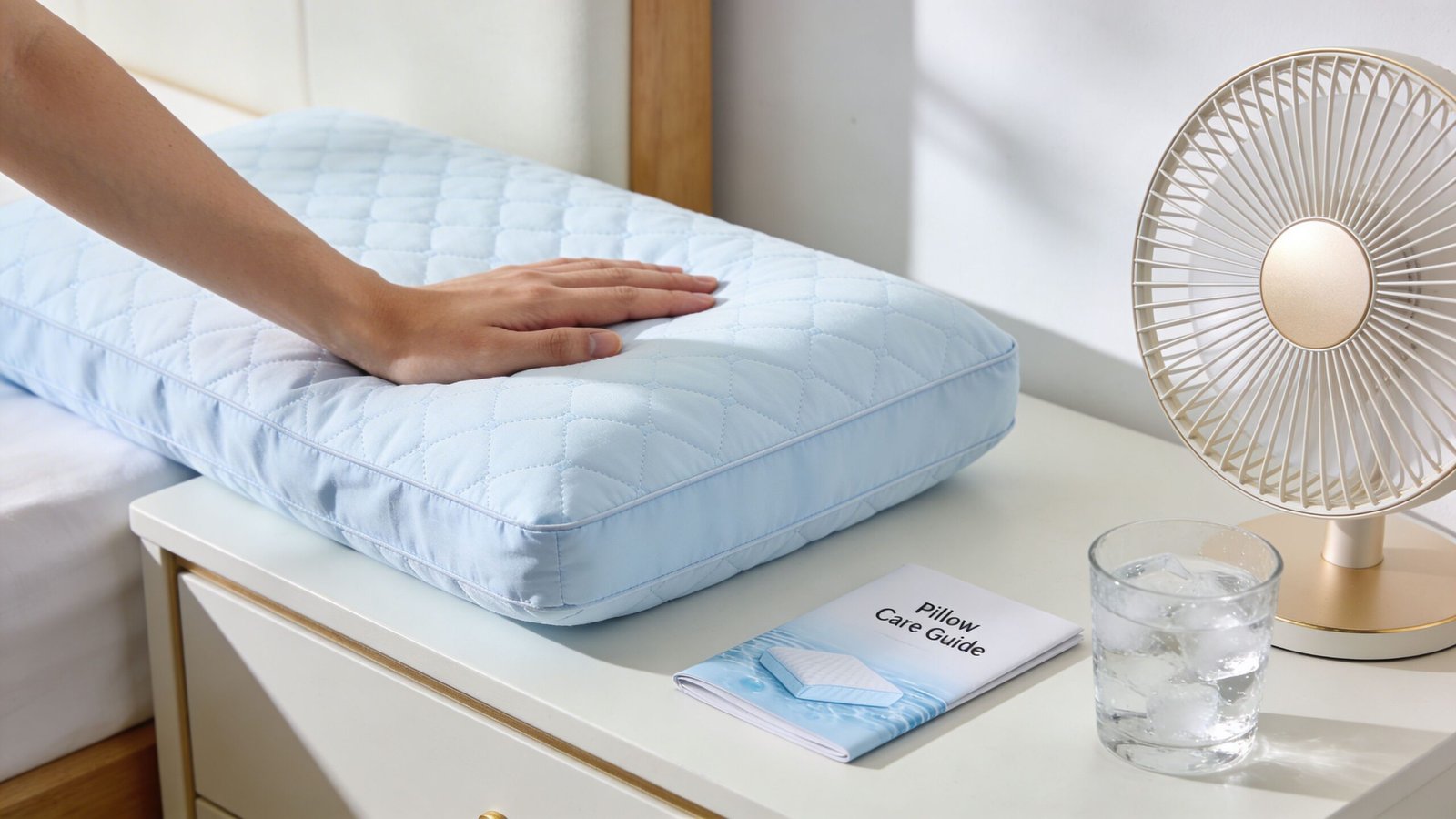
Sweat, skin oils, and dust all make a pillow sleep warmer over time.
Do this:
- Wash removable covers regularly: Follow the label. A dirty cover blocks airflow and holds odor.
- Use a breathable pillowcase: Don’t suffocate a cooling pillow with a heavy case.
- Let the pillow air out: Pull back bedding in the morning so trapped moisture can escape.
- Fluff or redistribute fill if applicable: Shredded and fiber-filled pillows need this more than solid cores.
If you’re also working on the rest of your bed setup, pairing the pillow with the best sheets for hot sleepers makes a bigger difference than many expect.
Quick hacks if you’re not ready to buy yet
You can improve a hot pillow setup without replacing everything tonight.
Try these:
- Swap the pillowcase first: A lighter, more breathable case often helps more than expected.
- Keep a backup case nearby: If one gets damp, change it midweek instead of suffering through it.
- Use a fan to dry the sleep surface before bed: Even a short burst helps if your room feels sticky.
- Avoid stacking too much under your head: Extra layers trap heat.
A decent setup should feel less sweaty, less stuffy, and less irritating. If it still feels like you’re sleeping on a warm sponge, the pillow isn’t doing its job.
Your Path to Cooler, Deeper Sleep
The best pillows that keep you cool aren’t the ones with the coldest sales pitch. They’re the ones that manage heat and moisture in the room you sleep in.
For hot sleepers in humid places, that means focusing on breathability, airflow, and moisture-wicking first. The cool-to-the-touch feel is nice, but it’s not the main event. What matters is how the pillow behaves after hours of body heat, sweat, and pressure.
It also has to fit your sleep style. Side sleepers need enough loft. Stomach sleepers need less. Night-sweat sufferers need materials that dry well and don’t trap dampness. Couples may need a pillow solution before they need another thermostat fight.
If your whole bed still runs hot, a pillow may be the first fix, not the last one. Sometimes the next step is pairing it with one of the cooling mattress pads that improves airflow underneath you too.
Sleep in Florida taught me this fast. The pillow that wins isn’t the one that feels dramatic in your hand. It’s the one you stop noticing at 3 a.m. because you’re still asleep.
Frequently Asked Questions About Cooling Pillows
Do cooling pillows stay cool all night
Some hold up well overnight. Others give you 20 minutes of cool-to-the-touch relief, then turn into a regular warm pillow once heat and sweat build up.
In Florida-style humidity, long-lasting comfort usually comes from airflow and moisture handling. A pillow that lets heat escape and dries out instead of staying damp will usually sleep cooler than one that relies on a slick, chilled cover.
Are water pillows or head-cooling pillows worth considering
They can help some sleepers, especially people who run hot around the head and neck.
I’d still treat them as a niche option. Water-based or active-cooling designs can feel noticeably cooler, but they often bring extra weight, setup, or maintenance. For many hot sleepers, a breathable pillow with a washable cover is the easier answer to live with every night.
Do I need a special pillowcase for a cooling pillow
You do not need a branded pillowcase. You do need one that breathes.
A thick or tightly woven case can trap heat and hold onto sweat, which is a bad combo in humid rooms. Cotton percale, linen, and lighter bamboo blends usually work better than dense, plush fabrics. If a cooling pillow is underperforming, I check the pillowcase before blaming the pillow.
Is memory foam always too hot for hot sleepers
No, but it deserves extra scrutiny.
Solid memory foam tends to hold more heat because it hugs the head closely and does not move much air. Some newer versions do better with ventilation holes, shredded fill, or cooler covers, but the trade-off is still real. If night sweats are your main problem, latex, shredded foam, or other fill types with more airflow often make more sense.
How long should I test a new pillow before deciding
Give it several nights, preferably a week or two if the return policy allows.
One rough night does not tell you much, especially if the loft or firmness is different from your old pillow. Repeated signs matter more. If you keep waking up with a damp pillowcase, trapped heat, or neck strain, that pillow is telling you what it can and cannot do.
Are cooling pillows safe
Usually, yes, if you buy from a reputable brand and follow the care instructions.
The bigger concern is not safety. It is performance. Some pillows are sold as cooling because the cover feels cold in your hand, even though the fill traps heat after an hour. Look for clear information on materials, washability, and whether the design promotes airflow.
If you’re tired of waking up sweaty and guessing what might help, CoolRestGuide is built for exactly that problem. We focus on honest, real-world advice for hot sleepers in warm, humid climates, with practical reviews on pillows, sheets, toppers, and other cooling sleep gear that has to work past the first ten minutes.
