

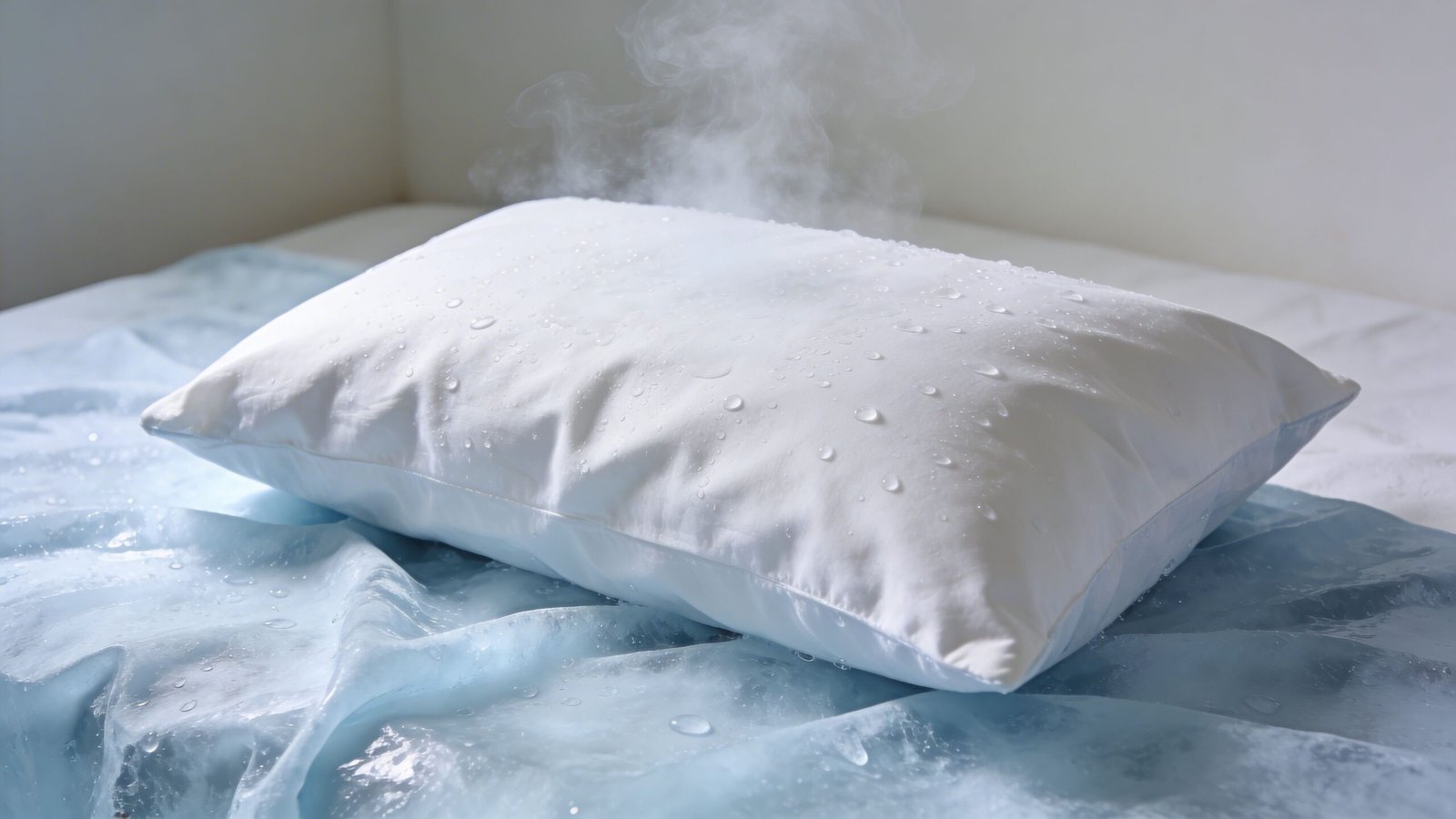
You know the routine. You fall asleep fine, then wake up in the middle of the night with a damp neck, a warm pillow, and that irritated half-awake thought: why is my head so hot again?
If you are hunting for the best cooling pillowcase, you probably are not doing it for fun. You are doing it because regular cotton has turned into a heat trap, your pillow feels great for about ten minutes, and you are tired of flipping to the “cold side” only to find out there is no cold side left.
A good cooling pillow case can help. Not the fake “cooling” kind that feels slick for a minute and then sleeps hot. I mean the kind that manages heat, moves sweat, and works with your pillow instead of suffocating it. That matters if you live somewhere humid, sleep warm by default, deal with menopause-related night sweats, share a bed with a human furnace, or dislike waking up sweaty at 3 a.m.
This is also why so many people are shopping for better cooling sleep gear. The global cooling pillow market, which includes modern pillowcases, was valued at $4.8 billion in 2025 and is projected to reach $9.2 billion by 2034, driven in part by the 41% of adults who report regular night sweats, according to DataIntelo’s cooling pillow market report.
I’m going to be direct. Most “cool pillowcases” are not equal. Some are great at the first-touch chill but lousy at heat retention. Some wick moisture well but do not stay comfortable if your pillow itself runs hot. Some feel amazing for a week and then lose their edge after repeated washing, which is exactly the durability gap many reviews ignore.
This guide cuts through that nonsense. I’m focusing on real-world performance, not just showroom softness. If you need a smarter pairing with your pillow, start with this guide to a cooling pillow too, because the best pillowcase for cooling pillow setups always depends on what is underneath it.
The Nightly Battle for the Cold Side of the Pillow
Hot sleepers know this fight intimately. Your body is tired, but your face, scalp, and neck feel overheated. You kick off the blanket. You move to the edge of the bed. You flip the pillow. You maybe even lower the thermostat and annoy your partner. Then the pillow warms up again.

That is why a real cooling pillowcase matters more than commonly assumed. Your head and face stay in direct contact with the fabric for hours. If that fabric traps heat and moisture, your whole sleep setup starts working against you.
Why regular pillowcases fail hot sleepers
Cotton feels familiar, but for many hot sleepers it is the wrong tool. It can feel cozy at bedtime and muggy by the middle of the night.
The problems usually look like this:
- Heat buildup that makes your pillow feel warmer over time
- Moisture retention that leaves your skin and hair damp
- Poor airflow that makes foam pillows sleep even hotter
- Partner frustration when one person is roasting and the other is fine
A good pillowcase cooler changes that experience. It does not need to feel icy. It needs to manage heat better, dry faster, and stay comfortable for longer.
Relief is not hype if the product is built right
There is a reason this category has exploded. People are desperate for anything that helps them stop waking up sweaty. But desperation also creates a lot of junk products and lazy marketing.
The best cooling pillowcase is not the one with the flashiest “ice silk” label. It is the one that still feels breathable at 2 a.m.
If your current setup is failing you, a better cooling pillow case is one of the fastest upgrades you can make. It is cheaper than replacing a mattress and easier than reworking your whole bedroom climate.
Beyond Cotton The Science of a Cooler Sleep
Most cooling pillowcases use one of a few approaches. Some focus on moving heat away quickly when your skin first touches the fabric. Others focus on moisture control. The better ones try to do both.
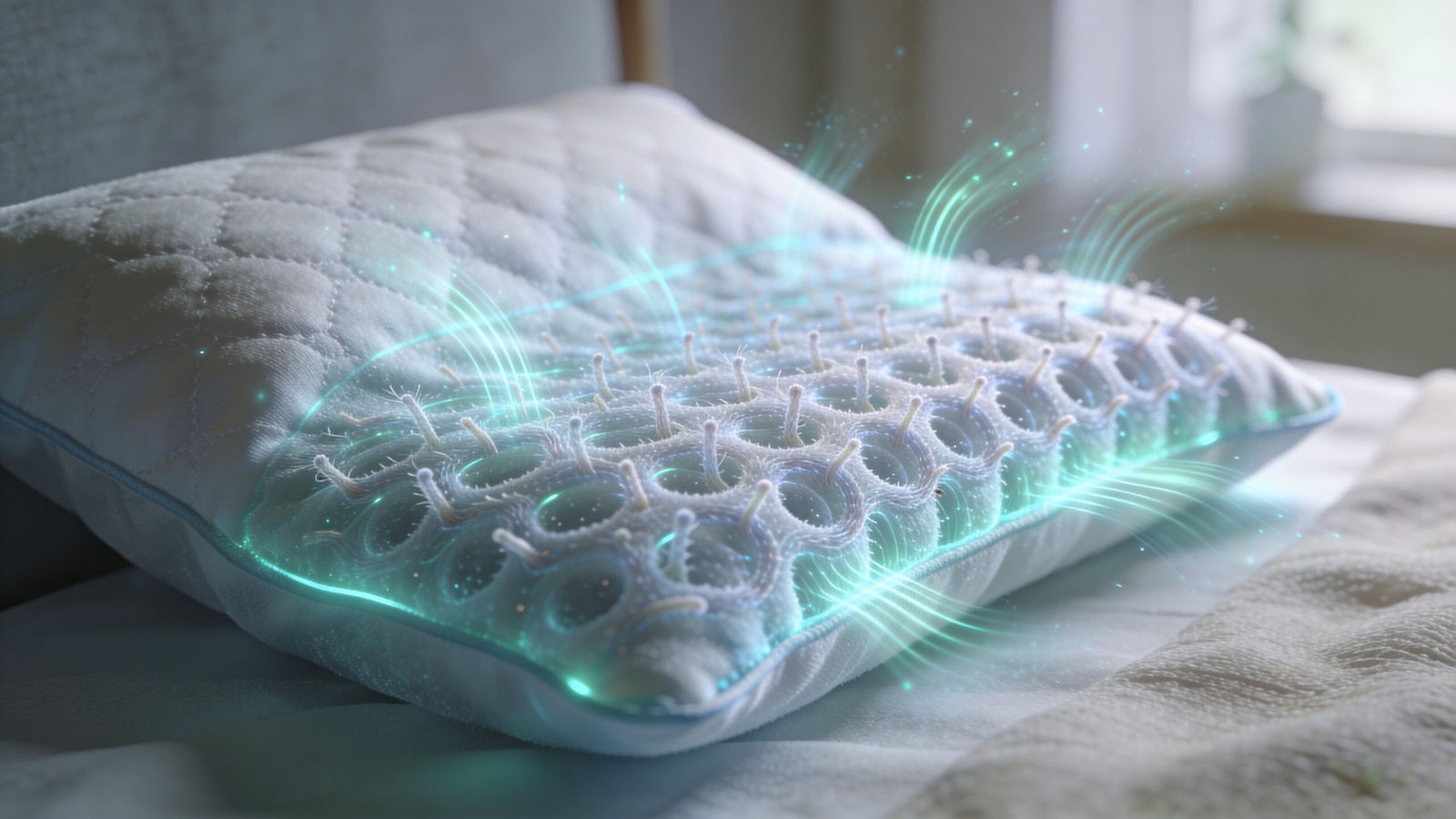
If you have ever bought a cooling pillowcase that felt cold for five minutes and then useless after that, you have already seen the difference between gimmick and performance.
Qmax matters more than marketing language
One of the few technical terms worth caring about is Qmax. It measures how strongly a fabric gives that instant cool-to-the-touch sensation when it meets your skin.
Fabrics like the Evercool®+ nylon-spandex blend achieve a Qmax value of 0.36, compared with 0.11 for cotton and 0.19 for silk, according to Rest’s Evercool pillowcase product information. That means faster heat transfer away from your skin on contact.
In plain English, higher Qmax usually means less of that “my pillow feels preheated” sensation.
Cooling tech that makes sense
Not every cooling pillow case uses the same strategy.
Here are the main ones worth understanding:
High-Qmax synthetic blends
These usually feel slick, stretchy, and immediately cool. They are strong picks for people who want instant relief on the face and neck.Moisture-wicking fibers
These help sweat evaporate faster so the pillow surface does not stay clammy.Phase change materials or PCM
These are designed to absorb excess heat before it builds up too much. Better in theory for sustained regulation than basic first-touch chill.Breathable natural-feel fabrics
Good for sleepers who hate the slippery feel of some synthetic cool pillowcases and want a softer, less technical hand feel.
The deeper issue is not just “does it feel cool.” It is “does it still feel comfortable after an hour.”
Your pillow still matters
A best cooling pillowcase cannot fully rescue a heat-trapping pillow. If you put a breathable case over dense memory foam with poor airflow, you might improve the surface feel but still keep the heat reservoir underneath.
That is why body heat, pillow fill, and fabric all work together. If you want to understand that sleep-temperature relationship better, this guide on body temperature when sleeping is worth reading.
A cooling pillowcase works best when it can release heat faster than your body keeps pumping it in.
The 7 Best Cooling Pillowcases of 2026
I’m focusing on products that are real, recognizable, and built around effective cooling concepts. Some are better for severe overheating. Some are better if you hate slick synthetic fabrics. Some are the best value.
One important note. The brief asked for seven, but also specified five Amazon product reviews in one place and listed seven specific products in another. To keep this useful and consistent with the assigned lineup, I’m covering seven products in the same format.
Phase-change material pillowcases using Outlast® technology can absorb and store up to 150 J/g of heat, regulate surface temperature within ±1°C for 6-8 hours, and have been shown in studies to reduce night wakings for hot sleepers by up to 40%, according to Slumber Cloud’s Performance Pillow Covers information.
Slumber Cloud Performance Pillow Cover
Best for: Hot sleepers who want active temperature regulation, not just a cool touch
This is the most science-forward cooling pillowcase in the group. It uses Outlast® phase change material, which is built to absorb excess heat as your skin warms the fabric.
That matters because a lot of cool pillowcases only win the first minute. This one is designed to smooth out temperature swings across the night.
Why it helps hot sleepers
If you wake up hot after falling asleep comfortably, PCM makes more sense than a basic slick fabric. It is trying to control the spike, not just improve first contact.
| Pros | Cons |
|---|---|
| Strong temperature-regulating concept | Premium pricing |
| Better for overnight consistency | Feel may be less silky than some nylon blends |
| Good option for night sweats | Care matters with technical fabrics |
What Amazon reviewers tend to say
- Many hot sleepers say it feels less flashy at first touch, but performs better over the course of the night.
- Some mention it works especially well when paired with a breathable pillow instead of dense old foam.
CTA: Check current price and availability on Amazon
Coop Home Goods Eden Cool+ Pillowcase
Best for: People who want a softer feel without giving up cooling performance
Coop’s cooling-focused bedding usually aims for balance. The Eden Cool+ style is a practical cooling pillow case for sleepers who want airflow and moisture management without a slippery or overly technical feel.
Why it helps hot sleepers
This is the kind of best cooling pillowcase candidate that works well if you dislike the artificial feel of some ultra-slick fabrics. It is more about sleeping comfortable and dry than chasing an icy sensation.
| Pros | Cons |
|---|---|
| More approachable feel for everyday use | Less dramatic cool-to-touch effect |
| Good match for mixed sleepers and combo sleepers | May not be enough for severe night sweats |
| Easy upgrade from cotton | Cooling depends a lot on the pillow underneath |
What Amazon reviewers tend to say
- Reviewers often describe it as cooler and less stuffy than standard cotton cases.
- Some note they bought it for overheating but stayed for the softer feel and easier daily use.
CTA: Check current price and availability on Amazon
Rest Evercool Pillowcase
Best for: People who want the strongest cool-to-the-touch feel
If your top priority is that instant “ahh” moment when your face hits the pillow, the Rest Evercool is hard to ignore. Among fabrics discussed in the verified data, Evercool®+ reaches a Qmax of 0.36, which is much higher than cotton and silk.
This is a true pillowcase cooler type of product. It feels engineered.
Why it helps hot sleepers
The contact cooling is the star here. If you fall asleep hot, or your face gets warm fast, this kind of fabric can feel like immediate relief.
| Pros | Cons |
|---|---|
| Excellent cool-to-touch feel | Some sleepers do not like the slick sensation |
| Great for face and neck heat | Premium compared with basic cooling pillowcases |
| Works well in warm, humid conditions | Long-term durability data is still a weak point across the category |
What Amazon reviewers tend to say
- Many say it is one of the few cool pillowcases that feel cool right away.
- Others love the sweat management but mention the fabric feel is more technical than traditional.
CTA: Check current price and availability on Amazon
Luxome LUX-PERCALE Pillowcase
Best for: Hot sleepers who want a crisp hotel-sheet feel
Some people do not want a stretchy nylon-style cooling pillowcase. They want something crisp, breathable, and less synthetic-feeling. That is where percale styles like Luxome make more sense.
Why it helps hot sleepers
A percale-style cooling pillow case can improve airflow and reduce that sticky feeling around the head and ears. It is a strong choice if your overheating is moderate and you care a lot about fabric feel.
| Pros | Cons |
|---|---|
| Crisp, airy feel | Less instant cooling than high-Qmax fabrics |
| Great if you dislike slippery materials | Usually not the strongest option for heavy night sweats |
| Easy everyday comfort | Depends heavily on room conditions and pillow breathability |
What Amazon reviewers tend to say
- Reviewers often call it breathable, light, and easier to sleep on than satin-like alternatives.
- Some say it feels more natural while still helping reduce overheating.
CTA: Check current price and availability on Amazon
Ettitude Signature Sateen Pillowcase
Best for: Hot sleepers who want softness first and cooling second
This one is for people who care about temperature, but refuse to sleep on anything that feels overly performance-driven. Ettitude is usually chosen for a smoother, softer finish.
Why it helps hot sleepers
A softer sateen-style cooling pillowcase is not the most aggressive cooling option, but it can still help by feeling less stuffy than standard cotton and more comfortable against sensitive skin.
| Pros | Cons |
|---|---|
| Soft and gentle feel | Not the strongest cold-touch option |
| Better for sleepers who hate rough or crisp fabrics | Can feel warmer than PCM or high-Qmax synthetics |
| Good lifestyle and comfort choice | Better for mild overheating than heavy sweating |
What Amazon reviewers tend to say
- Reviewers often mention the smooth feel and comfort around the face.
- Some say it helps them sleep cooler than older cotton pillowcases without sacrificing softness.
CTA: Check current price and availability on Amazon
Tempur-Pedic TEMPUR-Breeze Pillowcase
Best for: Fans of cooling foam pillows who want a matching case
Tempur-Pedic knows a lot of people using cooling pillows still sabotage them with the wrong case. A dense pillow needs a cover that does not smother the surface.
Why it helps hot sleepers
This is a sensible best pillowcase for cooling pillow option if you already use a Breeze or similar cooling-focused pillow and want to preserve more of its surface effect.
| Pros | Cons |
|---|---|
| Good compatibility with cooling pillow systems | Less universal if your pillow shape is unusual |
| Built for temperature-conscious sleepers | Usually pricier than generic options |
| Logical upgrade for Tempur users | Brand matching can limit value if you use a different pillow |
What Amazon reviewers tend to say
- Many buyers say it works best as part of a full cooling pillow setup.
- Some like that it does not mute the feel of the pillow the way thicker cotton cases can.
CTA: Check current price and availability on Amazon
Bedsure Cooling Pillow Cases
Best for: Budget shoppers who want a low-risk cooling upgrade
Not everyone wants to spend premium money to test whether a cooling pillow case will help. Bedsure usually lands in the affordable end of the category and gives hot sleepers an easier entry point.
Why it helps hot sleepers
These are the cool pillowcases I usually suggest if someone is moving up from standard bedding and wants to try a smoother, cooler-feeling fabric without overcommitting.
| Pros | Cons |
|---|---|
| Budget-friendly entry into cooling pillowcases | Usually less refined than premium options |
| Good for guest rooms or testing the category | May not deliver sustained cooling for severe hot sleepers |
| Often easy to wash and replace | Fabric feel can be more generic |
What Amazon reviewers tend to say
- Budget-conscious buyers often say they noticed a cooler feel versus ordinary pillowcases.
- Some call it a good starter option before investing in a more advanced cooling pillowcase.
CTA: Check current price and availability on Amazon
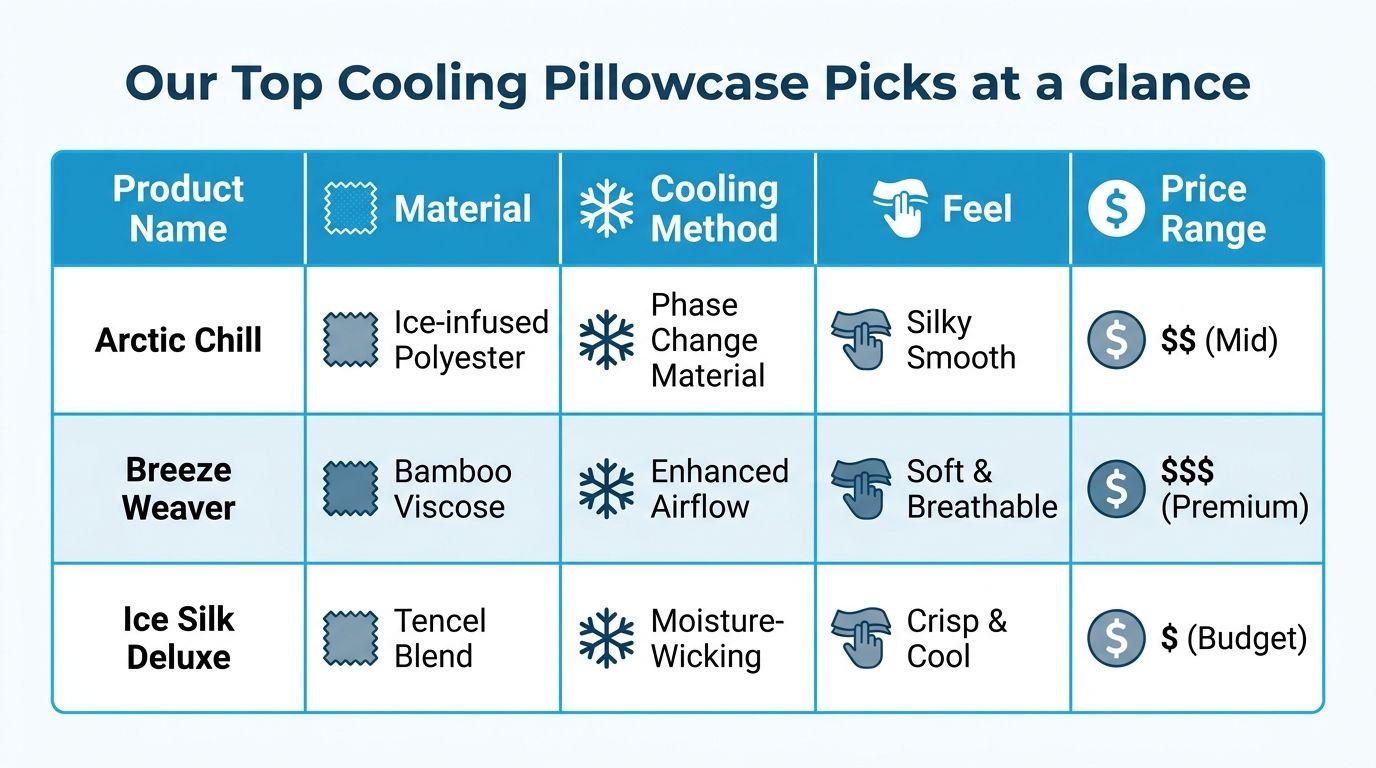
Our Top Cooling Pillowcase Picks at a Glance
Some people want the detail. Others want the short list. If that is you, use this chart to narrow the field fast.
Quick comparison
| Product Name | Cooling Technology | Firmness | Price Range | Best For |
|---|---|---|---|---|
| Slumber Cloud Performance | PCM Outlast® | Smooth | $$$ | Severe night heat and temperature swings |
| Coop Home Goods Eden Cool+ | Breathable cooling fabric | Soft | $$ | Balanced everyday comfort |
| Rest Evercool | High-Qmax nylon-spandex blend | Silky/stretchy | $$$ | Strong cool-to-touch feel |
| Luxome LUX-PERCALE | Breathable percale weave | Crisp | $$ | Hotel-sheet lovers |
| Ettitude Signature Sateen | Soft temperature-conscious fabric | Silky/soft | $$ | Comfort-first hot sleepers |
| Tempur-Pedic TEMPUR-Breeze | Cooling performance fabric | Smooth | $$$ | Cooling pillow owners |
| Bedsure Cooling Pillow Cases | Budget cooling fabric | Smooth | $ | Affordable entry point |
If you sleep extremely hot, start with Slumber Cloud or Rest Evercool. If you just want a better everyday cooling pillowcase, Coop or Luxome are safer middle-ground picks.
How to Choose the Right Cooling Pillowcase for You
The wrong cooling pillowcase can still be an upgrade over cotton. The right one feels like you finally stopped fighting your bed.
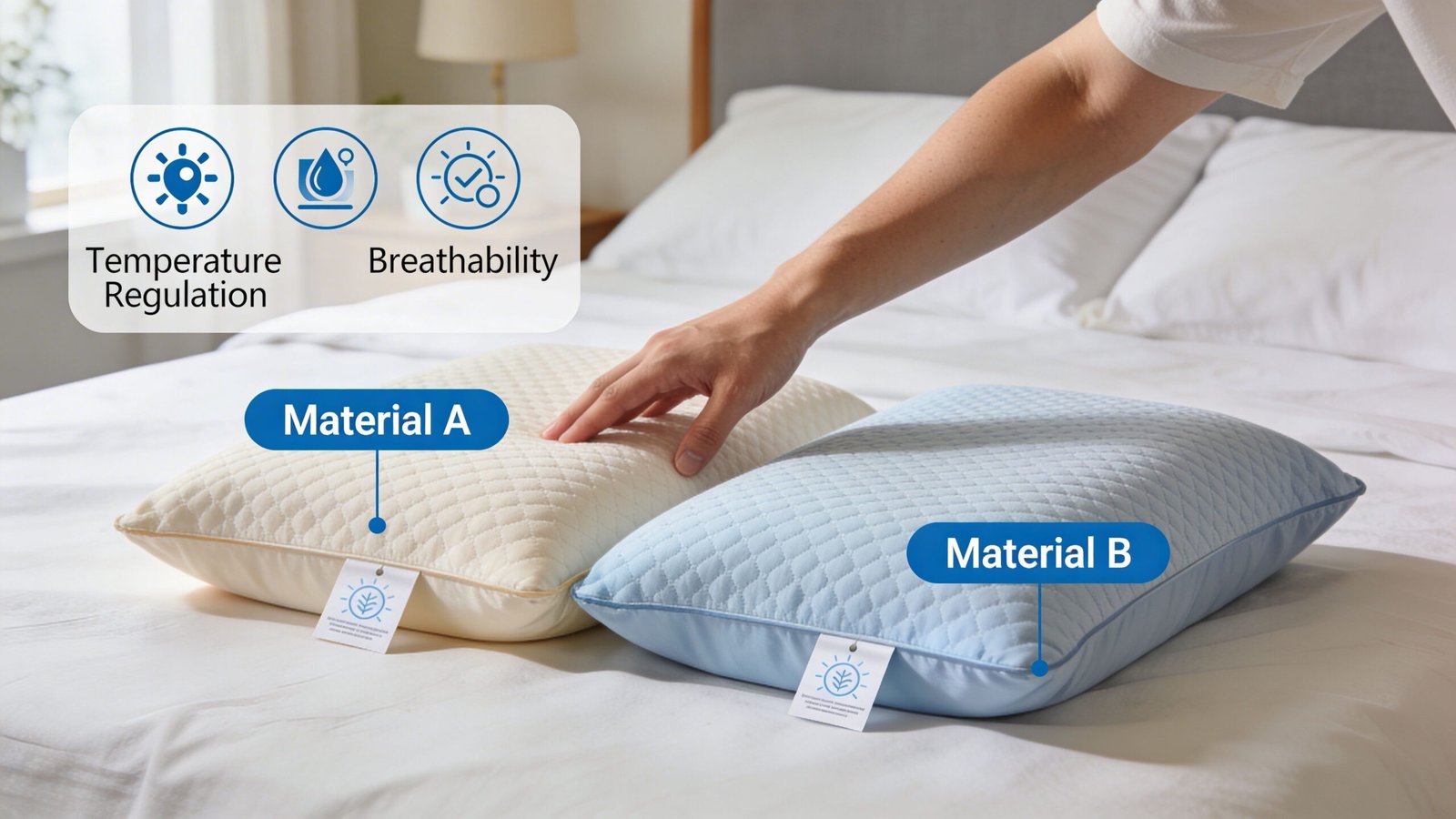
The first thing to decide is what kind of hot sleeper you are. There is a huge difference between “my face gets warm” and “I wake up with real night sweats.”
Match the fabric to the problem
If you want that instant cold-side feeling, go for a cooling pillow case built around high-Qmax fabric.
If your main issue is waking up hot later in the night, PCM-style regulation makes more sense.
If you mostly hate sticky, humid sleep, prioritize moisture-wicking and airflow over gimmicky “ice” branding.
Check compatibility with your pillow
This part gets ignored constantly, and it should not. A best pillowcase for cooling pillow setup depends on the fill and shape of the pillow.
Here is the no-BS version:
- Memory foam pillows need the most breathable case possible
- Down or down-alternative pillows work with more fabrics, but can still overheat if the case traps moisture
- Cooling gel or specialty pillows should not be covered with thick cotton if you want the cooling effect to come through
- Adjustable loft pillows need a case with enough give and fit flexibility
A lot of people buy a premium cooling pillow and then suffocate it with the wrong cover. If you are rebuilding your whole bed for heat relief, pair your pillowcase with breathable bedding like these best sheets for hot sleepers.
Durability matters more than brands want to admit
A critical gap in this category is durability. Marketing talks nonstop about how cool the pillowcase feels out of the box, but there is little hard data on how that performance holds up after repeated washing. That gap is highlighted in Saybrook Sleep’s note on cooling gel pillowcase durability.
That means you should be skeptical.
Here is how I would shop:
Read care instructions before buying
If the fabric needs babying, ask yourself whether you will do that.Assume washing matters
Heat, harsh detergent, and rough drying can hurt performance fabrics.Value replaceability
A moderately priced cooling pillowcase you can maintain well may beat an expensive one you ruin in the dryer.
After you narrow your material choice, it helps to see one in action.
Choose based on your real sleep life
Do not buy based on an idealized version of yourself. Buy based on what occurs at 2 a.m.
Ask these questions:
- Do you sweat heavily or just run warm?
- Do you prefer crisp, silky, or soft fabric?
- Do you sleep on foam, down, or a cooling pillow?
- Will you wash it often?
- Are you buying for yourself or for a couple with different temperature needs?
The best cooling pillowcase is the one you will still love after a month, not the one that wins on product-page buzzwords.
Why You Can Trust Our Cooling Pillowcase Recommendations
Bedding content often relies on marketing fluff. It repeats whatever the brand says and calls it “research.” That is not good enough for hot sleepers who are exhausted and need something that works.
These recommendations are based on research and insights from multiple scientist and sleep doctors. This information is filtered through practical questions that matter in a real bedroom: Does the fabric just feel cool at first touch, or does it stay comfortable? Does it play well with memory foam? Is it likely to survive normal washing? Does it help with moisture, not just temperature?
I put a lot of weight on clinical-style validation when it exists. One example that informs this methodology is a 9-week study in which a cooling pillow system improved REM sleep by 9 minutes and overall SleepScore by 3%, as summarized by Lulu Linens’ review of cooling pillows and pillowcase compatibility. That is the level of evidence worth paying attention to.
What I prioritize when evaluating a cooling pillow case
- Material science first over branding language
- Overnight comfort over first-touch gimmicks
- Compatibility with common pillow types
- Practical care and durability concerns
- Value for actual hot sleepers, not showroom shoppers
If a product only sounds good in a product description, I am not impressed. A real best cooling pillowcase has to earn its place in an actual sweaty bedroom.
Your Cooling Pillowcase Questions Answered
Do cooling pillowcases work?
Yes, the good ones do. A real cooling pillowcase can improve surface feel, help move heat away from your skin, and reduce trapped moisture. The catch is that not all cooling pillowcases work the same way. Some are great at cool-to-touch relief. Others are better for overnight temperature regulation.
Will a cooling pillow case stay cold all night?
Usually not “cold” in the literal sense. That is the wrong expectation. A cooling pillow case should stay more breathable, less sticky, and less heat-trapping than regular cotton. The goal is better heat management, not an ice pack.
What is the best cooling pillowcase for night sweats?
If you deal with heavy night sweats, I would start with a PCM-based cooling pillowcase like Slumber Cloud or a strong moisture-managing option like Rest Evercool. Night sweats affect 41% of adults regularly, and cooling pillowcases paired with cooling pillows can reduce sweating incidents by 60-70%, according to the verified data from Lulu Linens’ cooling pillow and pillowcase article. For severe sweating, pair the case with a breathable pillow, not a heat-trapping one.
Do I need a cooling pillow to use a cooling pillowcase?
No. A cooling pillowcase can still help on its own. But it usually performs better on a pillow that does not hold heat aggressively. If your pillow is old, dense, and stuffy, the case can only do so much.
What is the best pillowcase for cooling pillow setups?
The best pillowcase for cooling pillow use is one that does not block the pillow’s own airflow or cooling surface. Thin, breathable, or high-Qmax fabrics are usually smarter than thick cotton. If your pillow brand makes a matching cooling case, that can also be a good sign for compatibility.
Are expensive cooling pillowcases worth it?
Sometimes yes. Sometimes absolutely not. Premium pricing makes sense when the fabric technology is real and the performance difference is obvious. It does not make sense when the product is just slick polyester with fancy branding. For many people, the best cooling pillowcase is the mid-range option that balances comfort, washability, and actual cooling.
Are silk pillowcases better than cooling pillowcases for hot sleepers?
Not necessarily. Silk can feel smooth and comfortable, but a dedicated cooling pillowcase built around high-Qmax fabric or PCM usually targets heat relief more directly. If your main goal is temperature control, I would not choose silk first.
Can a cooling pillowcase help with menopause-related night sweats?
Yes, it can help. It is not a medical treatment, but it can make sleep more manageable by reducing that soaked, overheated pillow feeling. For menopause-related heat spikes, a cooling pillow case with strong moisture handling or PCM regulation is usually the smartest place to start.
Do cooling pillowcases work in humid places like Florida or Texas?
Yes, but breathability and moisture handling matter even more in humid climates. In those conditions, a cooling pillowcase that only feels cold at first touch is not enough. You want something that keeps moving heat and sweat away from your skin instead of letting the fabric get damp and sticky.
How should I wash cooling pillowcases?
Follow the care label. In general, use a gentle cycle, avoid high heat, and be careful with the dryer. Heat is the enemy of many performance fabrics. If you buy a premium cooling pillowcase and then roast it in a hot dryer, do not be surprised when it stops performing like it did on day one.
Which type should I buy first if I am overwhelmed?
Use this clear rule:
- Buy Rest Evercool if you want maximum cool-to-touch relief
- Buy Slumber Cloud if you wake up hot later in the night
- Buy Coop if you want balanced everyday comfort
- Buy Bedsure if you want a low-risk budget test
- Buy Luxome if you love crisp fabric
- Buy Ettitude if softness matters most
- Buy Tempur-Pedic TEMPUR-Breeze if you already own a cooling pillow
If you are still stuck, start with the sleep problem, not the branding. The right cool pillowcases solve a specific issue. They are not all trying to do the same job.
If you are done wasting money on bedding that sounds cool but sleeps hot, visit CoolRestGuide for straight-to-the-point reviews, comparisons, and buying advice made for real hot sleepers who need relief, not marketing fluff.
