

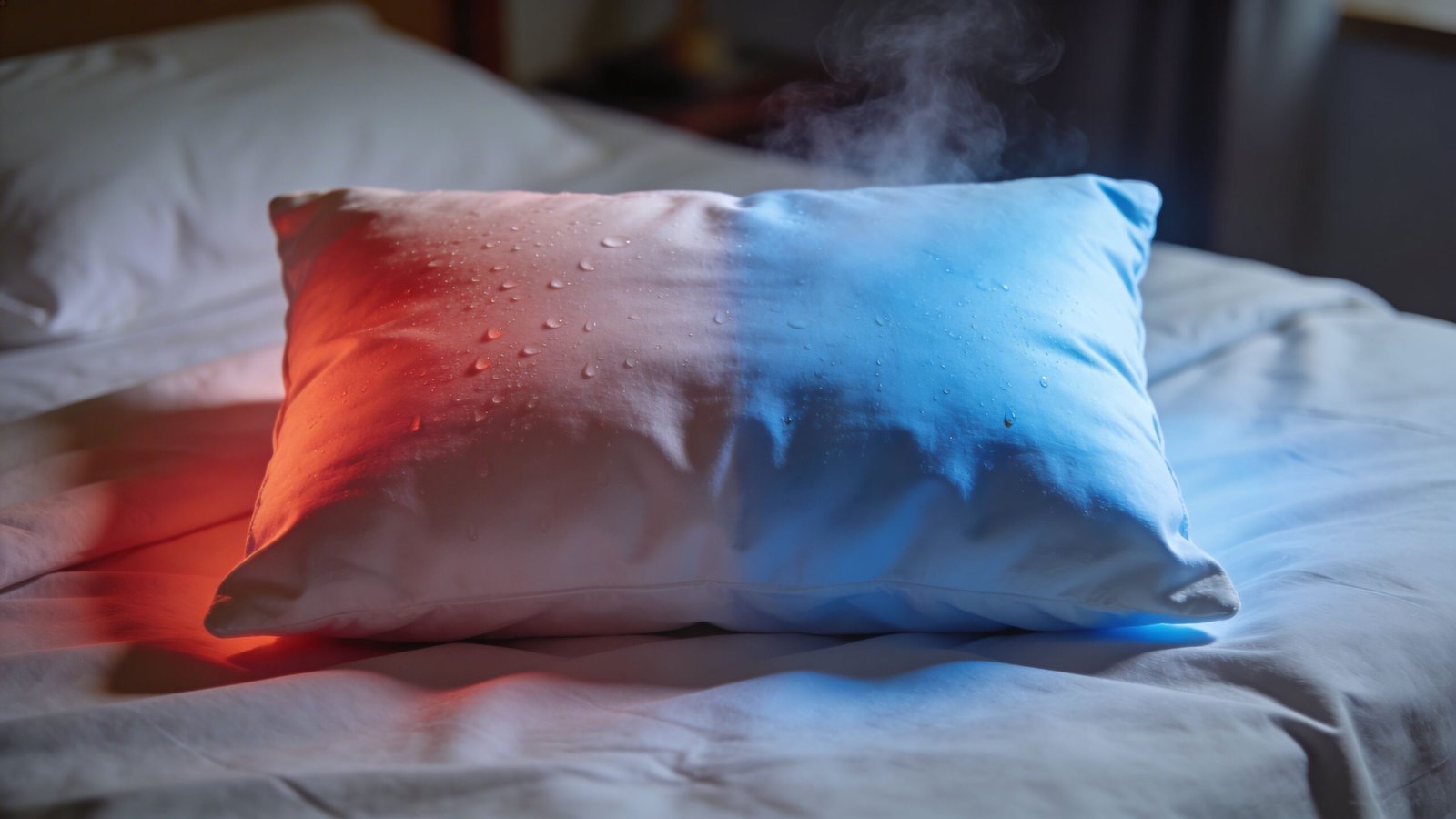
You go to bed in a room that should be cool enough. The AC is on. The fan is running. You’ve already kicked one leg out from under the sheet. Then you wake up at 2:13 a.m. with a damp neck, a hot scalp, and a pillow that feels like it’s been storing your body heat for hours.
If you live in Florida, Texas, or anywhere else where the air feels wet even at night, you know the problem. The room can be “cool” and you still overheat because your pillow is holding heat right under your head. You flip it, get thirty seconds of relief, and then you’re right back where you started.
That’s why finding the best pillow for night sweats isn’t about buying whatever brand slapped the word “cooling” on the tag. It’s about buying a pillow built to move heat out, let air through, and deal with sweat without turning clammy. Most cooling pillow marketing is fluff. The good ones work for very specific reasons.
Waking Up Sweaty? There Is a Better Way
Night sweats can make sleep feel like a fight. You start the night comfortable enough, then your head and neck heat up, the pillow gets sticky, and your sleep breaks apart in chunks. By morning, you’re tired, irritated, and wondering why your bedding feels like it made things worse.
You’re not overreacting. This is common. Approximately 40 to 60% of adults experience night sweats at least occasionally, with women in perimenopause or menopause reporting rates up to 75 to 85%, according to the Sleep Foundation’s cooling pillow guide. The same source notes that breathable materials can reduce heat buildup by up to 30% compared to traditional memory foam.
That last part matters. If your pillow is wrong, the rest of your cooling setup has to work overtime.
Hot climate sleep is a different problem
In humid places, sweat doesn’t evaporate well. That’s the part a lot of national “best pillow” lists miss. A pillow that feels fine in a dry climate can feel swampy in South Florida.
You need three things working together:
- Fast heat release so your head doesn’t bake the surface
- Real airflow through the fill, not fake “air channels” buried under dense foam
- Moisture management so sweat doesn’t sit on the fabric
If your current pillow is dense memory foam with a basic cotton cover, it’s the weak link.
Practical rule: If you wake up with a hot neck and damp hairline, start with your pillow before you replace your whole mattress.
A lot of people chase room temperature when the bigger issue is trapped heat at the point of contact. Your head sits on the same spot for hours. If that surface can’t dump heat and dry out, the AC won’t save you.
If night sweats are wrecking your sleep, read this practical breakdown on how to stop night sweats. Then come back and fix the piece of your bed that’s most likely cooking you.
What changes when you buy the right pillow
The right pillow won’t feel like an ice pack. That’s not the goal. A good cooling pillow keeps your head from crossing into that overheated, sweaty zone in the first place.
When that happens, you stop doing the little survival moves that destroy sleep:
- Pillow flipping
- Sheet kicking
- Neck repositioning
- Half-awake adjustments every hour
That’s a big win. Less disruption. Longer sleep stretches. Fewer wakeups from heat.
Why Your Pillow Turns Into a Furnace
Most pillows fail because they act like insulation where you need ventilation. Your body gives off heat all night. Your head and neck press into the pillow. If the materials are dense and the cover is tight, that heat has nowhere to go.
The pillow becomes a heat battery. It stores warmth, then feeds it right back into your skin.
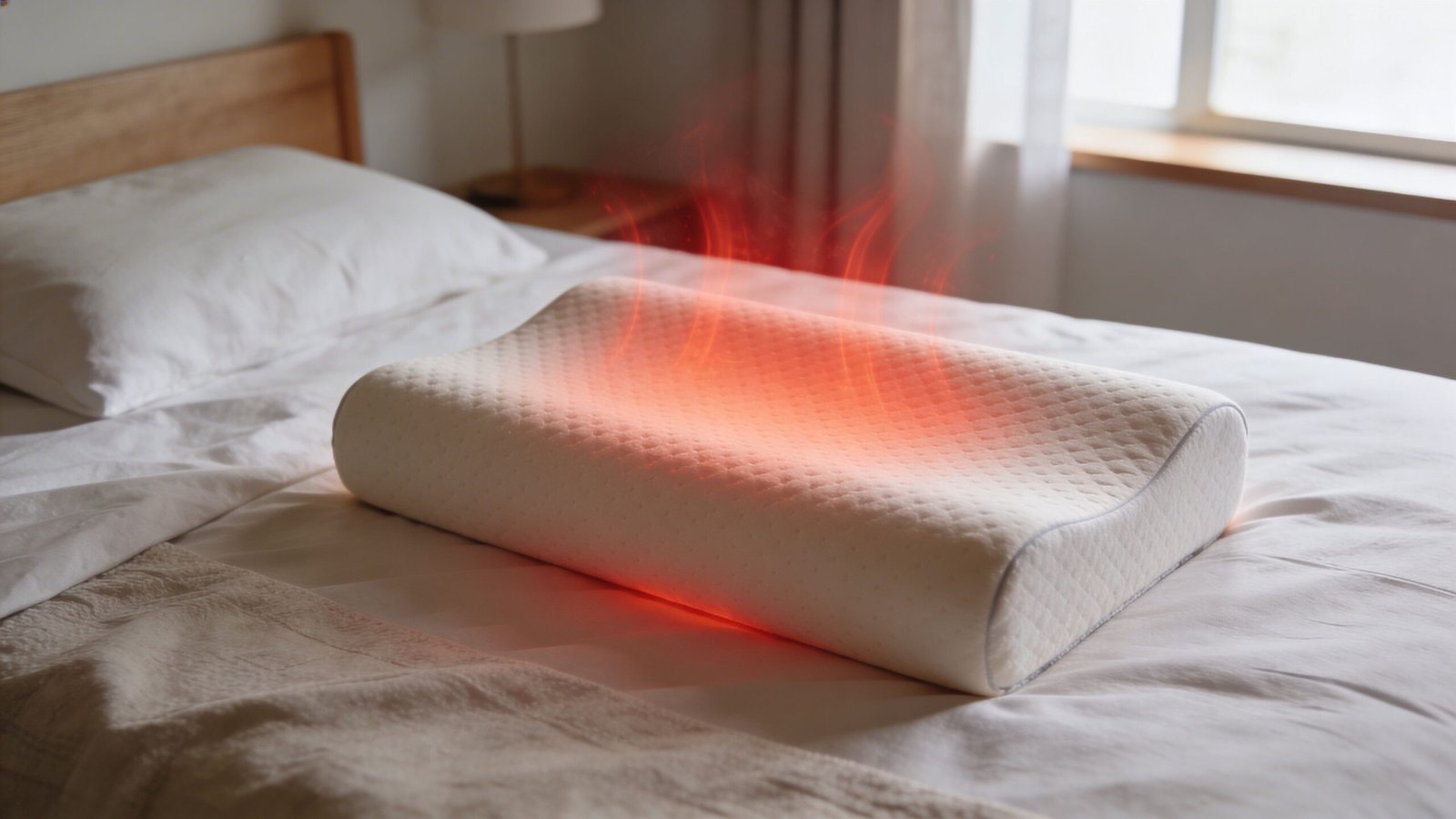
Dense foam is the biggest offender
Traditional solid memory foam is great at contouring. It’s also great at trapping heat. When foam is dense, air doesn’t move through it easily. Once your body warms that surface, it lingers.
That trapped warmth gets worse when:
- Your head sinks too far in, reducing airflow around your face and neck
- The pillow rebounds slowly, keeping more of your skin in contact with the same warm spot
- Humidity is high, which makes sweat evaporation slower
A lot of people say, “My pillow starts cool and then gets hot.” That’s exactly what a heat-trapping foam pillow does. Initial feel and overnight performance are not the same thing.
Covers can sabotage the whole pillow
The outer fabric matters more than most shoppers think. A pillow can have decent fill, but if the cover is thick, coated, or tightly woven, it blocks airflow and keeps moisture at the surface.
That’s why some “cooling” pillows disappoint. They may include one cooling ingredient, but the whole build doesn’t support temperature control.
Think of it this way:
| Problem area | What it does to your sleep |
|---|---|
| Dense core | Holds heat near your scalp |
| Tight cover | Slows airflow and traps moisture |
| Excessive sink | Increases warm skin contact |
| Poor loft match | Pushes your face and neck deeper into heat |
If you sleep hot, you have to judge the pillow as a system, not a buzzword.
Humidity makes every pillow flaw worse
In Florida-style weather, moisture is the multiplier. Sweat needs airflow to evaporate. Without it, your pillow gets muggy fast.
That’s why people in humid climates feel overheated even in a cooled room. The issue isn’t just ambient temperature. It’s the microclimate around your head.
A bad pillow doesn’t just feel warm. It blocks the body’s ability to cool itself.
If you want a deeper explanation of what your body is doing overnight, this guide on body temperature when sleeping is worth your time.
The marketing trick that fools people
Brands love saying “cooling gel,” “ice fiber,” or “temperature regulating.” Fine. But one cooling feature doesn’t fix a pillow built like a brick.
A pillow overheats when the core, fabric, and loft all work against airflow. That’s why some expensive pillows still sleep hot. They add a cool-touch cover to a heat-trapping interior and call it a day.
Ignore the label. Ask better questions:
- Can air move through the fill?
- Can the surface pull heat away fast?
- Can the fabric handle sweat without turning damp?
- Does the loft keep your head supported without burying it?
If the answer to those isn’t clear, skip it.
The Science Behind a Cool Pillow
A cooling pillow has one job. Keep the space around your head from turning hot, damp, and stagnant by 2 a.m.
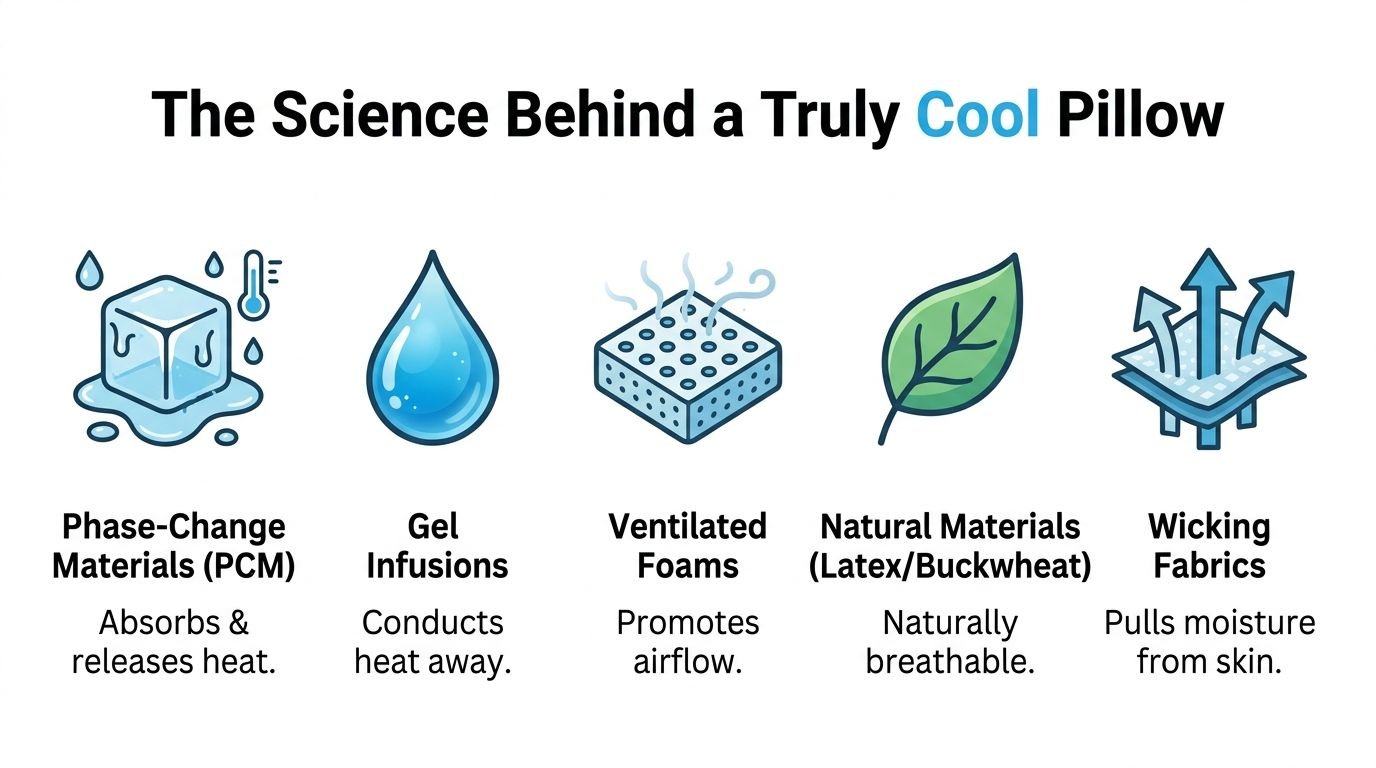
That happens through three separate mechanisms. Air moves through the pillow instead of getting trapped. The surface pulls heat off your skin fast enough to feel cooler on contact. The fabric manages sweat so humidity does not sit against your face and neck.
The best pillows do all three at once.
Airflow is the first thing I check
In humid climates, airflow matters more than fancy branding. If the core holds heat and moisture, the rest is decoration.
That is why solid memory foam so often fails hot sleepers. It molds closely, limits air movement, and keeps more warm surface area pressed against your head. Shredded latex, buckwheat, and ventilated designs do better because air can move through the fill instead of dying at the surface.
You feel the difference after an hour, not just in the first five minutes. The pillow stays more neutral instead of building that swampy heat pocket that wakes you up.
Materials that usually breathe better
- Shredded latex has open space between pieces, so it stays springy and moves more air.
- Shredded foam can work, but cheap versions still run warm.
- Buckwheat fill flows a lot of air and resists heat buildup, though the feel is firm and noisy.
- Ventilated foam helps only if the foam itself is not overly dense.
Surface cooling depends on heat transfer, not hype
The cool-touch effect comes from conduction. The cover or top layer grabs heat from your skin quickly, so the pillow feels cooler the moment you lie down.
Some brands use gel, graphite, copper, or specialty fibers and act like they reinvented sleep. Usually they did not. A lot of those materials create a brief cool sensation, then the benefit fades because the core underneath still traps heat.
Phase change materials are more convincing. They absorb and release heat as your skin temperature changes, which helps smooth out those middle-of-the-night heat spikes that are common with night sweats. Good Housekeeping’s cooling pillow testing also points to PCM fabrics as one of the few cooling features that hold up beyond first contact.
My rule is simple. A breathable core plus a PCM cover beats a dense foam pillow with a little gel mixed in almost every time.
Cooling features do different jobs
| Material Type | Primary Cooling Method | Feel & Firmness | Best For |
|---|---|---|---|
| Shredded latex | Airflow | Springy, supportive, adjustable feel | Hot sleepers who want breathability without losing support |
| Gel-infused foam | Surface heat transfer | Familiar foam feel, often medium to plush | People who like contouring but need some cooling help |
| PCM cover | Heat absorption and release | Cool-touch surface, depends on core underneath | Sleepers who get sudden heat spikes or night sweats |
| Buckwheat | Airflow | Firm, structured, less plush | People who prioritize airflow over softness |
| Wicking performance fabric | Moisture management | Depends on underlying fill | Humid-climate sleepers who wake up damp |
Moisture control is what separates “cool” from usable
Florida heat changes the standard. A pillow can feel cool at first and still fail once sweat shows up.
Wicking fabrics spread moisture across the surface so it evaporates faster. Breathable covers such as cotton percale, some technical poly blends, and more open-knit performance fabrics usually feel less clammy than smooth, dense covers that hold dampness against the skin. If you wake up wet, this part matters just as much as the fill.
A pillow that stays drier also feels cooler longer. Wet fabric kills comfort fast.
Qmax is one of the few specs worth paying attention to
Most cooling claims are fluff. Qmax is more useful because it measures how quickly a fabric pulls heat away on contact.
Higher Qmax does not guarantee an all-night cool pillow. It does tell you the surface is more likely to feel cool when your head first hits it, which matters if you overheat while falling asleep or wake up sweating and need quick relief. Use it as one piece of the puzzle, not the whole answer.
What works
If you sleep hot in a humid room, buy in this order:
- A breathable core
- A cover that moves heat quickly, preferably PCM
- Fabric that dries fast instead of staying clammy
- Support that keeps your head on top of the pillow, not buried in it
Miss the first two, and the pillow usually sleeps hot. Miss the third, and humidity wins. Miss the fourth, and your face ends up pressed into a warm, damp pocket anyway.
If you’re trying to figure out why you overheat in bed even before sweating starts, this article on why do I get so hot when I sleep lays out the bigger sleep-temperature picture.
Matching a Cooling Pillow to Your Sleep Style and Needs
You can buy a pillow that feels icy for five minutes and still wake up with a soaked pillowcase at 3 a.m. That happens all the time in Florida bedrooms, Gulf Coast apartments, and any sticky room where the AC runs hard but the air still feels wet. The right cooling pillow has to fit your sleep position, your heat pattern, and the way humidity traps warmth around your head.
Support comes first. If your neck is out of line, you shift more, press harder into the fill, and create a warmer pocket fast.
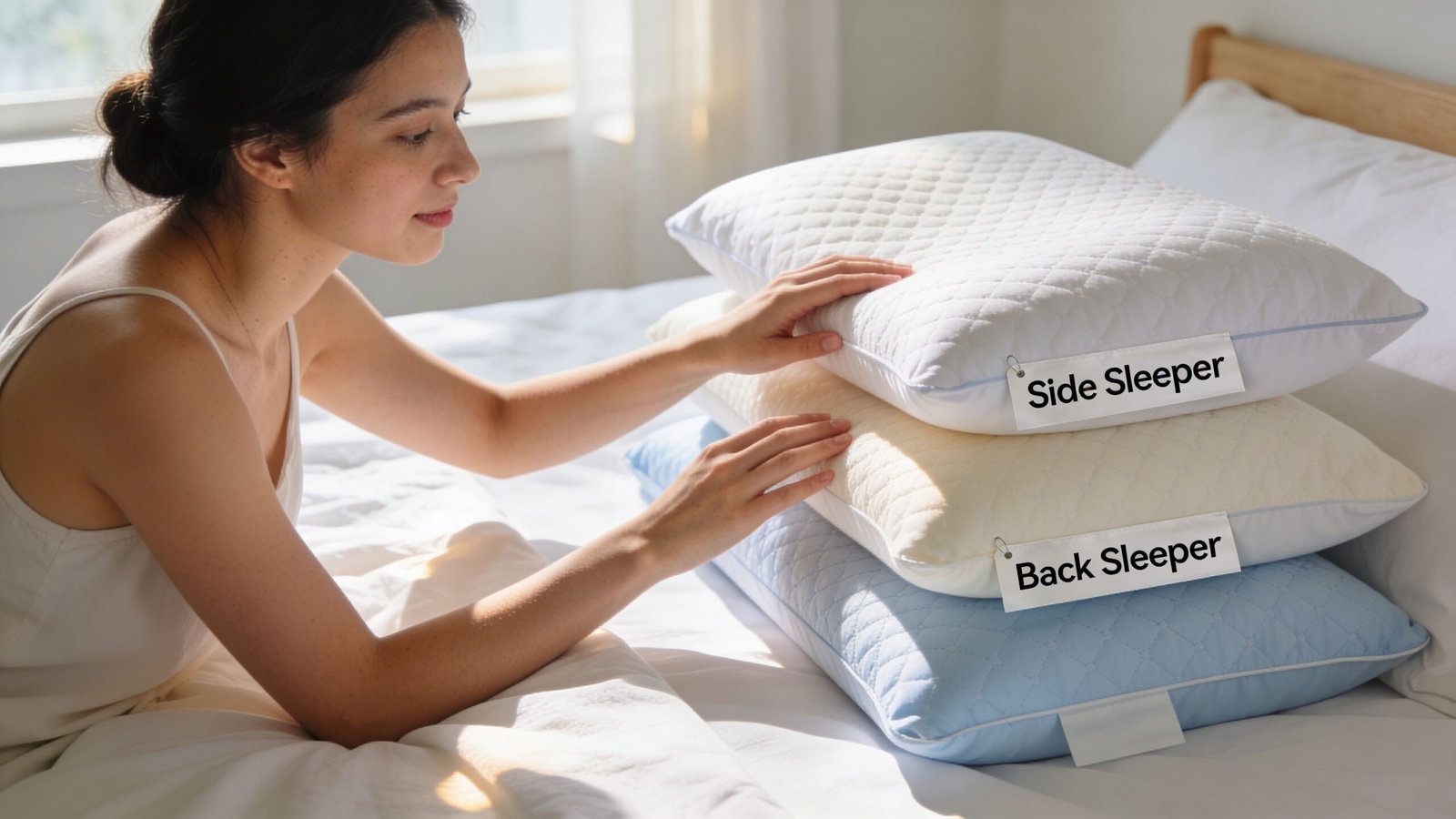
Side sleepers need height without that packed-in feeling
Side sleepers usually need the most loft. That makes them easy targets for thick, heat-holding pillows that look supportive in ads and sleep hot in real life.
If you sleep on your side and wake up sweaty, buy a pillow with adjustable fill. Shredded latex is my first choice. Shredded foam can work too if the cover is breathable and the fill does not compress into a dense slab. A customizable loft matters because shoulder width changes how much height you need, and too much fill pushes your face into a hot wall of fabric.
Skip solid memory foam blocks unless you already know you tolerate them well. Many side sleepers don’t.
Back sleepers should care about the cover more than the marketing story
Back sleepers usually stay in one spot longer, so the back of the head keeps loading the same surface. That makes the cover and top layer matter more.
A medium-loft pillow with a cool-touch cover or PCM panel is usually the better call here. You do not need an overbuilt pillow. You need one that holds your head slightly raised and does not turn clammy when the room feels heavy. Ventilated latex and breathable hybrids tend to do better than dense one-piece foam.
Stomach sleepers need restraint
Most stomach sleepers solve this problem the wrong way. They buy a tall cooling pillow because the product page promises stronger cooling tech, then spend the night twisting their neck and flipping to the cool side.
Use a low-loft pillow. Keep it soft enough to compress, but not so flat that your face sinks into a damp pocket. For this sleep position, less bulk usually means less trapped heat.
Hot sleepers need a pillow they can stay aligned on until morning. Surface chill alone will not save a bad fit.
Match the pillow to the way you overheat
Your heat pattern matters as much as your sleep position.
If the pillow feels hot within minutes, focus on cool-touch fabric and a higher Qmax surface, as noted earlier. Quick heat pull on contact helps when you run warm the second your head hits the bed.
If you fall asleep fine but wake up drenched later, put more weight on airflow and moisture handling. In humid climates, that usually means a breathable core, a cover that dries faster, and enough support to keep your head from sinking too deep. A pillow that only feels cool at first touch will disappoint you by the middle of the night.
Here’s a quick video if you want to see how sleep position and pillow choice affect comfort in practice.
Spend where it matters
Cheap cooling pillows are rarely cheap for long. You buy one, hate it, buy another, and end up spending mid-range money on junk.
Budget options can work if the loft fits you and the cover is decent, but this is the category with the most fake cooling claims. Mid-range is usually the sweet spot. That is where you start seeing adjustable fills, better fabric, and support that matches actual sleep positions. Premium pillows make sense for people with neck pain, heavy night sweats, or strong heat spikes that need both pressure relief and fast surface cooling.
My no-nonsense matching guide
Side sleeper, heavy sweater
Buy adjustable shredded latex first. If not, choose adjustable shredded foam with a breathable cover.Back sleeper, hottest in the middle of the night
Buy a medium-loft pillow with a PCM or cool-touch cover over a stable, breathable core.Stomach sleeper, hates bulky pillows
Buy a low-loft cooling pillow with a thin profile and fast-drying fabric.Sensitive to clammy fabric
Prioritize the cover. Smooth, dense fabric that stays damp will ruin an otherwise good pillow.Need instant relief at bedtime
Put more weight on Qmax and cool-touch fabric. That is the spec that relates to first-contact cooling.
Cooling Pillows That Get the Job Done
I’m not going to pretend there’s one perfect pillow for everyone. There isn’t. But there are clear product types that work better than others, and a few models keep coming up because they match the science instead of just the marketing.
Adjustable shredded pillows are the safest bet for many hot sleepers
If you don’t know where to start, start here. Adjustable shredded-fill pillows give you the best balance of airflow, support, and customization.
The reason is straightforward. Shredded fills leave more room for air movement than solid foam, and adjustability lets you stop overstuffing your neck into a hot mound.
A pillow like the Coop Sleep Goods Adjustable Pillow fits this lane. It appeals to a lot of combination sleepers because you can fine-tune the loft instead of accepting whatever height came out of the box.
Who should look at this type:
- Combination sleepers
- Side sleepers who need loft
- Anyone who wants one pillow that can be tweaked over time
PCM-cover pillows are better for heat surges
Some people don’t just sleep warm. They get sudden waves of heat and wake up sweaty fast. For those, I prefer a pillow with a strong cool-touch cover, especially phase change material.
The Nectar Tri-Comfort Cooling Pillow is a good example of the category. What matters here isn’t the brand story. It’s the design logic. A cooling cover can help handle those sharp temperature spikes better than a pillow that relies only on internal foam modifications.
This style makes the most sense for:
- Menopausal or perimenopausal sleepers
- People who feel fine at bedtime but wake overheated
- Back sleepers who stay in one position a long time
Latex pillows are for people who are done with swampy foam
If you’ve had enough of memory foam altogether, breathable latex is usually the move. Shredded latex especially has a more open, springy feel that doesn’t hold onto heat in the same suffocating way.
This category won’t please everyone. Some people want that deep foam hug. If that’s you, latex may feel too buoyant. But if your top priority is airflow, it’s one of the strongest options.
If you wake up with a hot scalp instead of just a warm cheek, your pillow core is probably the bigger problem than your pillowcase.
What I’d skip
A few pillow types sound good and disappoint:
- Solid memory foam with a thin “cooling” label slapped on the cover
- Pillows that brag about gel but say almost nothing about airflow
- Overstuffed hotel-style pillows with no moisture management
- Cheap cold-touch fabrics over bad foam
The first minute on the bed can fool you. What matters is hour three.
My practical recommendation stack
If I were giving fast advice to someone in a humid climate, I’d narrow it like this:
- Many people should buy an adjustable shredded pillow first
- Heat-spike sleepers should prioritize a PCM cover
- People who hate foam should try breathable latex
- Stomach sleepers should keep loft low and surface cooling high
That’s the shortest path to buying a pillow that has a real shot at fixing the problem.
Maintaining Your Pillow for Long-Lasting Coolness
A cooling pillow can lose a lot of its benefit if you smother it with the wrong bedding or never clean it properly. This is how people ruin a good purchase.
The biggest mistake is simple. They buy a cooling pillow, then wrap it in a thick, cheap pillowcase and wonder why it sleeps warm.
Your pillowcase can cancel the cooling effect
A dense standard cotton case can dull the feel of a cool-touch cover and hold onto moisture longer than you want. If your pillow relies on a PCM surface or high-Qmax fabric, covering it with the wrong material is like putting a towel over the part you paid for.
Better choices usually include:
- Breathable performance fabric pillowcases
- Tencel-style smooth, lightweight covers
- Bamboo-derived options that feel less stuffy
You don’t need the fanciest case on earth. You do need one that doesn’t block airflow and trap sweat.
Clean the cover before the core becomes the problem
Most cooling pillows have a removable cover. Wash that regularly according to the care label. Sweat, skin oils, and humidity can make even a good cover feel less fresh and less effective.
For the core:
- Air it out if it isn’t machine washable
- Don’t soak foam or latex unless the manufacturer specifically says you can
- Fluff adjustable fills so they don’t compact into dense hot spots
A pillow that starts sleeping warmer over time may not be “worn out” yet. It may just be dirty, compressed, or poorly ventilated.
Know when to replace it
Cooling performance fades when the structure breaks down. You’ll notice one or more of these signs:
| Sign | What it usually means |
|---|---|
| Surface feels muggy faster | Cover is worn, dirty, or less effective |
| Pillow stays flattened | Fill has compressed and airflow is worse |
| Neck support is inconsistent | Core no longer holds shape |
| You keep flipping for relief | Cooling performance has dropped enough to notice |
Don’t keep nursing a dead pillow because it was expensive. Once the support and cooling are both slipping, it’s done.
A cooling pillow is only as good as the layers touching it. Breathable pillow, breathable case, breathable protector. All three matter.
Your Cooling Pillow Questions Answered
Will a cooling pillow feel cold all night?
No. It shouldn’t. A good cooling pillow regulates temperature and prevents heat buildup. It’s not supposed to feel like a freezer pack under your head for eight straight hours.
The best ones feel neutral, dry, and stable. That’s better than icy.
Can a pillow protector block cooling?
Yes, absolutely. A thick, plasticky protector can ruin the feel and airflow of a good pillow. If you want protection, choose one that’s specifically breathable and lightweight.
If the protector feels rubbery or heavy in your hands, it’s a bad match for a cooling pillow.
Are gel and cooling fabrics safe?
Generally, yes. Most mainstream cooling pillows use common bedding materials and foams. You should still check the product details, materials list, and any certifications the brand provides, especially if you’re sensitive to odors or fabrics.
What I care about most is build quality and transparency. If a brand is vague about what’s inside the pillow, I move on.
How long does it take to adjust to a new pillow?
A few nights. Sometimes a bit longer if the loft or support style is very different from what you’ve been using.
If the cooling feels good but your neck feels off, don’t panic on night one. If it still feels wrong after a fair adjustment period, the fit is wrong.
Is the best pillow for night sweats always the most expensive one?
No. Price helps, but design matters more. I’d take a well-built adjustable shredded pillow over an overpriced solid foam “cooling” pillow any night.
You’re paying for airflow, surface performance, and usable support. If a premium pillow can’t explain how it handles those three, skip it.
Should menopausal sleepers shop differently?
Yes. If your heat comes in waves, prioritize a pillow with strong surface cooling and moisture management. Those sudden surges are brutal, and they need a pillow that reacts fast rather than one that just feels okay at bedtime.
What if my pillow is only part of the problem?
That’s common. A hot pillow can wreck sleep by itself, but bedding, sleepwear, room humidity, and mattress materials matter too. Start with the highest-contact item that’s overheating you most. For a lot of people, that’s the pillow.
If you’re tired of fake “cooling” claims and want practical advice from people who focus on hot-sleeper products, visit CoolRestGuide. It’s built for people who wake up sweaty, sleep in humid climates, and want bedding that helps.
