

You wake up at 2:17 a.m. with your shirt stuck to your back, one leg kicked out from under the blanket, and the fitted sheet twisted into a rope under your knees. The AC is on. The fan is on. You already bought the “cooling” set with the fancy packaging. And somehow your bed still feels like it’s holding heat instead of dumping it.
That’s the problem with most advice on cooling sheets for hot sleepers. It treats every sleeper the same, and it treats every climate the same. A set that feels fine in a dry bedroom can turn clammy fast in Florida, where humidity punishes bad fabric choices. If your sheets can’t move sweat and let air pass through, you don’t just sleep warm. You sleep damp, annoyed, and half-awake all night.
Most of it means nothing unless the fabric breathes, dries, and stays comfortable after repeated sweaty nights and regular washing.
Some cooling sheets do help. They’re not magic, and they won’t turn a heat-trapping mattress into a refrigerated slab. But the right material, weave, and fit can make a real difference when you’re waking up overheated night after night.
The End of Sweaty Nights Starts Here
The worst part of sleeping hot isn’t just the heat. It’s the pattern.
You fall asleep tired, wake up sweaty, throw a leg out, flip the pillow, pull the blanket back on because now you’re chilly, then wake up hot again. By morning, the bed looks like you fought it.
That cycle is miserable for regular hot sleepers. It’s even worse for people dealing with night sweats, hormonal shifts, post-workout overheating, or a bedroom that never quite dries out because the air already feels wet before bedtime.
The good news is that cooling sheets aren’t just a label manufacturers slap on a box. There is real evidence that the right sheets can help. In a pilot study of cooling bed sheets, the share of participants who had trouble sleeping because they felt too hot dropped from 82.5% to 39.6%, which cut heat-related sleep complaints in half (pilot study on cooling bed sheets).
That matters because hot sleep isn’t just about comfort. It breaks continuity. You don’t get a clean night of rest when your body keeps pulling you awake to deal with heat and sweat.
What people get wrong first
A lot of shoppers go straight to brand names, buzzwords, or “luxury” finishes. That’s backwards.
Start with the actual problem:
- If you wake up damp, you need better moisture handling.
- If the bed feels stuffy, you need more airflow.
- If sheets feel cool at first and then muggy, the fabric probably can’t keep up once body heat and humidity build.
Cooling sheets work best when they solve the specific reason you’re overheating, not when they just feel slick in the first five minutes.
What this guide focuses on
This guide is built for real-world use, especially in humid conditions where weak fabrics get exposed fast.
You’ll see what helps, what tends to disappoint, and how to test sheets yourself before you trust the label. That last part matters because too many sheet reviews stop at “soft” and “comfortable,” which tells a sweaty sleeper almost nothing.
How Cooling Sheets Actually Keep You Cool
Cooling sheets do their job through three things. Airflow, moisture movement, and surface feel. If a sheet is missing one of those, it may still feel nice, but it probably won’t solve sweaty nights.
Breathability is the first filter
Think of breathability like opening a window for your skin.
When fabric breathes, body heat has somewhere to go. When it doesn’t, the air around your body gets trapped. In humid weather, that trapped warmth turns sticky fast.
This is why hot sleepers often do better with crisp, lighter fabrics instead of dense, silky ones. The fabric needs room for air to move through it. If the weave is packed tight, heat hangs around your body longer.
If you’re trying to improve body temperature when sleeping, breathability is the part that most brands oversell and most buyers underestimate.
Moisture-wicking is what saves you in humidity
Breathability alone isn’t enough in Florida-style weather. If you sweat and the sheet holds that moisture against your skin, you’ll still feel lousy.
A good cooling sheet pulls moisture off the body and spreads it across the fabric so it can evaporate instead of pooling under your back, chest, or legs. That’s the difference between waking up a little warm and waking up feeling clammy.
On a humid night, this matters more than the “cool-to-the-touch” gimmick. A sheet that feels chilly at first but stays damp loses the plot fast.
Cool-to-the-touch is real, but limited
Some fabrics feel cooler the second you slide into bed. That sensation is real. It comes from how the surface transfers heat when your skin first touches it.
But initial coolness is not the whole story.
A sheet can feel great for the first few minutes and still become uncomfortable later if it lacks airflow or traps moisture. That’s why I don’t judge cooling sheets by first touch alone. Plenty of slick fabrics ace the showroom test and fail the midnight sweat test.
Practical rule: Judge sheets by what they feel like after you’ve been in bed a while, not by the first contact.
The thread count myth needs to die
A lot of people still assume higher thread count means better sheets. For hot sleepers, that idea causes expensive mistakes.
The useful range for cooling sheets is 200 to 400 thread count, while 600 and up tends to create a denser fabric that restricts airflow and traps heat (thread count guidance for cooling sheets).
That’s why some expensive “luxury” sets sleep warmer than cheaper percale cotton. They’re too dense. They may feel smooth in the package, but in real use they can hold heat around the body.
Weave matters as much as fiber
Even a good fiber can underperform if the weave is wrong.
Here’s the short version:
- Percale weave usually feels crisp, airy, and more breathable.
- Sateen weave usually feels smoother and drapier, but often sleeps warmer.
That doesn’t mean sateen is always bad. It means hot sleepers should be suspicious of anything heavy, glossy, or marketed mainly around softness rather than airflow.
What actually works in practice
If you’re shopping for cooling sheets for hot sleepers, the winning formula usually looks like this:
- Lower to moderate thread count
- Breathable weave, especially percale
- Fibers that handle sweat well
- A fit that stays flat instead of bunching
That last point sounds minor until a fitted sheet starts wrinkling under your body and cutting off airflow in the exact places you’re already overheating.
Comparing the Best Cooling Sheet Materials
Material is where most of the performance comes from. Marketing can dress up bad construction, but it can’t turn the wrong fabric into a great hot-sleeper sheet.
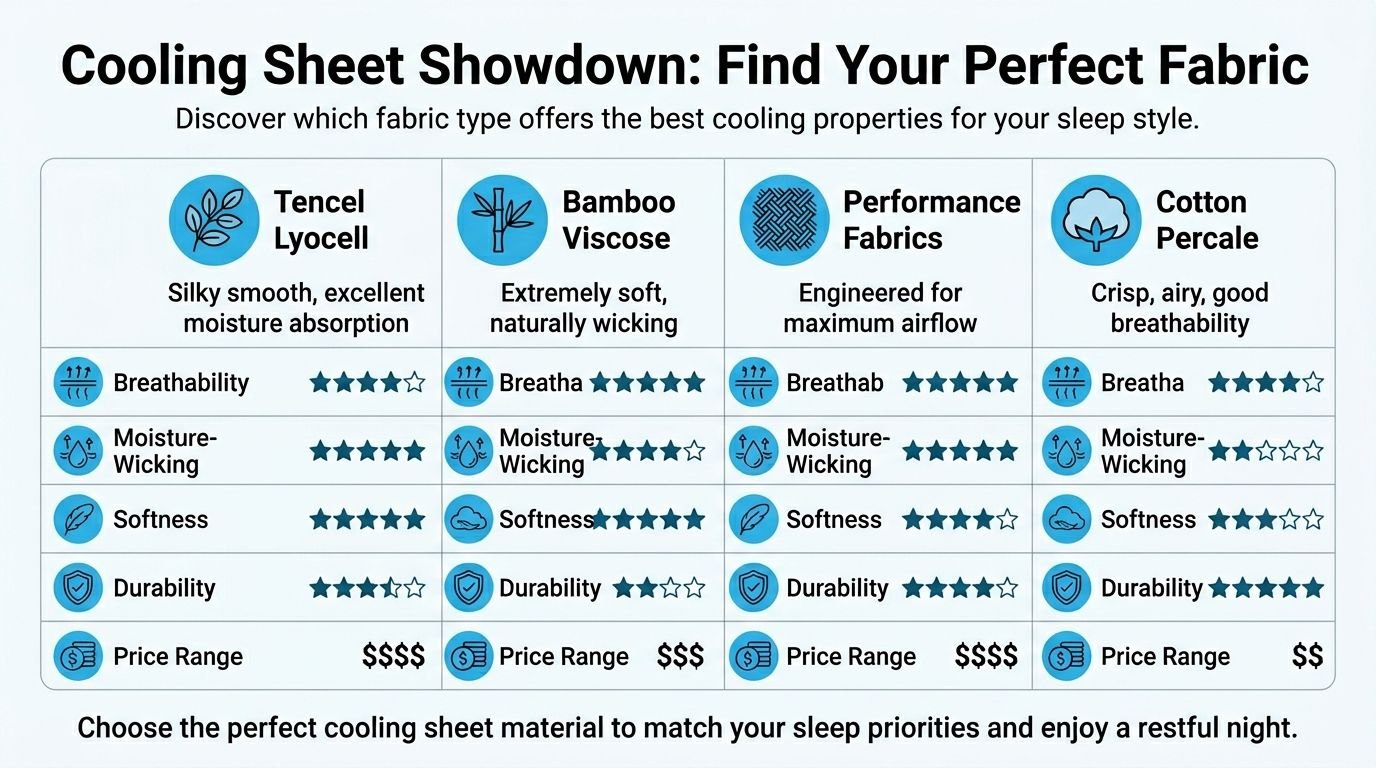
Some materials feel dry and airy. Others feel smooth and damp-proof. Some start strong and wear out poorly. Some are forgiving for mixed sleepers. Some are great only if you don’t mind wrinkles.
Here’s the practical side-by-side view.
The quick comparison
| Material | Breathability | Moisture-Wicking | Feel | Durability | Avg. Price |
|---|---|---|---|---|---|
| Linen | Excellent | Very good | Textured, airy | Very good | Premium |
| Tencel lyocell | Very good | Excellent | Smooth, slick | Good to very good | Premium |
| Cotton percale | Very good | Good | Crisp, cool, matte | Very good | Moderate |
| Bamboo viscose | Very good | Excellent | Silky, soft, drapey | Fair to good | Moderate to premium |
| Cooling synthetics | Varies widely | Often good at first | Smooth, athletic, sometimes slippery | Varies widely | Moderate to premium |
A video walkthrough can help if you want to see fabrics discussed in a more visual way.
Cotton percale for people who want crisp airflow
Percale cotton is still one of the safest picks for hot sleepers.
It feels dry, light, and less clingy than silky fabrics. In humid bedrooms, that crispness helps because the sheet doesn’t plaster itself to your skin the way some smoother materials do. If you hate slippery sheets, percale is often the easiest win.
The downside is feel. Some sleepers try percale and complain that it’s not “luxury soft” out of the package. That’s fair. Percale usually prioritizes airflow over that buttery showroom texture.
Best for:
- People who want hotel-style crispness
- Sleepers who run hot but don’t sweat heavily
- Anyone tired of silky sheets bunching under them
Bamboo viscose for sweat management
Bamboo viscose is popular for a reason. When it’s done well, it handles moisture better than standard cotton and feels softer against the skin.
The strongest quantitative claim in this category is that bamboo viscose sheets can absorb up to 60% more moisture than cotton and disperse it three times faster, helping maintain skin temperature 2 to 3°F lower overnight (bamboo viscose cooling and moisture data).
For people with night sweats or sticky summer sleep, that’s meaningful. Bamboo often feels less clammy than basic cotton once sweating starts.
But there are trade-offs:
- It can bunch more easily than crisper fabrics.
- Some sets feel fantastic at first and less impressive after repeated washes.
- If the weave is too dense, the cooling benefit gets blunted.
I like bamboo best for sleepers who care more about moisture control and softness than a crisp sheet feel.
Tencel lyocell for balanced cooling
Tencel sits in a useful middle zone.
It tends to feel smoother than cotton percale and less gummy than some bamboo sets. For mixed-temperature couples, this balance can help because it usually feels breathable without being aggressively cold or papery.
It’s also one of the better choices for people who hate roughness. If linen feels too textured and percale feels too stiff, Tencel often lands better.
Weak spots:
- Some sets can feel slippery if you toss and turn a lot.
- Not every “eucalyptus” or “lyocell” set is built equally well.
- Premium pricing can sting if the construction is mediocre.
Linen for maximum airflow
Linen is the fabric I recommend to people who care most about ventilation and least about a polished finish.
It breathes. It dries well. It tends to stay comfortable in muggy weather because it doesn’t feel dense. For sleepers who turn their bed into a heat zone every night, linen can be a workhorse.
The trade-off is obvious the second you touch it. Linen has texture. Some people love that relaxed, airy feel. Others decide instantly that it’s not for them.
Best for:
- Very hot sleepers
- People in humid climates
- Anyone who values airflow more than silky softness
Not ideal for:
- Sleepers who want a smooth, draped, polished sheet
- Anyone annoyed by wrinkles or texture
Cooling synthetics and performance fabrics
This category is the messiest.
Some performance fabrics are engineered for airflow and moisture movement, and some of them do a respectable job. Others feel like athletic wear stretched over a mattress. You may get quick-dry behavior, but you also risk a slick, less natural hand feel that not everyone wants for all-night sleep.
I’m cautious with this category because labels get vague fast. “Cooling blend,” “phase change,” and “performance” can mean almost anything. Unless a brand explains construction clearly and gives you a real trial period, I’d put synthetics behind percale, bamboo, Tencel, and linen for most hot sleepers.
My practical ranking in humid weather
If you sleep hot in humidity, I’d usually sort materials like this:
- Linen if airflow is your top priority
- Cotton percale if you want dependable breathability and a crisp feel
- Bamboo viscose if sweat control and softness matter most
- Tencel lyocell if you want balanced comfort with a smoother finish
- Cooling synthetics only if you’ve tested and liked the feel before
The best fabric isn’t the one with the best marketing story. It’s the one that still feels dry, flat, and breathable at 3 a.m.
Look for These Features Beyond the Fabric
A strong fabric can still fail if the sheet is built badly.
I’ve slept on breathable materials that should have worked, but the weave was too dense, the fitted sheet shifted all night, or the pockets were so shallow the corners kept popping off. Once that happens, all the “cooling technology” talk stops mattering.
Percale usually beats sateen for heat control
If you only remember one construction detail, make it this one.
Percale tends to be the better pick for hot sleepers because it feels lighter and allows more airflow. Sateen usually feels smoother and heavier. Some people love that drape, but in warm, humid rooms it can feel stuffier.
That difference shows up in actual use, not just in product descriptions. A sheet can be made from good cotton or bamboo and still sleep warmer if the weave leans dense and glossy.
Fit changes performance more than people expect
Loose, shifting fabric doesn’t just annoy you. It creates bunching, folds, and pressure points where heat gets trapped.
That’s why I pay attention to:
- Pocket depth that matches the mattress
- Elastic quality that keeps the fitted sheet anchored
- Corner hold so the sheet doesn’t creep up overnight
For thicker modern beds, secure fit matters even more. The same goes for restless sleepers, adjustable bases, and anyone layering a topper under the sheets.
If you’re comparing bedding details and sleep accessories, this broader guide to sleep tech and bedding performance helps frame what’s worth caring about and what’s mostly packaging.
Small build choices that separate good sheets from frustrating ones
Here are the details I watch for after material and weave:
- Matte, breathable finish instead of heavy sheen. Slick can be fine. Slick and dense usually isn’t.
- Strong edge stitching because weak hems and stretched corners show up quickly with frequent washing.
- Flat lay on the bed rather than drapey excess that twists around the legs.
A hot sleeper doesn’t need pretty sheets that photograph well. A hot sleeper needs sheets that stay put, stay dry, and don’t turn into a bundled mess by midnight.
How to Test and Choose Your Perfect Sheets
Most reviews don’t test in the conditions that expose bad cooling sheets. They mention softness, maybe mention fabric, then stop there.
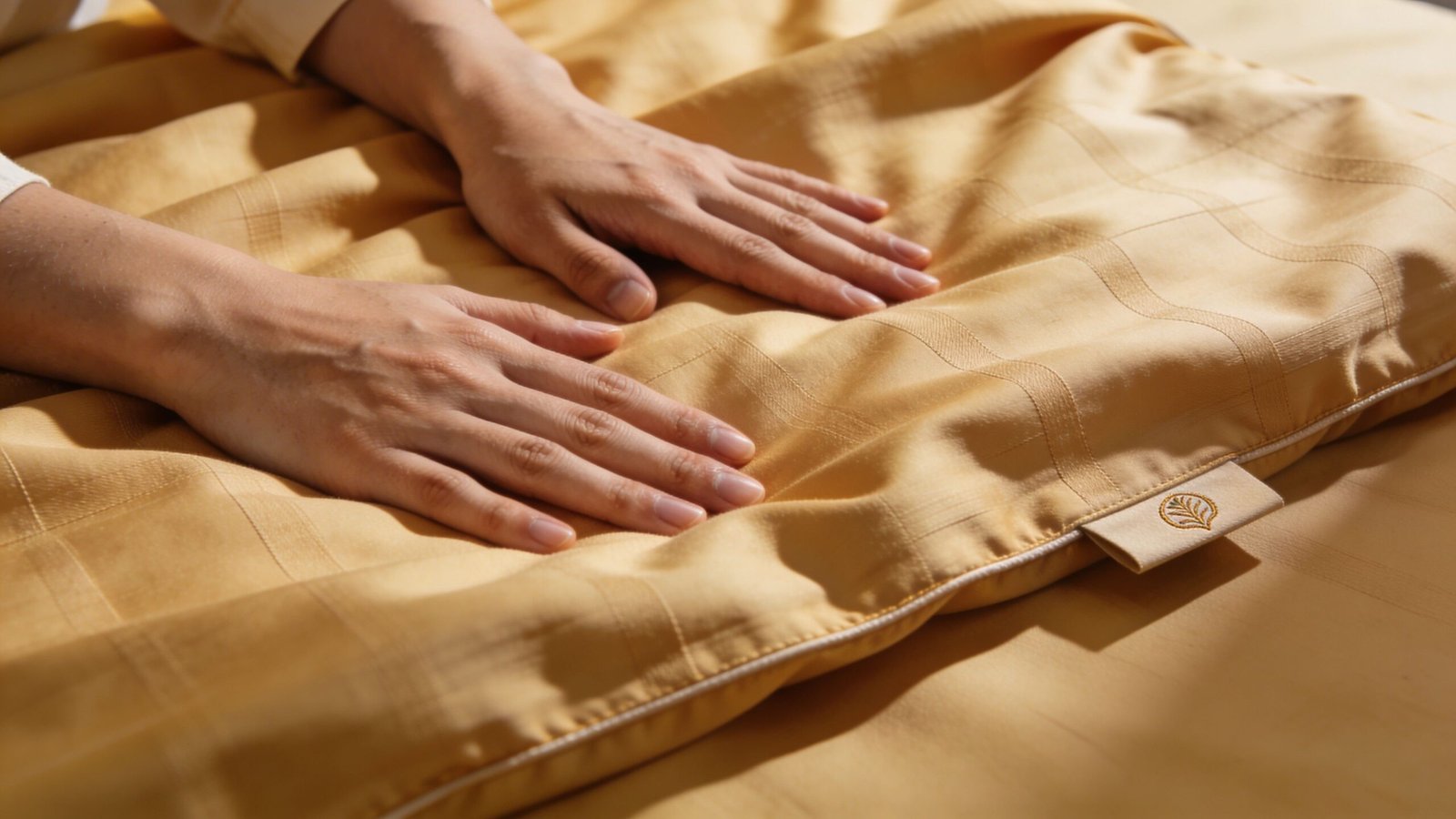
That’s a problem because real-world quantified cooling data is scarce, especially in high-humidity conditions, which leaves shoppers leaning on subjective claims and makes at-home testing and strong trial periods essential (analysis of the cooling sheet data gap).
Don’t trust first-night impressions
A brand-new sheet can fool you.
Fresh out of the package, almost anything clean and room-temperature can feel cool for a few minutes. What matters is how the sheet behaves after you’ve slept on it, washed it, and put it through a few humid nights.
I’d rather sleep on a sheet for several nights than rely on a one-evening impression. That’s how you catch bunching, trapped warmth, slow drying, and fabric that starts soft but ends sticky.
The DIY breathability test
You don’t need lab gear to spot obvious losers. Use this quick home test before you commit to a set.
Step 1
Hold a single layer of the sheet fabric up to your mouth and breathe through it.
If airflow feels restricted, that’s a warning sign. This isn’t perfect science, but dense sheets usually reveal themselves fast.
Step 2
Lay the fabric across your forearm for several minutes in a warm room.
Then remove it and notice what your skin feels like. Dry and neutral is good. Damp, sticky, or overly warm is not.
Step 3
Place a small drop of water on the fabric surface.
Watch whether it spreads through the material or beads up and sits there. Faster spreading usually suggests the sheet can move moisture better, which matters if you sweat at night.
The overnight test that matters more
After the quick checks, run the sheet in actual sleep conditions.
Use the same pillow, same comforter, and same thermostat for a few nights. Change only the sheets if you can. That removes a lot of the guesswork.
Judge the set on these questions:
- Do you wake up less damp
- Does the fitted sheet stay flat
- Do your legs feel tangled in extra fabric
- Does the bed feel less stuffy after a few hours
- Does the sheet still feel good after a wash
Return policy is not a bonus
For hot sleepers, a real trial window matters because you often won’t know in one night whether a sheet performs.
I won’t treat a strict, inconvenient return process as a minor issue. If a brand makes returns painful, it usually means they expect disappointment. Good cooling sheets should survive scrutiny in a real bedroom, not just in ad copy.
Where to spend and where to save
Not every sleeper needs the most expensive option.
Spend more when:
- You deal with regular night sweats
- You live in a humid climate
- You need durable sheets for frequent washing
- You’re sensitive to bunching, texture, or trapped heat
Save money when:
- You just need a breathable summer rotation
- You already know you do well with simple percale
- You’d rather test a solid basic fabric than gamble on premium buzzwords
What I don’t recommend is paying extra for vague “cooling technology” without clear material and weave details. If a brand won’t tell you what the sheet is, that’s usually enough information.
Solutions for Couples and Severe Night Sweats
Standard sheet advice breaks down fast when two people share a bed and only one of them sleeps hot.
That setup creates a different problem. One person wants airflow and a lighter feel. The other wants some softness and insulation. Most buying guides barely touch it, even though one source notes that 40% of hot sleeper complaints involve partner discomfort (discussion of mixed-temperature couple complaints).
For couples with different temperature needs
The goal isn’t finding a sheet that feels icy. It’s finding one that doesn’t punish either sleeper.
In practice, these tend to work best:
- Tencel lyocell for a smoother, balanced feel
- Lighter percale cotton for couples who both hate stuffiness
- Some bamboo sets if the hot sleeper sweats a lot and the other sleeper doesn’t mind a silkier texture
What usually goes wrong:
- Ultra-crisp sheets can feel too cool or too dry to the colder partner.
- Overly silky sheets can trap more warmth and annoy the hot partner.
- Slippery fitted sheets magnify movement when one person tosses and turns.
If you share a bed, don’t just evaluate temperature. Evaluate motion, bunching, and whether one partner ends up fighting the fabric all night.
For heavy sweaters and severe night sweats
This group needs a different standard.
You’re not shopping for “pleasantly cool.” You’re shopping for sheets that can handle repeated moisture without turning swampy or wearing out too fast. That usually means prioritizing moisture movement, fast drying, and construction that survives frequent laundering.
My usual priority order looks like this:
- Bamboo viscose if sweat management is the top issue
- Linen if airflow and drying matter most
- Percale cotton if you want simpler care and less cling
The wrong move is choosing a dense, smooth sheet just because it feels cold at first touch. Severe night sweats expose that mistake quickly.
If you wake up drenched, judge sheets by how fast they stop feeling wet, not by how soft they felt in the package.
Laundry habits that preserve performance
Good sheets lose a lot of their edge when people wash them like heavy towels.
For cooling fabrics, I’d keep it simple:
- Use mild detergent so residue doesn’t coat the fibers
- Skip fabric softener because it can leave buildup that hurts breathability
- Dry gently and avoid cooking the sheets
- Wash consistently if you sweat heavily, because trapped residue and body oils make sheets feel warmer over time
Care won’t turn bad sheets into good ones. But sloppy care can absolutely make good sheets perform worse.
The realistic expectation
Sheets can improve a sweaty bed. They can’t solve every heat problem by themselves.
For severe night sweats, the best sheet is often the one that recovers fast after moisture hits it, stays comfortable wash after wash, and doesn’t turn into a wrinkled knot when the night gets rough.
Build Your Ultimate Cool Sleep System
Cooling sheets are the foundation, not the whole fix.
If you put breathable sheets over a heat-trapping mattress protector, a sweaty pillow, and a heavy comforter, you’re asking the sheets to clean up everyone else’s mess. They can only do so much.
Build the bed from the skin outward
Use this order:
- Start with sheets that match your sleep profile. Percale for airflow, bamboo for moisture, linen for maximum ventilation, Tencel for balance.
- Add a breathable protector instead of a plasticky one that blocks airflow.
- Choose a pillow that doesn’t run hot, because a cool bed with a sweaty head still ruins sleep.
- Keep top layers light if your room already runs warm.
If you’re pairing your bedding with an underbody cooling layer, these options for cooling mattress pads are worth comparing carefully.
The fast checklist
Before you buy, ask:
- Does the fabric breathe in humidity
- Will it move sweat instead of holding it
- Is the weave airy or dense
- Will the fitted sheet stay anchored
- Can the rest of your bed support the same goal
That last part gets skipped too often. Hot sleepers need the whole bed pulling in the same direction.
Cooling sheets for hot sleepers can help a lot. The right pair won’t fix every heat issue, but it can stop your bed from working against you. That alone is a huge upgrade when you’re waking up sticky, tangled, and irritated night after night.
If you’re tired of sorting through cooling claims that all sound the same, visit CoolRestGuide for honest reviews and practical buying guides focused on what helps hot sleepers in warm, humid climates.
