

Waking up in a pool of sweat is more than just an inconvenience—it’s a thief of good sleep. It leaves you tangled in damp sheets with a racing heart, all but guaranteeing you'll feel foggy and exhausted the next day. If that vicious cycle sounds painfully familiar, please know you’re not alone, and you’ve come to the right place.
I get it. As a trusted friend and expert in sleep, I’ve heard countless stories of ruined sheets, interrupted nights, and the bone-deep fatigue that follows. This guide was created to give you real, science-backed strategies, not just empty promises. Whether you're a naturally hot sleeper, live somewhere warm and humid, or are dealing with the frustrating hormonal shifts of menopause or andropause, we understand how disruptive this is.
Our goal is simple: to arm you with the knowledge and tools to fight back and reclaim your rest. Think of this as your personal roadmap to finally getting the deep, dry, uninterrupted sleep you deserve.
What Causes Night Sweats?
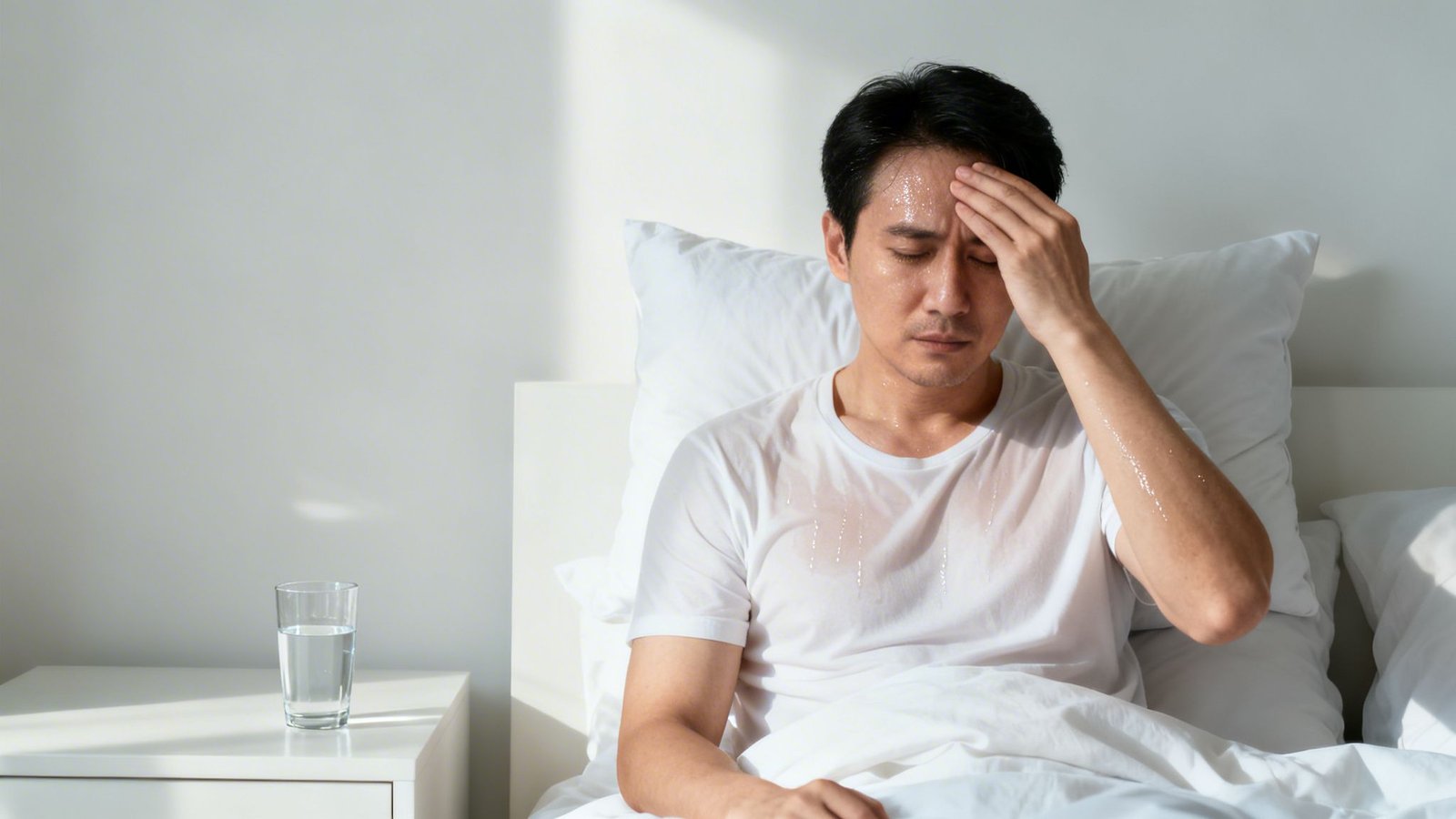
If you're waking up in the middle of the night feeling like you just ran a marathon, you know the frustration all too well. It’s more than just being a "hot sleeper"—it's that drenching, sheet-soaking sweat that ruins your sleep and leaves you exhausted. This isn't just about your room being too warm; it's a condition doctors call nocturnal hyperhidrosis.
And if you feel embarrassed or alone in this, you're not. Night sweats are incredibly common, but many people just assume it's something they have to live with. In reality, studies from primary care settings show up to 41% of patients report dealing with night sweats.
So, what's really going on? Understanding the triggers is the first real step toward finding a solution. Your body's internal thermostat can get thrown off for a lot of reasons, and they often overlap.
Hormonal Shifts for Women and Men
Hormones are the body's powerful chemical messengers. When they get out of balance, your temperature regulation is often the first thing to go haywire.
-
For Women (Perimenopause and Menopause): This is the classic culprit. As estrogen levels drop, it can trick the hypothalamus—your brain’s thermostat—into thinking your body is overheating. This kicks off a hot flash, and your body responds with a flood of sweat to cool down, leading to those infamous drenching night sweats. In fact, up to 80% of women experience this during their transition.
-
For Men (Low Testosterone): It's not just a female issue. Men can experience hormone-related night sweats, too. A gradual decline in testosterone, sometimes called "andropause," can have a similar disruptive effect on the body's ability to manage its temperature.
Medications That Turn Up the Heat
Before you blame your body, take a look in your medicine cabinet. Many common medications have excessive sweating as a known side effect because they interfere with the brain regions or hormones that control body temperature.
Common Medication Culprits:
Several types of prescription drugs are known to cause night sweats. This list includes many antidepressants (especially SSRIs), steroids, and some blood pressure medications. Even over-the-counter fever reducers like acetaminophen can be a trigger for some. If your sweating started around the same time you began a new medication, it’s a conversation worth having with your doctor.
Lifestyle and Environmental Factors
Your daily habits and where you live play a massive role. These factors can be the root cause of your night sweats or just make an existing problem a whole lot worse.
Living somewhere hot and sticky like Florida or Texas? High humidity is your enemy. It prevents sweat from evaporating off your skin, which is the body's primary cooling method. The moisture gets trapped, leaving you feeling sticky and overheated even if the air conditioner is running full blast. We dive deeper into this issue right here: why you sweat so much in your sleep.
Other everyday triggers include:
- Spicy Foods and Alcohol: A spicy meal or a glass of wine too close to bed can raise your core body temperature and kick your sweat glands into high gear while you sleep.
- Stress and Anxiety: That "fight or flight" response doesn't just happen during the day. Stress releases hormones that spike your heart rate and body temperature, often leading to nighttime sweating.
- Underlying Medical Conditions: While most causes are harmless, persistent night sweats can sometimes signal an underlying issue like sleep apnea, an infection, or thyroid problems. If your sweats are severe, won't go away, or come with other symptoms like a fever or unexplained weight loss, it’s always smart to check in with a healthcare professional.
The Science of Core Body Temperature & Why It's Key
To get a handle on night sweats, you first have to understand your body’s built-in thermostat. It's a lot like the smart thermostat in your house—it’s constantly working in the background to keep things just right. This natural process, known as thermoregulation, is absolutely vital to your sleep cycle.
Every single night, your body tries to lower its core body temperature by about one to two degrees. This slight cool-down is the biological trigger that tells your brain, "Okay, it's time for sleep," and cues the release of melatonin. It’s not just about feeling a little cooler; this drop is a non-negotiable step for getting deep, restorative rest.
When something throws a wrench in the works—be it hormones, a hot room, or even that spicy dinner—your body’s finely tuned system gets completely out of whack. It senses overheating and deploys its most powerful emergency cooling system: sweat.
Waking up soaked is a clear sign that your natural temperature regulation has failed. The only way to truly stop the sweating is to help your body successfully drop its temperature and keep it there all night.
Science Snippet: The Sleep-Temperature Connection: Think of your body temperature and sleep cycle as dance partners. A lower core temperature leads the way into sleep, while a rising temperature helps you wake up in the morning. Anything that disrupts this rhythm—especially overheating—shatters your sleep quality and leaves you exhausted.
This is why your sleep environment matters so much. A stuffy room or heat-trapping bedding makes it nearly impossible for your body to offload that excess heat. You can dive deeper into why you might be getting so hot when you sleep in our detailed guide.
Best Solutions: Building Your Ultimate Cooling Sleep System
Tackling night sweats isn't about finding one single magic bullet. It’s about building a smart, layered “Cooling Sleep System” where every component works in harmony to pull heat and moisture away from your body. Let's walk through our top recommendations, linking to our in-depth "7 Best" reviews.
- Cooling Pillows: Your head is a major heat-release zone. A cooling pillow isn't a luxury; it's your first line of defense.
- Cooling Sheets: Swapping heavy, non-breathable fabrics for moisture-wicking materials like Tencel or bamboo is a game-changer.
- Cooling Mattress Toppers: Many mattresses trap heat. A topper creates a cool, breathable barrier between you and your personal furnace of a bed. Our complete guide to cooling mattress pads breaks down the tech.
- Sleep Tech: For severe cases, active cooling systems that use water or air to regulate your bed's temperature can be a lifesaver.
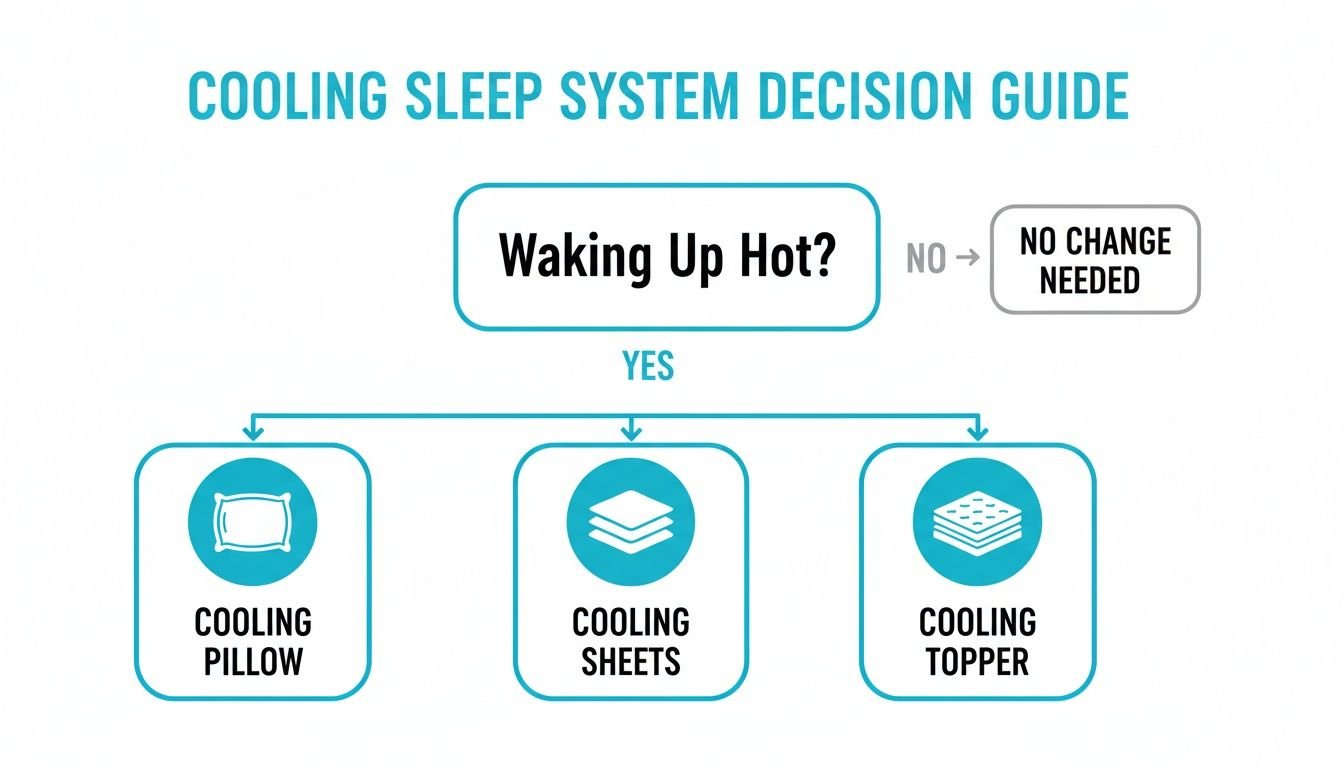
For many, a combination of a cooling pillow, sheets, and topper is all it takes. But if you need more power, active sleep tech provides a level of precise temperature control that no passive product can offer.
Practical Nightly Routine & Lifestyle Tips for Hot Sleepers
Investing in the right cooling products is a huge step, but the most powerful changes often start with small, consistent habits. These tips are free, science-backed, and will help you create a pre-sleep ritual that tells your body it’s time to chill out—literally.
- Optimize Your Bedroom: Keep your thermostat between 60 and 67°F (15-19°C). Use blackout curtains and a fan to circulate air, which helps sweat evaporate from your skin.
- Take a Lukewarm Shower: A lukewarm shower 90 minutes before bed seems counterintuitive, but it works. As the water evaporates off your skin, it causes your core temperature to drop, giving your body a head start on the cooling process.
- Choose Sleepwear Wisely: Ditch heavy synthetics. Opt for loose, lightweight, breathable fabrics like cotton, bamboo, or Tencel. Or, better yet, sleep nude to allow for maximum airflow.
- Mind Your Evening Habits: For at least 2-3 hours before bed, avoid common triggers like spicy foods, alcohol, caffeine, and heavy meals. These all fire up your metabolism and generate internal heat.
Your Night Sweat Questions, Answered (FAQ)
It's completely normal to have questions. Let's tackle some of the most common ones we hear from people who are tired of waking up in a pool of sweat.
Can stress and anxiety really cause night sweats?
Without a doubt. Your body's stress response can stay activated at night, releasing hormones that disrupt your internal thermostat and send your sweat glands into overdrive. Practicing a few minutes of deep breathing before bed can make a world of difference.
What's the difference between a "hot sleeper" and having "night sweats"?
A hot sleeper just runs warm and might kick off the covers. Night sweats are drenching episodes that soak pajamas and sheets, often happening even in a cool room and signaling an issue with your body's temperature regulation.
When should I see a doctor about night sweats?
You should see a doctor if your sweats are relentless, getting worse, or accompanied by other symptoms like unexplained weight loss, a fever, or persistent fatigue. It's important to rule out any underlying medical conditions.
Are there foods that make night sweats worse?
Yes. The main offenders, which you should try to avoid for 2-3 hours before bed, are spicy foods, alcohol, caffeine, and heavy, fatty meals. They all generate internal heat.
How long does it take for these changes to help?
It varies. Some people feel relief in a few nights. For others, especially if the cause is hormonal or stress-related, it might take a few weeks of consistent effort. Patience is key.
Do men and women experience night sweats differently?
They often do. For women, night sweats are a well-known hallmark of perimenopause and menopause. For men, they can be tied to low testosterone levels ("andropause"), as well as certain medications or conditions like sleep apnea.
Can dehydration cause night sweats?
It's actually the other way around: night sweats are a common cause of dehydration. The key is to stay consistently hydrated throughout the day, rather than chugging water right before bed.
Can my weight be a factor?
Yes, excess body fat acts as an insulator, making it harder for your body to shed heat. For some, weight management is a key part of their strategy for sleeping cooler.
Do cooling products like pillows and sheets actually work?
Yes, but you have to choose the right ones. Products designed with breathable and moisture-wicking materials (like Tencel or advanced gels) work by pulling heat and sweat away from your body, helping you maintain a stable temperature.
Is sleeping in a cold room enough to stop night sweats?
Not always. If your mattress and bedding are trapping heat, you're still sleeping in a personal sauna, even if the room is chilly. A cool room is a great start, but it needs to be paired with a breathable sleep surface.
Our Expert Trust Signal
This guide includes insights from a licensed Nurse Practitioner with over 22 years of patient care experience. She has helped countless patients—especially women navigating menopause—find real solutions for sleep disruption caused by overheating and night sweats. Her advice is woven throughout, grounding our recommendations in real-world clinical practice and a deep sense of empathy for how frustrating this condition can be. The connection between hormonal shifts and sweating at night is undeniable, with up to 80% of menopausal women experiencing these symptoms. Global studies confirm this is a major quality-of-life issue, which you can read about here: read the full research on vasomotor symptom trends.
Ready to build your ultimate cooling sleep system and finally stop sweating at night? The team at CoolRestGuide has spent hundreds of hours testing and reviewing the products that can help you sleep cooler and drier.
Explore Our Top-Rated Cooling Products and Take Back Your Nights
