

If you've ever found yourself asking, "Why do I sweat so much in my sleep?" you know how frustrating it can be. The short answer is that your body's internal thermostat is getting thrown off course, but the reasons why are often a bit more complex. It could be anything from hormonal shifts to the very sheets you're sleeping under.
Let's unpack the common culprits so you can get one step closer to a cool, dry night.
The Real Reasons You Wake Up Sweating
Waking up drenched in sweat is a disruptive and surprisingly common problem. If this sounds familiar, you're not alone—far from it. Studies show that up to 41% of adults experience night sweats at some point in their lives.
We’re not just talking about feeling a little too warm. True night sweats involve intense episodes of perspiration that can easily soak through your pajamas and bedding. This often forces you to wake up, disrupts your sleep cycle, and can leave you feeling unpleasantly chilled and clammy.
Think of your body's temperature control center—a part of your brain called the hypothalamus—as a highly sensitive thermostat for your home. Normally, it does a great job of keeping things comfortable. But when certain signals interfere with it, the system can go haywire, cranking up the heat and triggering your sweat glands to cool you down, even when you don't need it.
A Quick Look at What Causes Night Sweats
To help you get a clearer picture, this table breaks down the most common triggers for night sweats. Think of it as a quick-reference guide to what might be meddling with your internal thermostat while you sleep.
| Cause Category | Brief Explanation and Examples |
|---|---|
| Medical Conditions | An underlying health issue can throw your body's temperature regulation out of whack. Common examples include infections, thyroid problems, and sleep apnea. |
| Hormonal Shifts | This is a major trigger, especially for women. Fluctuating estrogen during perimenopause and menopause is notorious for causing hot flashes and night sweats. |
| Medications | Many widely used prescription drugs list excessive sweating as a known side effect. Antidepressants, steroids, and some diabetes medications are common culprits. |
| Sleep Environment | Often overlooked, your bed's "microclimate" plays a huge role. Materials like memory foam and polyester fabrics are known to trap body heat and moisture. |
Each of these factors can contribute to overheating at night, and sometimes, it's a combination of causes. We'll explore each of these in more detail, but this overview should give you a solid starting point.
It's important to distinguish between feeling warm and having true night sweats. The medical definition points to recurring episodes of heavy sweating that aren't simply caused by a hot bedroom or too many blankets. If you're consistently soaking your sheets, it’s a strong signal that something more is going on internally.
Exploring the Medical Reasons Behind Night Sweats

While it's easy to blame your thermostat or bedding, waking up drenched in sweat night after night can be your body’s way of waving a red flag. If you’ve ruled out the obvious environmental causes, it's time to consider if an underlying health issue is messing with your internal thermostat.
Think of it like a check-engine light for your body. When something isn't right—maybe an infection is brewing or your metabolism is out of whack—your temperature regulation can go haywire. Your body might start working overtime, causing you to perspire heavily as it tries to manage the internal chaos.
Obstructive Sleep Apnea: The Hidden Culprit
One of the most common—and often missed—medical reasons for severe night sweats is Obstructive Sleep Apnea (OSA). With OSA, your breathing doesn’t just get shallow; it literally stops and starts repeatedly all night long because your airway temporarily closes.
Each time you stop breathing, your body goes into panic mode. Your oxygen levels plummet, triggering a "fight or flight" response from your nervous system to shock you back into breathing. This isn't a gentle nudge; it's a full-on adrenaline surge.
That jolt sends your heart rate and blood pressure soaring, which in turn cranks up your body temperature. Your body’s natural reaction? To sweat—a lot—to cool you down from that intense internal struggle. It’s an exhausting, unseen battle that happens hundreds of times a night, leaving you soaked and feeling anything but rested.
It’s a surprisingly common experience. Night sweats are reported by a staggering 41% of adults in primary care settings, with the issue peaking for people between 41 and 55. OSA significantly ups the odds; one key study showed that 33% of patients with OSA dealt with night sweats. After treatment, that number plummeted to just 11.5%. You can learn more about the link between night sweats and medical conditions at sweathelp.org.
Infections and Cancers
Your body's primary defense against germs is to raise your core temperature, creating a fever to make life miserable for invaders. This internal battle often rages at night, and the resulting sweats are simply your body's attempt to cool down after the fever spikes.
Even low-grade, persistent infections that you might not otherwise notice can be the cause. These include:
- Bacterial Infections like tuberculosis
- Viral Illnesses that come with a fever
- Bone Infections (osteomyelitis)
In much rarer instances, persistent night sweats can be an early warning sign of certain cancers, especially lymphoma. Cancer cells can sometimes release chemicals that hike your body temperature or interfere with the part of your brain that controls it. While it's not the most likely cause, it's a crucial reason to take ongoing, unexplained night sweats seriously.
Key Takeaway: If your night sweats are accompanied by a persistent fever, swollen lymph nodes (especially in the neck, armpits, or groin), or unexplained fatigue, it’s crucial to see a doctor to rule out these more serious conditions.
Neurological and Endocrine Disorders
Your brain and hormones act as the master command center for your body's thermostat. When either of these systems is on the fritz, temperature control can become completely unreliable. Neurological problems, like a stroke or autonomic neuropathy, can damage the nerves that signal your sweat glands, causing them to go into overdrive.
Similarly, hormonal imbalances from endocrine disorders are a major trigger. It's not just about menopause; other conditions can throw your body into a sweaty state:
- Hyperthyroidism: An overactive thyroid gland revs up your metabolism to an unsustainable speed, making you feel hot and sweaty pretty much all the time.
- Hyperhidrosis: This is a stand-alone condition where your nerves are just plain overactive, telling your sweat glands to produce way more sweat than necessary, even without a specific medical trigger.
Knowing about these potential medical links is the first step toward getting the right help. While most causes for sweating in your sleep are harmless, understanding when it might be more than just an inconvenience empowers you to take action and talk to your doctor.
Of course. Here is the rewritten section, designed to sound natural, human-written, and expert-led.
How Hormones and Medications Can Trigger Night Sweats
Sometimes, the reason for your sweaty nights isn't a complex medical issue. The cause might be hiding in plain sight—either within your body's own hormonal cycles or inside your medicine cabinet. Both can throw your internal thermostat completely out of whack.
Think of the part of your brain that controls body temperature, the hypothalamus, as a very precise thermostat for your home. Normally, it keeps things comfortable. But when certain hormones or medications get involved, it’s like someone is messing with the controls, causing your internal furnace to kick on and then crank up the AC (in the form of sweat) to cool you back down.
The Powerful Link Between Hormones and Heat
Hormones act as your body's internal messaging system. When they’re fluctuating, those messages can get jumbled, and your temperature regulation is one of the first things to get confused. This makes hormonal shifts a top reason why so many people find themselves waking up drenched.
This isn't a rare problem, either. Studies show that night sweats are a complaint for 10-41% of adults in primary care, with rates peaking in the 41-55 age group. The connection is undeniable when you look at menopause: a staggering 75-85% of women report hot flashes and night sweats during this life stage, as noted in research published by the American Academy of Family Physicians.
Here are the most common hormonal culprits:
- Menopause and Perimenopause: This is the big one. As estrogen levels drop and fluctuate, the hypothalamus becomes extra sensitive. It starts to misread tiny changes in body temperature as a sign of overheating, triggering a full-blown hot flash and the soaking sweat that follows. If this sounds familiar, our guide on how to stop menopausal night sweats has strategies that can help.
- Thyroid Issues: An overactive thyroid (hyperthyroidism) essentially puts your metabolism into overdrive. Your body is burning through energy and generating heat around the clock, which can easily lead to constant sweating, both day and night.
- Andropause: Often called "male menopause," this involves a slow, steady decline in testosterone levels. While it's usually less dramatic than the changes women experience, it can absolutely cause symptoms like hot flashes and night sweats for some men.
- Pregnancy: The body goes through massive hormonal shifts during pregnancy and in the postpartum period. It's incredibly common for these fluctuations to disrupt temperature control and cause temporary but very intense bouts of night sweats.
Here’s another way to think about it: Imagine fluctuating estrogen is like a prankster constantly turning your thermostat up to 90 degrees. Your body’s control system (the hypothalamus) panics, thinks the house is on fire, and turns on the sprinklers (your sweat glands) to put out a blaze that isn't really there.
When Your Medicine Cabinet Is the Culprit
It’s a frustrating twist: the very medication you rely on to stay healthy could be what’s causing you to overheat at night. A surprising number of common drugs list excessive sweating (hyperhidrosis) as a side effect because they can interfere with the brain chemicals that manage your body temperature.
If your night sweats started right after you began a new prescription, that's a pretty big clue. You should never stop taking a prescribed medication on your own, but it’s definitely worth a conversation with your doctor.
Common Medications Known to Cause Night Sweats:
| Medication Category | How They Can Cause Sweating |
|---|---|
| Antidepressants | SSRIs and similar drugs are notorious for this, as they directly affect the brain chemicals that regulate heat. |
| Hormone Therapy | Medications that alter or block hormones, such as those for cancer treatment or even some birth control, can trigger sweats. |
| Diabetes Medications | Some drugs can cause your blood sugar to drop too low overnight (hypoglycemia), a state that often prompts the body to sweat. |
| Steroids | Corticosteroids like prednisone can disrupt your body's natural hormone balance and lead to sweating. |
| Pain Relievers | Opioids and even some common over-the-counter pain meds can impact the central nervous system's temperature dial. |
If you think one of your medications is to blame, just bring it up with your healthcare provider. They might be able to switch you to a different drug or adjust your dosage. That one conversation could be all it takes to get back to sleeping dry and comfortable.
Of course. Here is the rewritten section, designed to sound completely human-written and natural.
Is Your Bedroom Making You Sweat at Night?
We've talked about what's going on inside your body, but what about what's going on right under your nose? Often, the reason you're sweating buckets at night has less to do with a complex medical issue and more to do with your own bedroom.
Think about the space between your body and your bedding. That’s your personal microclimate, and it can have a much bigger impact on your sleep comfort than the number on your thermostat. If that little pocket of air gets hot and humid, your body's cooling system stalls out, and you wake up feeling sticky and miserable.
The Problem with Non-Breathable Bedding
Many of the bedding materials we see on the market today feel incredibly comfortable at first touch, but they're secretly terrible at managing heat and moisture. They end up wrapping your body in a layer that traps heat, creating a frustrating cycle of overheating all night long.
It’s a bit like trying to sleep in a raincoat. You could be in a perfectly cool room, but if you're on a dense memory foam mattress with polyester sheets, your body heat has nowhere to go. It gets trapped right against your skin, and when you start to sweat, that moisture gets trapped, too. The next thing you know, you’re waking up in a damp, clammy mess.
Common Heat-Trapping Materials to Watch For:
- Dense Memory Foam: Traditional memory foam is infamous for this. It’s great at relieving pressure because it contours to your body, but that same "hugging" effect kills airflow, essentially creating a personal sauna.
- Polyester and Microfiber Sheets: These synthetic fabrics are basically just super-fine plastic threads. They might feel soft and come with a nice price tag, but they simply don’t breathe. Instead of wicking moisture away, they trap it, which is why you end up feeling so clammy.
- Thick, Heavy Comforters: A big, fluffy duvet feels amazing for the first five minutes, but it can quickly turn into an incubator, holding onto every bit of heat your body produces.
When your bedding can't breathe, your sweat has nowhere to go. Evaporation is how we cool down, and if that process is blocked, you're just going to get hotter and sweatier, no matter how low you set the AC.
How Humidity Makes Everything Worse
High humidity is the secret ingredient that makes a hot night feel truly unbearable. When the air is already full of moisture, your sweat simply can't evaporate off your skin. It just sits there, leaving you feeling sticky without providing any of the cooling relief you desperately need.
This is a huge problem in warm, humid climates. Even a great air conditioner can struggle to pull all the moisture out of the air, making your sleep environment feel much warmer than it actually is. The result? A long night spent tossing and turning, feeling perpetually damp.
Getting a handle on how your bedroom setup is contributing to your night sweats is the first real step toward taking back your sleep. Once you identify these heat-trapping culprits, you can start building a cooler, more breathable sleep system that actually works with your body, not against it.
How to Build the Ultimate Cooling Sleep System
We've talked about the internal factors that can cause night sweats, but now it's time to get practical and tackle your sleep environment. You can absolutely transform your bed from a heat-trapping sauna into a cool, comfortable sanctuary by being strategic about your mattress, sheets, and pillows.
Building a truly cool sleep system isn't about one magic-bullet product. It's about creating a layered setup where every single component works together to promote airflow and manage moisture. Think of it this way: you wouldn't wear a thick fleece jacket on a humid summer day, yet many of us are essentially doing that with our bedding, suffocating our bodies and trapping heat all night long. The goal is to choose materials that act more like high-performance athletic wear—actively pulling sweat away from your skin and helping it evaporate.
Start with a Breathable Mattress
Your mattress is the foundation of your entire sleep setup, and it’s also the single biggest potential heat trap. Traditional memory foam is a notorious offender here. While it conforms beautifully to your body, its dense, closed-cell structure offers almost no room for air to circulate. It’s like sleeping on a giant slab of insulation that just absorbs and holds onto your body heat for hours.
To stop that cycle, you need a mattress that's actually designed for airflow.
- Open-Cell Foam: Many modern cooling foams are now engineered with an "open-cell" structure. Imagine the difference between a sponge and a solid block of plastic; those open cells create countless tiny air pockets, giving your body heat a path to escape instead of building up around you.
- Innerspring or Hybrid Mattresses: These are the classic choice for hot sleepers for a reason. Their core of steel coils creates a massive, open space for air to move freely. A hybrid mattress gives you the best of both worlds, combining the superior airflow of coils with the comfort of cooling foam or latex layers on top.
- Latex Mattresses: Natural latex is inherently more breathable than traditional memory foam. It's also often perforated with small holes during the manufacturing process, which further enhances its ability to dissipate heat.
If a brand-new mattress isn't in the budget right now, a high-quality cooling mattress topper can be a total game-changer. Look for one made from ventilated latex, gel-infused open-cell foam, or even wool, which is surprisingly great at regulating temperature and wicking away moisture.
Choose Sheets and Bedding That Breathe
Next up, let's talk about what's directly touching your skin: your sheets. They play a critical role in managing sweat. If you’re waking up feeling damp, it’s probably time to ditch any polyester or microfiber sheets. At the end of the day, these synthetic fabrics are a form of plastic, and they are terrible at absorbing moisture.
Instead, you want to focus on natural or semi-synthetic materials prized for their breathability and ability to handle moisture.
As this infographic shows, your bedding is a crucial piece of the puzzle, working together with good airflow and humidity control to keep you from overheating.
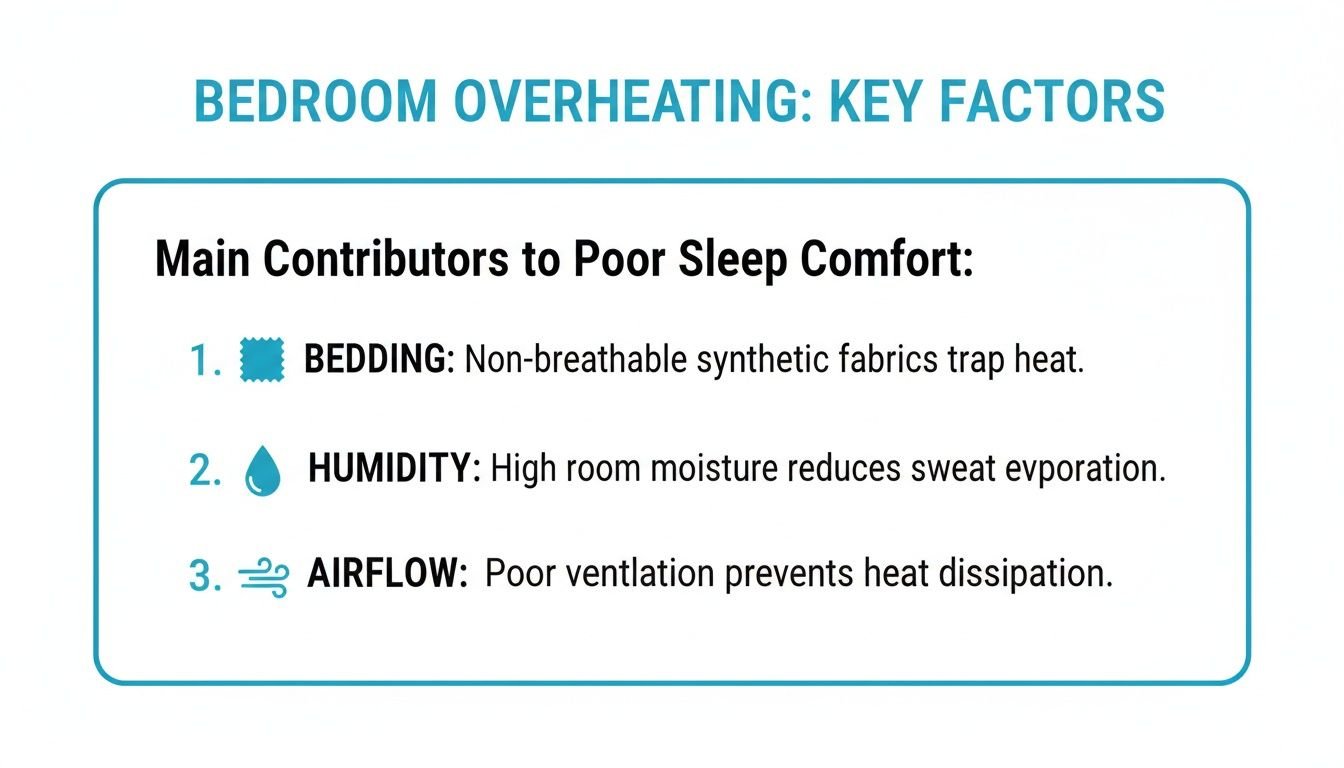
When you're shopping for sheets, you're looking for fabrics that can pull moisture away from your body and spread it out so it can evaporate quickly. This process, known as wicking, is what keeps you feeling dry even if you do sweat a little during the night.
Here’s a head-to-head comparison of some of the best cooling fabric technologies to help you choose the right sheets for your sleep style and budget.
Comparing the Best Cooling Bedding Materials
| Material | Breathability | Moisture-Wicking | Best For |
|---|---|---|---|
| TENCEL™ Lyocell | Excellent | Excellent | Hot sleepers who want a silky, cool-to-the-touch feel and superior moisture management. |
| Bamboo Viscose | Very Good | Very Good | Those seeking an exceptionally soft, breathable sheet that drapes well and helps regulate temperature. |
| Long-Staple Cotton | Good | Good | Fans of the classic, crisp hotel-sheet feel. A percale weave is more breathable than sateen. |
| Linen | Excellent | Good | Sleepers in humid climates who need maximum airflow and appreciate a durable, textured fabric that gets softer over time. |
Ultimately, choosing any of these materials over standard polyester or microfiber will make a significant difference in your comfort. For a deeper dive into optimizing your entire sleep environment, our guide on how to stay cool at night has even more strategies.
Don't Forget Your Pillow
It’s easy to overlook, but your pillow is incredibly important. Your head and neck are major heat-release zones for your body. A pillow that traps heat can make your whole body feel uncomfortably warm, even if the rest of your bed is perfectly cool. The rule is the same as with mattresses: avoid solid blocks of traditional memory foam.
Instead, look for pillows that are built with airflow in mind. A few excellent choices include:
- Shredded Foam or Latex Pillows: The shredded filling allows air to constantly move through the pillow, which stops heat from getting trapped around your head.
- Buckwheat Pillows: The natural hulls create thousands of tiny air pockets, offering unmatched breathability. Just be aware they have a very firm and unique feel that isn't for everyone.
- Gel-Infused or Phase-Change Pillows: These modern materials are specifically designed to absorb and pull heat away from your head, providing a noticeably cool sensation when you first lie down.
By systematically upgrading each part of your sleep system—from the mattress to your sheets and finally your pillow—you create an environment that actively works with you to stay cool and dry. This layered, strategic approach is one of the most powerful ways to finally get a restful night's sleep.
Simple Lifestyle Changes for Cooler Nights
While the right bedding is a game-changer, your daily habits can either help or hinder your efforts to sleep cool. Think of your body as an engine that needs to cool down after a long day. Certain foods, drinks, and activities keep that engine running hot, making it that much harder to stay comfortable once you turn out the lights.Making a few smart adjustments to your routine can dramatically lower your body's temperature before you even slip between the sheets, setting you up for a much cooler, drier night.
Tweak Your Evening Routine
What you do in the hours before bed has a direct impact on your core body temperature. If you find yourself asking, "Why do I sweat so much in my sleep?" the answer might be in your pre-sleep habits.
Try to steer clear of these common triggers in the last 2-3 hours before you plan to sleep:
- Spicy Meals: The capsaicin in hot peppers literally turns up your internal thermostat. Your body’s natural response is to sweat to cool back down.
- Alcohol: A nightcap might feel relaxing at first, but as your body metabolizes the alcohol, it disrupts your temperature regulation, often leading to sweats in the middle of the night.
- Intense Exercise: A tough workout is great for you, but doing it too close to bedtime leaves your metabolism fired up and your body temperature elevated for hours. If you need to move, stick to some gentle stretching.
Here’s a Surprising Trick: Take a lukewarm shower an hour or two before bed. It might sound counterintuitive, but the warm water brings blood to the surface of your skin. When you get out, the rapid evaporation and cooling effect sends a powerful signal to your brain that it's time to lower your core temperature and get ready for sleep.
Manage Stress for a Cooler State of Mind
The link between your mind and body is incredibly powerful. When you're stressed or anxious, your body pumps out hormones like cortisol and adrenaline, kicking you into "fight or flight" mode. This reaction revs up your heart rate and body temperature—a perfect storm for night sweats.
Even if you don't feel overwhelmed by stress, a racing mind can keep your nervous system on high alert, preventing your body from winding down properly. Weaving some simple relaxation techniques into your nightly routine can help break that cycle.
Easy Ways to Unwind:
- Mindfulness or Meditation: Just 5-10 minutes of focusing on your breath can calm your nervous system and help your body begin to cool itself.
- Journaling: Get those swirling thoughts out of your head and onto paper. Writing down worries can help you mentally "close the book" on the day so they don't pop up at 2 a.m.
- Reading a Physical Book: Swapping your phone for a book helps you avoid stimulating blue light, which can mess with your sleep hormones and keep your brain buzzing.
These lifestyle adjustments are the other half of the equation. When you combine them with a cooling sleep setup, you're tackling the problem from all angles and giving yourself the best possible shot at a dry, deep, and uninterrupted night's sleep.
Answering Your Lingering Questions About Night Sweats
Even after digging into the common causes, you might still be wrestling with a few specific questions about sweating in your sleep. Let's tackle some of the most frequent points of confusion to give you a clearer path forward.
Is It Just Heat, or Is This Something More?
There's a big difference between feeling a little toasty and kicking off the comforter, and what doctors call sleep hyperhidrosis. These are true, drenching sweats that leave your pajamas and sheets soaked, often happening even when the room feels cool.
The classic giveaway is waking up drenched but also feeling a sudden, bone-deep chill from all the moisture. If that scenario sounds all too familiar, you're probably dealing with more than just a warm bedroom.
Can Anxiety Really Make Me Sweat at Night?
Without a doubt. When your body is dealing with high levels of stress or anxiety, it can get stuck in "fight or flight" mode. This triggers a release of stress hormones that ramp up your heart rate and body temperature, kicking your sweat glands into overdrive even when you’re fast asleep.
Even a stressful dream or a nightmare you can’t quite recall upon waking can be enough to set off this physical reaction. You might wake up in a pool of sweat with no idea what caused it. For a deeper dive into this and other triggers, you can explore our other articles covering night sweats.
When Should I Talk to a Doctor About Sweating?
It's time to book a visit with your doctor if the night sweats are consistent and severe enough to regularly wake you up. This becomes especially important if they show up alongside any other new or unusual symptoms.
Pay close attention to red flags like unexplained weight loss, a recurring fever, new aches or pains, or swollen lymph nodes (check your neck, armpits, or groin). When in doubt, it's always smartest to get a professional opinion to rule out an underlying medical issue.
