

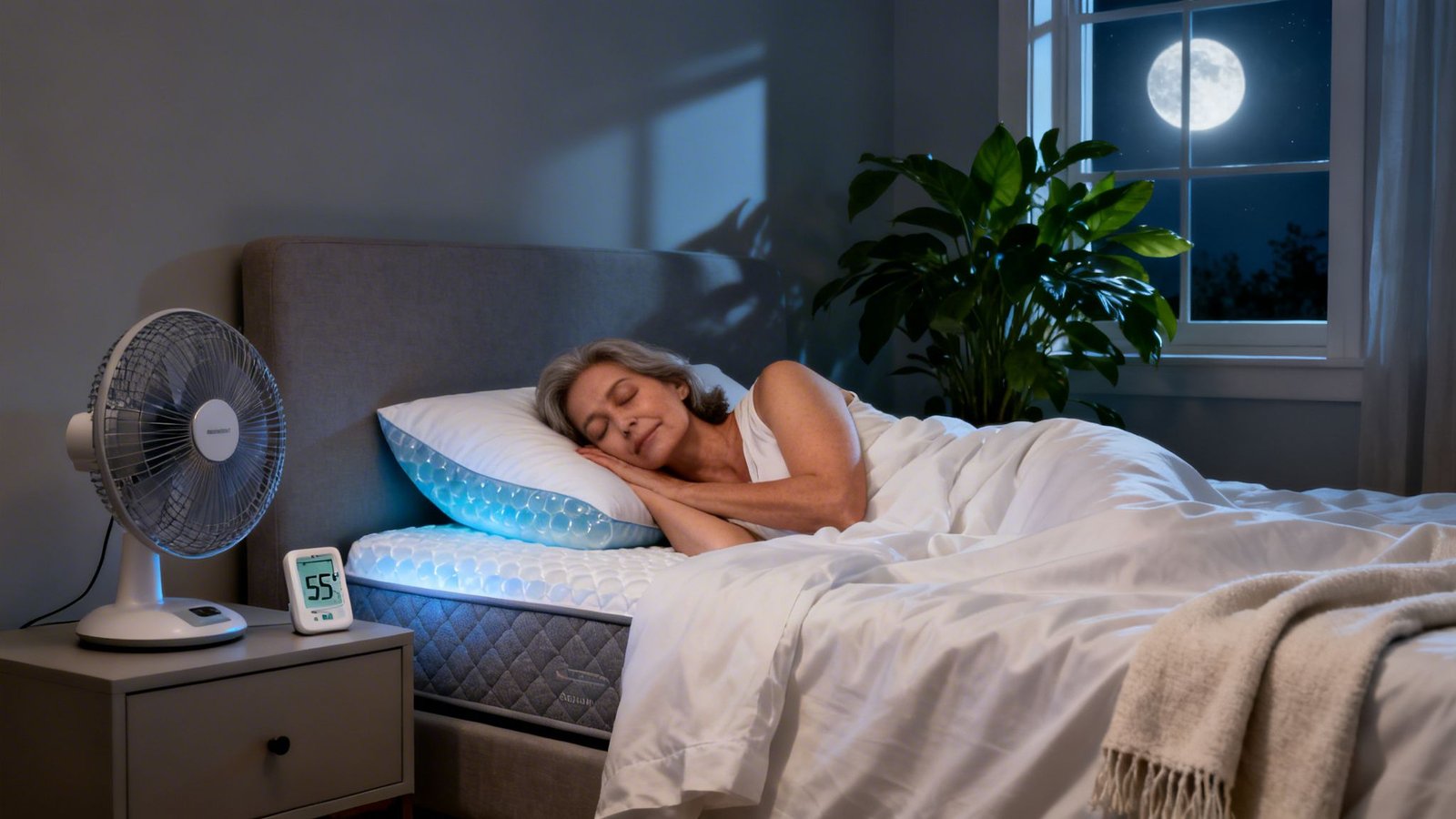
Waking up drenched in sweat isn't just uncomfortable; it's completely exhausting. If you're tired of throwing off the covers only to feel a chill seconds later, you're not alone. This frustrating cycle is a hallmark of menopause, and it all comes down to hormones.
Fluctuating estrogen levels throw a wrench in your body's internal thermostat—the hypothalamus. It gets confused and thinks you're overheating, triggering an all-out sweat response to cool you down, usually right in the middle of the night.
But you don't have to just ride it out. There are practical, effective ways to fight back and reclaim your sleep, and you can start tonight.
Understanding Menopausal Night Sweats and Finding Relief Now
The sheer number of women going through this is staggering. For about 85% of menopausal women, hot flashes and night sweats are a frustrating, sleep-stealing reality. And with an estimated 1.2 billion women expected to be menopausal or postmenopausal by 2034, it's a shared experience across the globe.
If you live somewhere hot and humid like Florida or Texas, the climate just pours fuel on the fire. This is exactly why small, targeted changes to your environment and routine can bring such immense relief. For a deeper dive, we have plenty of other resources covering night sweats.
The strategy is simple: give your body a helping hand in cooling down. Your internal thermostat is on the fritz, so you need to create an external environment that does the work for it. This isn't about a massive life overhaul; it's about making a few smart moves before your head hits the pillow.
A Quick-Start Guide for a Cooler Night's Sleep
Think of this as your immediate action plan. These aren't long-term projects but quick fixes designed to give you a better night's sleep tonight. To make it even easier, here's a simple checklist of changes you can make right away.
Quick Relief Checklist for Menopausal Night Sweats
Here’s a breakdown of the most impactful, immediate changes you can make to start sleeping cooler tonight.
| Action Area | Quick Fix | Why It Works |
|---|---|---|
| Your Room | Lower the thermostat to 60-67°F (15-19°C). | A cool room is your first and best defense against your body's confused internal thermostat. |
| Your Pajamas | Swap synthetics for loose, natural fabrics like cotton, bamboo, or linen. | These materials breathe and wick moisture away from your skin instead of trapping heat and sweat. |
| Your Bedding | Ditch the heavy comforter. Use lightweight, breathable layers you can easily remove. | Trapped heat is the enemy. Layers give you control, allowing you to adjust throughout the night. |
Each of these steps directly counteracts what's happening in your body, creating an environment that supports cool, uninterrupted rest.
Why These Small Changes Matter So Much
Let's break down the logic behind these quick fixes.
Cool Down Your Room: Setting your thermostat between 60-67°F (15-19°C) sends a powerful signal to your body that it's time for sleep. It creates a thermal environment where your body doesn't have to work as hard to stay cool.
Dress for Success (in Bed): Forget those fleece or polyester pajamas. They're like wearing a plastic bag to bed. Opt for loose-fitting sleepwear made from natural, breathable materials. Think cotton, bamboo, or linen—fabrics that let air circulate and pull moisture away from your skin.
Rethink Your Bedding: That heavy duvet might feel cozy for five minutes, but it quickly becomes a heat trap. Switch to lighter layers—a breathable cotton quilt or even just a Tencel top sheet might be all you need. The key is having options you can easily add or remove.
Key Takeaway: You don't have to endure miserable, sweat-soaked nights. Immediate relief often starts with these simple, intentional changes to your sleep environment and what you wear to bed.
By focusing on these practical adjustments, you're not just wishing for a better night—you're actively creating the conditions for one. These foundational steps pave the way for other powerful changes you can make to your sleep sanctuary, which we'll get into next.
How to Create a Sleep Environment That Fights Back
One of the most powerful things you can do to stop menopausal night sweats is to make your bedroom work for you, not against you. This goes way beyond just cranking down the A/C. It's about being strategic with every single thing you sleep on and under—from your mattress to your pillowcase—to build a personal cooling oasis.
Your bed can either trap heat like an oven or help dissipate it. We're aiming for the latter. The key is to find materials that excel at two things: breathability (letting air flow freely) and moisture-wicking (drawing sweat away from your skin before it can drench you).
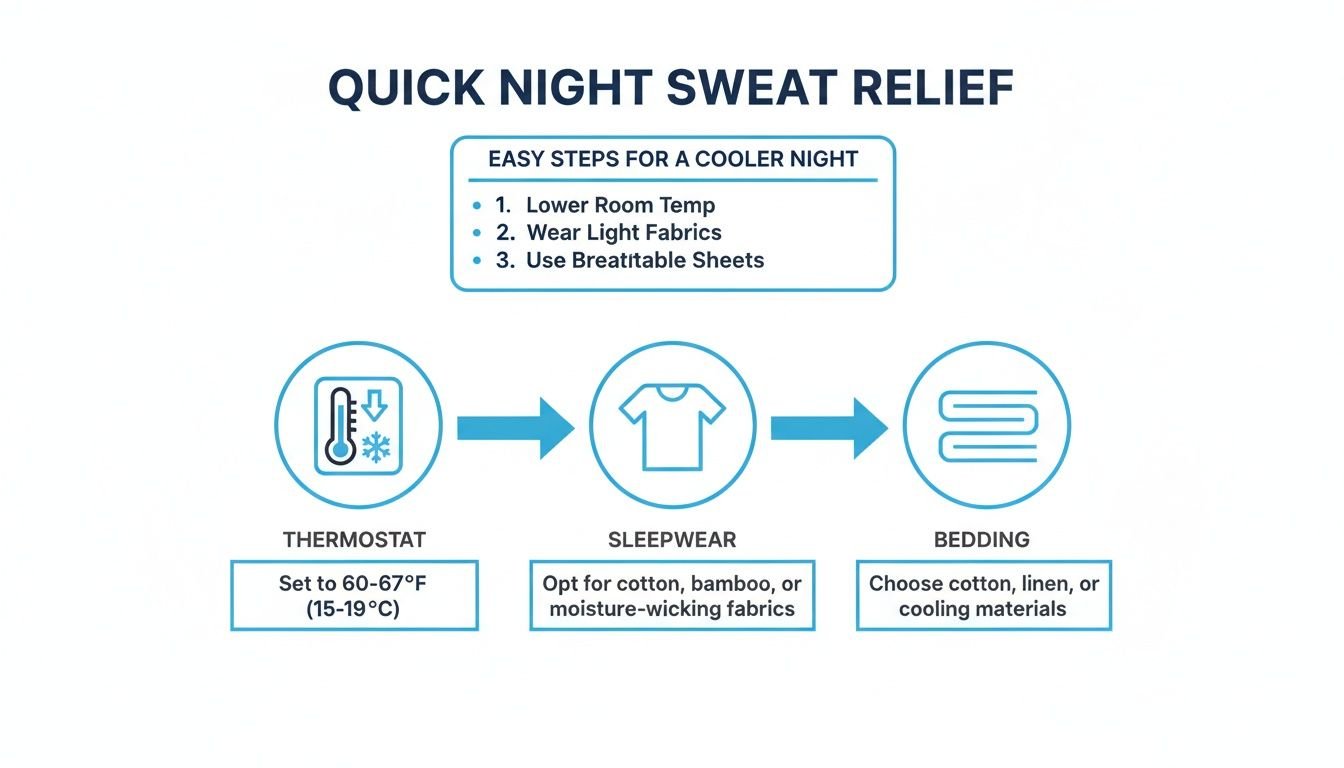
As you can see, a few smart changes to your room and bedding can create a powerful defense against those nighttime heat waves. Let's break down where to start, from the ground up.
Start With Your Mattress and Topper
The surface you spend a third of your life on has a massive effect on your body temperature. If you’ve ever slept on a traditional memory foam mattress, you know that sinking, heat-trapping feeling that can make a hot flash feel ten times worse. Thankfully, modern sleep technology has given us much better options.
Cooling Mattresses: If a new mattress is in your budget, look for models built specifically for temperature regulation.
- Hybrid Mattresses: These are often the best of both worlds. They pair the supportive airflow of innerspring coils with the comfort of specialized foam or latex on top. That coil layer is crucial for letting heat escape.
- Latex Mattresses: Natural latex has an open-cell structure that makes it inherently more breathable than dense memory foam. It doesn't hold onto heat in the same way.
- Gel- & Copper-Infused Foam: Many brands now infuse their foam with materials like gel beads or copper particles. These additions are designed to pull heat away from your body, acting like tiny heat sinks.
Cooling Mattress Toppers: Don't have the budget for a new mattress? A high-quality cooling topper can be a complete game-changer and is far more affordable. It adds a cool-to-the-touch, breathable layer right where your body makes contact, which is often enough to make a huge difference. Seek out toppers made from latex, gel foam, or those featuring phase-change material (PCM) technology.
A Note From Experience: Phase-change materials (PCMs) are incredible. They are designed to absorb your body heat when you’re getting too warm and then release it back when you cool down. This actively helps keep your skin temperature stable all night long.
Choose Your Sheets and Pillows Wisely
The fabric that’s directly against your skin all night is a critical piece of the puzzle. It’s time to ditch the high-thread-count polyester or microfiber sheets. They might feel soft, but they’re notorious for trapping heat and moisture. Instead, you need natural, breathable fabrics.
Below is a comparison of some popular cooling bedding technologies to help you decide what's right for your bed.
Cooling Product Feature Comparison
| Cooling Technology | Best For | How It Works | Average Cost |
|---|---|---|---|
| Phase-Change Material (PCM) | Those who fluctuate between hot and cold. | Micro-capsules absorb heat when you're hot and release it when you're cold, actively regulating temperature. | $$ – $$$ |
| Gel-Infused Foam | Consistent hot sleepers needing pressure relief. | Gel beads are mixed into foam to draw heat away from the body, providing a passive cooling effect. | $$ – $$$ |
| Copper Infusions | Sleepers looking for cooling plus antimicrobial benefits. | Highly conductive copper fibers pull heat away from the body and naturally inhibit bacterial growth. | $$ – $$$ |
| Natural Latex | Anyone wanting a breathable, durable, and natural option. | The open-cell structure of latex allows for constant airflow, preventing heat from getting trapped. | $$$ – $$$$ |
| Tencel/Lyocell Fabric | People who sweat a lot and prefer a silky feel. | Derived from eucalyptus, these fibers are ultra-absorbent and wick moisture away from the skin efficiently. | $$ – $$$ |
| Bamboo Viscose Fabric | Hot sleepers who love a soft, luxurious texture. | Bamboo is naturally porous and breathable, helping moisture evaporate quickly to keep you dry. | $ – $$ |
Choosing the right material isn't just a luxury—if you live in a warm, humid climate, it's a necessity. In high humidity, the wrong bedding can feel swampy in minutes. Advanced fabrics can absorb sweat vapor almost instantly, which has been shown to reduce the feeling of being hot by 20-40%. Even a simple upgrade to a cooling topper can lower your bed’s surface temperature by 4-7°F, which makes a real impact on your ability to stay asleep.
And don't forget your head! A pillow that traps heat around your head and neck can easily trigger a full-body sweat. Look for pillows filled with shredded latex, gel-infused foam, or buckwheat hulls, as they all promote much better airflow than a solid block of memory foam.
Solving the Partner Problem
What happens when you’re throwing off the covers while your partner is shivering under them? It’s a classic bedroom dilemma, but you don’t have to compromise on comfort.
- Go Dual-Zone: Some smart mattresses, mattress pads, and electric blankets now offer dual-zone climate control. Each of you can set your side of the bed to the perfect temperature.
- Try the "Scandinavian Method": This is a simple but brilliant solution. Instead of one big comforter, use two separate, smaller duvets. You can use a lightweight, breathable quilt while your partner snuggles under a thicker, warmer one.
- Layer the Bed Smartly: Use multiple light layers. You might sleep with just a cooling top sheet made of Tencel, while your partner can easily add a lightweight blanket on their side of the bed.
Building a cooling sleep sanctuary is about making deliberate choices that work together. By upgrading your mattress, sheets, and pillows with the right technology, you can drastically reduce the disruptions from night sweats and get back to sleeping soundly. For more general tips, you can also check out our guide on how to stay cool at night.
Lifestyle Adjustments That Make a Real Difference
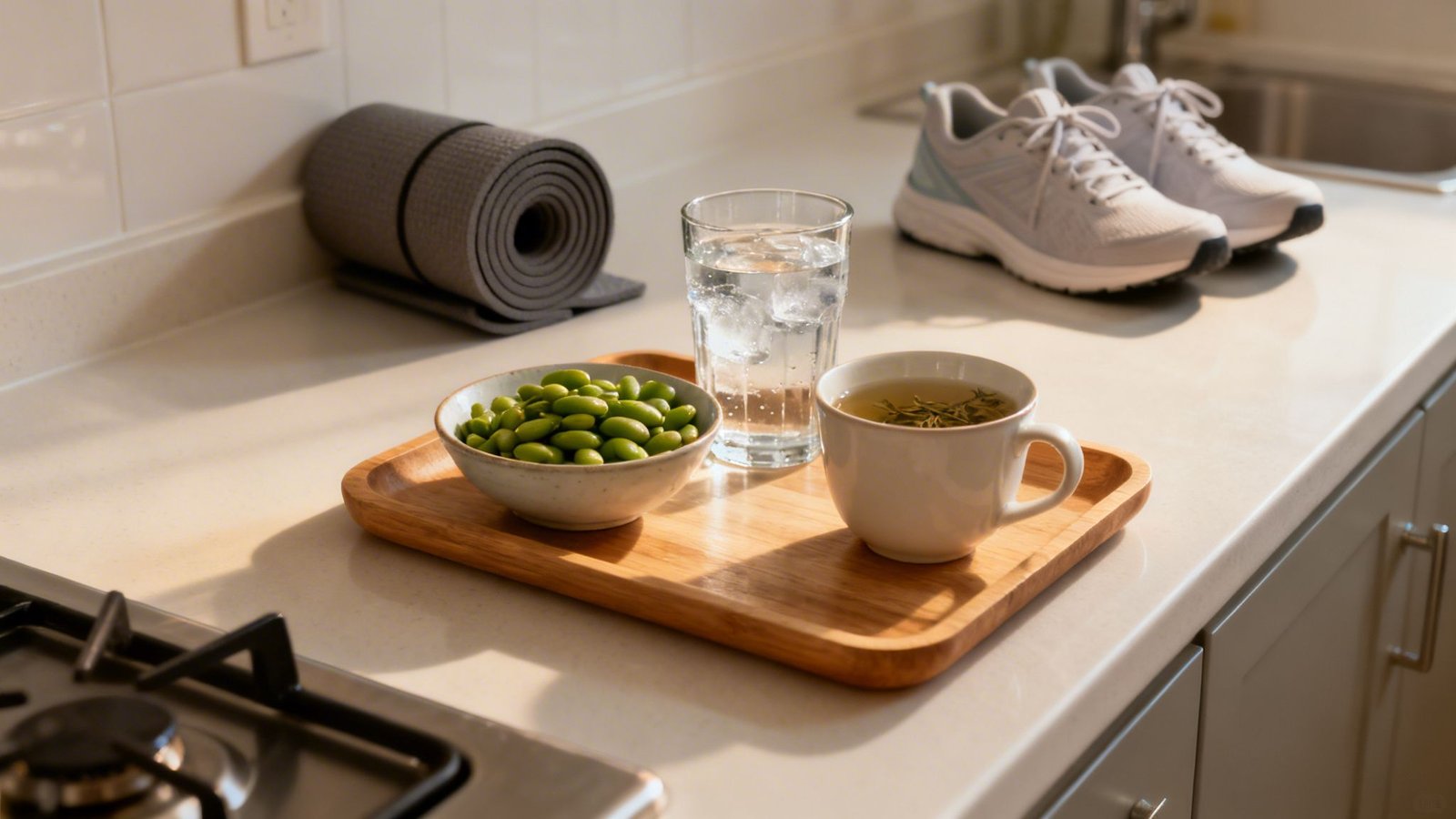
While cool sheets and a low thermostat are a great start, they're only half the battle. What you do all day long—from what you eat for dinner to how you handle stress—directly impacts how your body behaves at night.
Think of it as setting the stage for a peaceful sleep hours before your head even hits the pillow. Small, consistent changes to your daily habits can help recalibrate your body's internal thermostat, making it far less likely to send you into a sweat-soaked panic at 3 a.m.
Your Diet: The Night Sweat Connection
Some foods and drinks are well-known triggers for the vasomotor symptoms behind hot flashes and night sweats. They can hit the "on" switch for your body's heat response, especially when your system is already feeling sensitive.
Pinpointing and cutting back on these culprits is one of the fastest ways to see a real change. You might be surprised by how much of a difference a few simple swaps can make.
Common triggers to keep an eye on include:
- Spicy Foods: The capsaicin in chili peppers that creates that pleasant heat on your tongue also tricks your brain into thinking your body is overheating. The result? A full-body cool-down (aka sweat). It's best to save the spicy curry for lunchtime.
- Caffeine: That afternoon latte can feel like a lifeline, but it also stimulates your nervous system and can throw your temperature regulation out of whack. Try to have your last caffeinated beverage at least six to eight hours before bed.
- Alcohol: A glass of wine might seem relaxing, but it’s a major trigger for many women. Alcohol can mess with your body’s ability to control its temperature, and a hot flash can hit hours after you've finished your drink.
It's not just about what you avoid, though. Try adding foods rich in phytoestrogens, like soy (edamame, tofu), lentils, and chickpeas. Some studies suggest they can help reduce menopausal symptoms. And don't forget to stay hydrated! Sipping cool water throughout the day is a simple but effective way to help your body manage its temperature.
Timing Your Exercise for a Cooler Night
We all know exercise is great. It busts stress, improves sleep, and helps with weight management—all things that can help with night sweats. But when you work out is just as important as if you work out.
Intense exercise naturally raises your core body temperature. If you go for a hard run or hit a HIIT class too close to bedtime, your body might not have enough time to cool down, leaving you feeling overheated and restless all night.
As a rule of thumb, try to wrap up any strenuous exercise at least two to three hours before you plan to go to sleep. This gives your body plenty of time to wind down and lower its temperature.
If evening is your only time to move, just switch up the intensity. Gentle, restorative activities like a calm walk, stretching, or a yin yoga class are perfect for the evening. They help you de-stress without firing up your internal furnace.
Stress Management as a Cooling Tool
Stress is like pouring gasoline on the night sweat fire. When you're frazzled, your body pumps out hormones like adrenaline, which can directly set off a heat-releasing, sweat-inducing response.
Worrying about whether you'll have night sweats can actually make them more likely to happen—a frustrating cycle. This is why having a go-to stress-management practice isn't just a "nice-to-have"; it's a non-negotiable part of your toolkit.
Find a technique that works for you and try to incorporate it into your day:
- Mindfulness or Meditation: You don't need to sit for an hour. Just 10-15 minutes with a guided meditation app can do wonders for your nervous system.
- Deep Breathing Exercises: When you feel anxiety creeping in, try box breathing: Inhale for a count of four, hold for four, exhale for four, and hold for four. It's a simple, powerful way to find your center.
- Journaling: Get those swirling thoughts out of your head and onto paper. Spending five minutes writing down whatever is on your mind before bed can help you fall asleep with a clearer, calmer mind.
Building Your Nightly Cool-Down Ritual
Dealing with menopausal night sweats isn't just about damage control in the middle of the night. It's about being proactive. Think of it as creating a cool-down ritual—a series of simple, deliberate steps in the evening that tell your body it's time to chill out, literally.
This isn't about adding more chores to your day. It’s about creating a calming routine that helps regulate your body's internal thermostat, making it much harder for a hot flash to hijack your sleep.
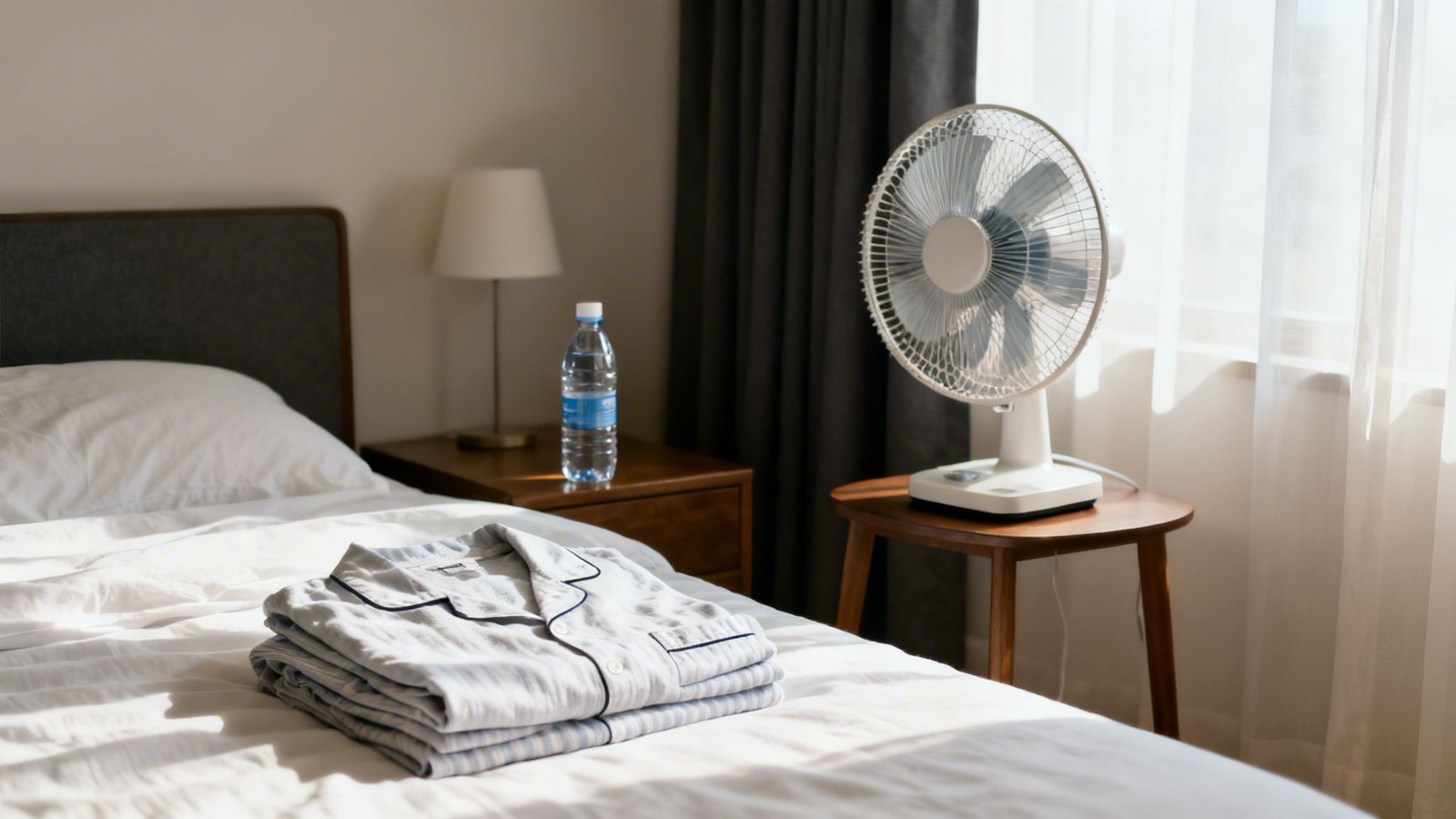
Prime Your Body for Coolness
Your journey to a sweat-free night can start about 90 minutes before your head even hits the pillow. One of the best things you can do is take a lukewarm shower. It might seem odd—why not a cold one? A lukewarm shower gently raises your skin temperature, so when you step out into a cooler room, the sudden drop sends a powerful "time to sleep" signal to your brain.
As you wind down, stay hydrated, but be smart about it. A small glass of cool water on your nightstand is perfect for internal temperature regulation. Just avoid chugging a huge bottle right before bed, or you'll be trading one nighttime disruption for another.
What you wear to bed also matters more than you might think. It's time to retire the heavy flannel or synthetic fabrics that trap heat. Instead, choose lightweight, loose-fitting pajamas made from materials that breathe.
- Cotton: A classic for a reason. It's soft, breathable, and lets air circulate freely.
- Bamboo: Feels silky smooth against the skin and is fantastic at wicking moisture away.
- Linen: This fabric is a powerhouse of breathability, allowing heat to escape from your body effortlessly.
Prep Your Bedroom Environment Every Evening
Making your bedroom a cool sanctuary should become a non-negotiable part of your evening. A few minutes of prep can be the difference between a peaceful night and waking up at 2 a.m. feeling like you're in a sauna.
First, tackle the thermostat. Sleep experts agree that the ideal temperature for sleep is somewhere between 60-67°F (15-19°C). This cooler air helps your body reach the lower core temperature it needs for deep, restorative sleep. If you don’t have central air, a window A/C unit or a good fan works wonders. A fan is a great two-for-one solution, circulating cool air while also providing a bit of soothing white noise.
Expert Tip: For a low-tech air conditioner, place a shallow bowl of ice in front of your fan. As the fan blows over the ice, it will circulate a surprisingly cool, misty breeze.
Next, manage the light. Blackout curtains are a game-changer, especially if you live in a warm climate. They block ambient light from streetlamps and, just as importantly, prevent the sun from baking your room during the day. A dark room encourages your body to produce melatonin, the crucial hormone that regulates your sleep cycle.
Your Go-To Cool-Down Checklist
Consistency is everything. Turning these small actions into nightly habits will have a compounding effect on your sleep quality. Here’s a simple checklist to run through each evening to set yourself up for success.
- Drop the Temp: Lower the thermostat about an hour before you plan to sleep.
- Get the Air Moving: Switch on your ceiling fan or a bedside fan.
- Block It Out: Draw your blackout curtains to keep the room cool and dark.
- Stay Hydrated: Place a glass of cool water by your bed.
- Dress for Success: Lay out your most breathable, lightweight pajamas.
- Flip Your Pillow: If you get a hot head and neck, turn your pillow to the "cool side" or consider a dedicated cooling pillow. You can also explore many other cool sleeping tips to see what else helps.
By intentionally creating these conditions every night, you start to take back control. This routine is about more than just managing a frustrating symptom; it's about reclaiming your right to a comfortable and uninterrupted night of sleep.
Turning to Supplements and Medical Solutions
So, you've done everything right. You've optimized your bedroom, tweaked your diet, and perfected your bedtime routine… but you’re still waking up drenched. It’s incredibly frustrating when lifestyle changes just don't cut it.
This is when it makes perfect sense to look at over-the-counter supplements or start a conversation with your doctor. It's not a sign of failure; it’s the logical next step to reclaim your sleep. The key is finding a solution that fits your health profile and that you feel comfortable with.
Over-the-Counter Supplements for Night Sweats
Stepping into the supplement aisle can feel overwhelming. With so many bottles promising relief, it's tough to know where to start. It’s absolutely vital to approach supplements with a healthy dose of caution and always run them by your doctor first, as they can interfere with other medications.
Here are a few that often come up in conversations about menopause:
- Black Cohosh: This is probably the most-studied herbal remedy for menopausal symptoms. While the research is a bit mixed, some women find it genuinely helps reduce the frequency and intensity of their hot flashes and night sweats.
- Magnesium: While it won’t stop a hot flash in its tracks, magnesium is a powerhouse for sleep regulation and calming the nervous system. A good magnesium supplement can significantly improve your sleep quality, which makes those nighttime wake-ups feel far less disruptive.
- Soy Isoflavones: As we talked about with diet, phytoestrogens can be a big help. These supplements are a concentrated source of those plant-based compounds, and some studies suggest they provide modest relief from night sweats.
Remember, the supplement industry isn’t regulated like prescription drugs. To ensure you're getting what the label says, look for products verified by a third party like NSF International or USP.
When to Talk to Your Doctor
If supplements and lifestyle adjustments aren't giving you the relief you need, please don't hesitate to book a doctor's appointment. Night sweats that constantly shatter your sleep are more than just a nuisance—they’re a legitimate health issue that can take a toll on everything.
Your doctor can confirm that menopause is the root cause, rule out any other possibilities, and walk you through the pros and cons of proven medical treatments.
This is important: You do not have to just "power through" this. If night sweats are wrecking your sleep and quality of life, it's a real medical problem. Talking to your doctor is the first step toward getting a solution that actually works.
Proven Medical Treatments for Menopausal Night Sweats
For many women dealing with severe symptoms, medical treatments offer the most powerful and reliable relief. These are prescription options that get to the heart of the problem by addressing the hormonal shifts or brain chemistry that trigger the sweats in the first place.
Hormone Replacement Therapy (HRT)
HRT is often called the gold standard for a reason. By replacing the estrogen your body has stopped making, it directly stabilizes your body's internal thermostat (the hypothalamus). For many, this can dramatically reduce or even completely eliminate night sweats. HRT isn't a one-size-fits-all solution; it comes in pills, patches, and gels. It's a fantastic option for some, but not for everyone, making a frank discussion about your medical history with your doctor absolutely critical.
Non-Hormonal Prescription Options
If you can't or prefer not to use hormones, there are other excellent medical options that can make a huge difference.
- Low-Dose Antidepressants: Certain antidepressants (from the SSRI and SNRI families) have been proven to be very effective at reducing hot flashes. They work by influencing brain chemicals that play a role in regulating body temperature.
- Gabapentin: Originally a medication for seizures and nerve pain, doctors discovered it also does a great job of lessening the severity of hot flashes for many women.
Choosing a medical treatment is a personal decision. But by knowing what’s out there, you and your doctor can put together a plan to help you finally get the cool, uninterrupted sleep you deserve.
Your Questions About Menopause and Night Sweats, Answered
It's completely normal to have a ton of questions when you're dealing with menopausal night sweats. Even after you’ve tweaked your sleep setup and habits, you might still be wondering what’s really going on. Let’s tackle some of the most common questions we hear to give you a little more clarity and peace of mind.
How Long Do Menopausal Night Sweats Last?
This is the million-dollar question, and the frustrating truth is that there's no single timeline. For some women, night sweats are a short-lived hassle that pops up for a year or two during the most intense part of perimenopause.
For many others, though, it's a much longer journey. Research shows that vasomotor symptoms like night sweats last for an average of 7.4 years, and it's not uncommon for women to deal with them for a decade or even longer. Instead of fixating on an unknown end date, the best approach is to focus on what you can do to manage them right now.
Are Night Sweats Every Night Normal During Menopause?
Waking up drenched in sweat night after night can feel pretty scary, but it's often a part of the menopausal transition. The frequency really comes down to your own unique hormonal roller coaster, which can be unpredictable, to say the least.
That said, just because it’s a “normal” part of menopause doesn’t mean you have to just live with it. If you're having nightly sweats that consistently ruin your sleep, take that as your cue to get more serious about your cooling strategies or to schedule a chat with your doctor.
If the sweats feel relentless and severe, it's always smart to check in with a healthcare provider. They can help confirm that menopause is the root cause and make sure nothing else is going on.
Can Certain Medications Make Night Sweats Worse?
Yes, they absolutely can. Sometimes menopause isn't the only thing stoking the fire. A surprising number of common medications—both prescription and over-the-counter—list sweating as a side effect, which can pour fuel on your menopausal symptoms.
A few types of medications are known for causing or worsening sweating:
- Certain antidepressants
- Some diabetes medications
- Steroids like prednisone
- Pain relievers, including aspirin or ibuprofen
- Medications for high blood pressure
If you think a new medication is ramping up your night sweats, don't just stop taking it. The best move is to talk to your doctor. They might be able to switch you to an alternative or adjust the dose to help dial down that disruptive side effect.
Is There a Difference Between Perimenopause and Menopause Night Sweats?
From a physical standpoint, the experience of a night sweat feels the same whether you're in perimenopause (the years leading up to your final period) or post-menopause. The main difference is often in their pattern.
During perimenopause, your hormones are all over the place. That means your night sweats might show up randomly—hitting you hard for a few weeks, then disappearing for a month. Once you're officially in menopause and your estrogen has settled at a new, consistent low, the sweats might become a more regular and predictable symptom for a while before they start to ease up.
Ultimately, learning how to stop night sweats during menopause means using the same core strategies no matter where you are in the transition. A cool room, breathable bedding, and avoiding your personal triggers are your best allies the whole way through.
At CoolRestGuide, we're obsessed with finding real solutions for hot sleepers. If you're tired of guessing which products will actually keep you cool, let our honest, in-depth reviews guide you to a better night's sleep. Explore our guides at https://coolrestguide.com.
Built with Outrank
